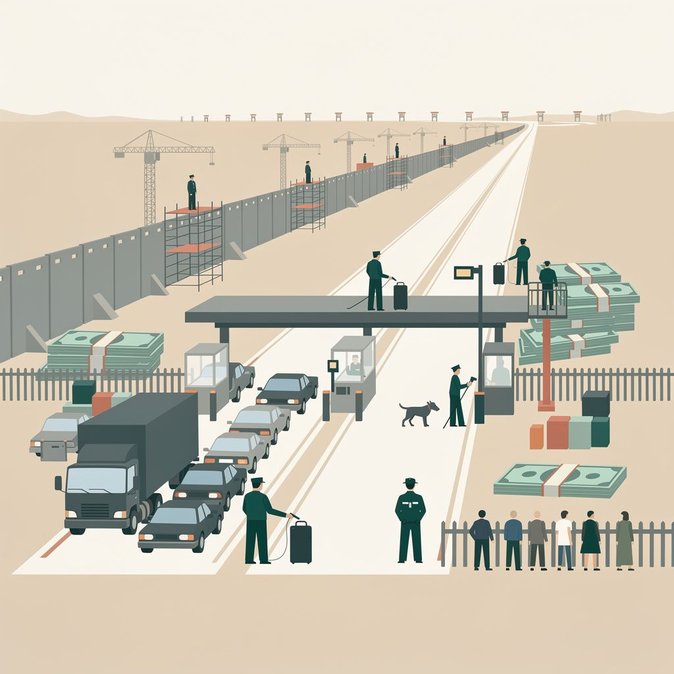
A new reconciliation bill signed by President Trump on 10 June—and analysed in detail by the Washington Office on Latin America’s 12 June Border Update—provides Customs and Border Protection (CBP) and Immigration and Customs Enforcement (ICE) with an additional $69.5 billion, insulating the agencies from the annual appropriations process for the next three fiscal years. The law effectively guarantees a quarter-trillion dollars in operating funds for border and interior enforcement from 2025-29. The bill arrives as watchdogs decry deteriorating detention conditions; ICE recorded its 19th in-custody death of 2026 this week, while hunger strikes continue at multiple facilities. DHS simultaneously waived environmental laws to fast-track new border-wall segments through Big Bend National Park, raising concerns among conservationists and local communities about rushed construction on fragile terrain. For companies with cross-border operations, the funding surge means more agents, more technology and more physical barriers—factors that could lengthen cargo inspections and complicate NAFTA-regional supply chains. Employers should update contingency logistics plans and budget for potential delays at ports of entry. The law also reduces congressional leverage to impose reporting requirements or human-rights conditions, increasing reputational risk for service providers contracting with ICE or CBP. Vendors should review ethics clauses and be prepared for heightened scrutiny from shareholders and NGOs. Finally, the pre-funding model could become a template for future “front-loaded” appropriations in areas ranging from cybersecurity to foreign aid, altering how stakeholders forecast federal enforcement capacity and engage in advocacy.