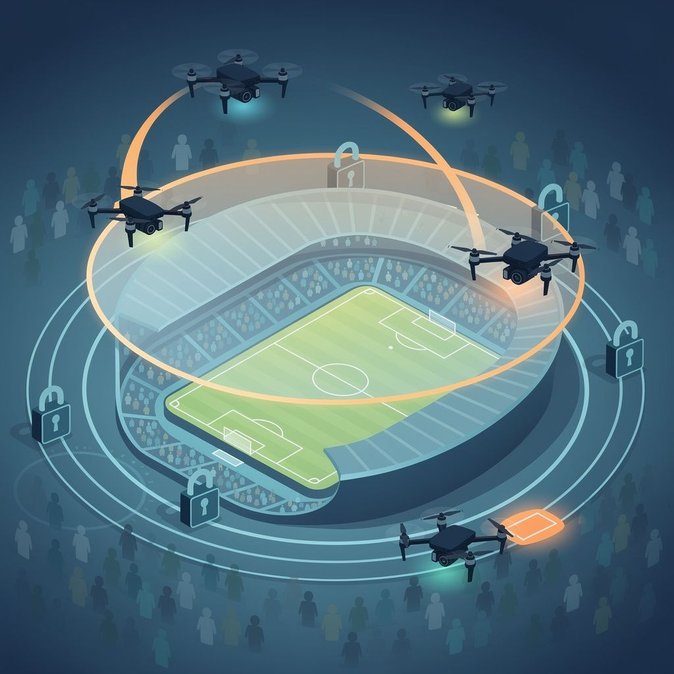
With the FIFA World Cup kicking off today in Los Angeles, the Federal Aviation Administration has hurriedly modified its Temporary Flight Restrictions (TFRs) to let commercial drone operators seek case-by-case clearance from the Department of Homeland Security. The change, announced June 12 on industry site DroneXL, applies to the three-nautical-mile, 3,000-foot security bubbles around every U.S. match venue and the one-mile rings surrounding team base camps.
For overseas broadcast crews, international volunteers, or any foreign professionals supporting tournament operations, ensuring the right travel documentation is just as critical as securing drone waivers. VisaHQ’s online visa and passport service can expedite U.S. visa applications, offer real-time status tracking, and provide personalized guidance to keep tight production timelines on track (https://www.visahq.com/united-states/).
Under the new protocol, Part 107 and Part 135 operators can email drones@dhs.gov with flight plans, purpose, and a 24/7 contact to request access. The system will debut in Texas host cities before rolling out nationwide. Until updated language appears in the individual NOTAM for each venue, existing prohibitions stand, and violators face civil penalties up to US$75,000 per incursion. The pathway is a win for media outlets, construction surveyors and logistics firms that had legitimate commercial work grounded by the blanket ban. However, mobility managers handling World Cup hospitality projects must build extra lead time into aerial-imaging schedules and budget for possible denial of DHS waivers. The move also highlights the growing integration of UAS management into large-scale event security. Companies operating corporate drones near stadiums should ensure Remote ID compliance, maintain flight logs for audit, and keep contingency plans for manned-helicopter alternatives if authorizations are delayed. For visiting fans and business travelers, the rule has indirect benefits: tighter airspace control reduces rogue-drone disruptions that can close airport runways and snarl arrival flows. Still, travelers should anticipate heightened screening and allow additional time when arriving via private aviation on World Cup match days.
For overseas broadcast crews, international volunteers, or any foreign professionals supporting tournament operations, ensuring the right travel documentation is just as critical as securing drone waivers. VisaHQ’s online visa and passport service can expedite U.S. visa applications, offer real-time status tracking, and provide personalized guidance to keep tight production timelines on track (https://www.visahq.com/united-states/).
Under the new protocol, Part 107 and Part 135 operators can email drones@dhs.gov with flight plans, purpose, and a 24/7 contact to request access. The system will debut in Texas host cities before rolling out nationwide. Until updated language appears in the individual NOTAM for each venue, existing prohibitions stand, and violators face civil penalties up to US$75,000 per incursion. The pathway is a win for media outlets, construction surveyors and logistics firms that had legitimate commercial work grounded by the blanket ban. However, mobility managers handling World Cup hospitality projects must build extra lead time into aerial-imaging schedules and budget for possible denial of DHS waivers. The move also highlights the growing integration of UAS management into large-scale event security. Companies operating corporate drones near stadiums should ensure Remote ID compliance, maintain flight logs for audit, and keep contingency plans for manned-helicopter alternatives if authorizations are delayed. For visiting fans and business travelers, the rule has indirect benefits: tighter airspace control reduces rogue-drone disruptions that can close airport runways and snarl arrival flows. Still, travelers should anticipate heightened screening and allow additional time when arriving via private aviation on World Cup match days.