Quebec Tweaks Work-Permit Rules for Foreign Health Professionals—but Excludes Orderlies
Air Canada and Machinists Union Reach Tentative Deal, Stabilising Summer Travel Outlook
World Cup Kick-off Tests Vancouver’s Border and Crowd-Management Plans
Latest News

Rural Community Immigration Pilot Overwhelmed as Small-Town Canada Seeks Skilled Workers
Applications for Canada’s Rural Community Immigration Pilot now exceed available slots several-fold, with 800 new permanent residents already landed in 2026 and thousands more in queue. Communities from B.C. to Nova Scotia say the pilot is critical for filling health-care, trades and manufacturing roles, but limited quotas are creating bottlenecks and potential exploitation risks. Employers relying on the program should prepare for longer waits or explore backup pathways.

Rural Canadian Communities Overwhelmed by Demand for Permanent-Residency Pilot
Participation in Canada’s Rural Community Immigration Pilot is far exceeding capacity: 800 approvals were recorded in the first two months of 2026 and thousands of additional applications are pending even though each of the 14 communities has tightly capped nomination quotas. Employers relying on the pilot to retain foreign talent in smaller markets should anticipate bottlenecks and move quickly to secure nominations.

Rural Immigration Pilot Overwhelmed as 800 New Residents Approved in Two Months
New figures reveal Canada’s Rural Community Immigration Pilot approved 800 permanent residents in just the first two months of 2026, far exceeding expectations and leaving communities with more applicants than available nomination spaces. Local officials say the pilot is critical for filling health-care, manufacturing and skilled-trade roles but warn of capacity constraints and potential exploitation of would-be immigrants. Employers operating in rural Canada should move quickly if they wish to secure endorsements before annual caps are reached.

Rural Communities Swamped with Applications as Permanent-Residency Pilot Gains Traction
Applications for Canada’s Rural Community Immigration Pilot have outstripped available spaces, with 800 newcomers already granted PR in 2026 and thousands more in the queue. Communities say the program is vital to plug labour gaps, but quotas and compliance pressures mean employers must act quickly and responsibly. For global-mobility managers, RCIP is becoming a key – but highly competitive – pathway for retaining foreign talent in smaller Canadian markets. ([vancouver.citynews.ca](https://vancouver.citynews.ca/2026/06/14/communities-report-high-demand-for-pilot-offering-permanent-residency-for-rural-jobs/))
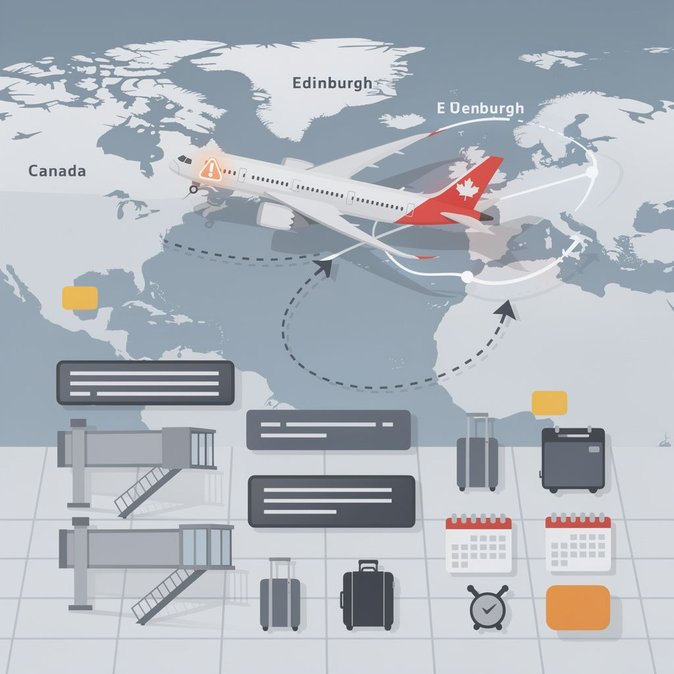
Air Canada 787 Emergency Return Highlights Trans-Atlantic Disruption Risks
Air Canada flight AC937 returned to Edinburgh after declaring an in-flight emergency, stranding Montréal-bound passengers and illustrating how a single 787 disruption can cascade across a tight summer schedule. Employers should prepare for rebooking costs, longer connection buffers and potential fleet-wide knock-ons if regulators mandate additional inspections. ([airtraveler.club](https://www.airtraveler.club/news/air-canada-787-edinburgh-emergency/))

Air Canada Dreamliner Declares Emergency and Returns to Edinburgh, Triggering Transatlantic Disruptions
AC937, an Air Canada Boeing 787-9 operating Edinburgh–Montréal on 14 June, declared an airborne emergency and returned to Edinburgh after a rapid descent. No injuries occurred, but the flight was cancelled and passengers face complex rebooking under UK 261 and Canada’s APPR rules. The incident removes a wide-body jet from service at the height of the summer rush, threatening knock-on disruptions across Air Canada’s Atlantic network.

Canada Invokes New Powers to Suspend Immigration Documents from Ebola-Affected Countries
Ottawa has used new legislative powers to freeze more than 36,000 visas and permits held by residents of the DRC, Uganda and South Sudan because of an elevated Ebola risk. The suspension, effective until 28 August 2026, bars holders from travelling to Canada even if their documents were already issued. Employers face onboarding delays and must seek interim solutions for affected talent.

IRCC’s weekly update shows faster processing: Express Entry now 6–8 weeks, work permits 5–13 weeks
Fresh IRCC data released 13 June show Express Entry decisions averaging 6–8 weeks and work permits 5–13 weeks—welcome news for employers planning fall assignments. While most streams are accelerating, PR-card renewals and some family programs lag, so mobility teams should still build buffer time into travel plans.

CBSA Schedules 13-June EDI/eManifest Outage, Advises Carriers to Activate Contingency Plans
CBSA will shut down its EDI, eManifest and export portals for scheduled maintenance early on 13 June 2026. Carriers and customs brokers must switch to paper procedures, and companies moving commercial or personal goods should adjust schedules to avoid penalties and clearance delays.

IRCC Updates Processing-Time Benchmarks: Express Entry Now Averages 6-8 Weeks
The 13 June 2026 processing-time refresh shows Express Entry decisions holding at six to eight weeks, with study permits at up to 18 weeks and spousal sponsorship at up to 14 weeks. The stable but still variable timelines mean employers and students must apply early and incorporate buffers into mobility planning.