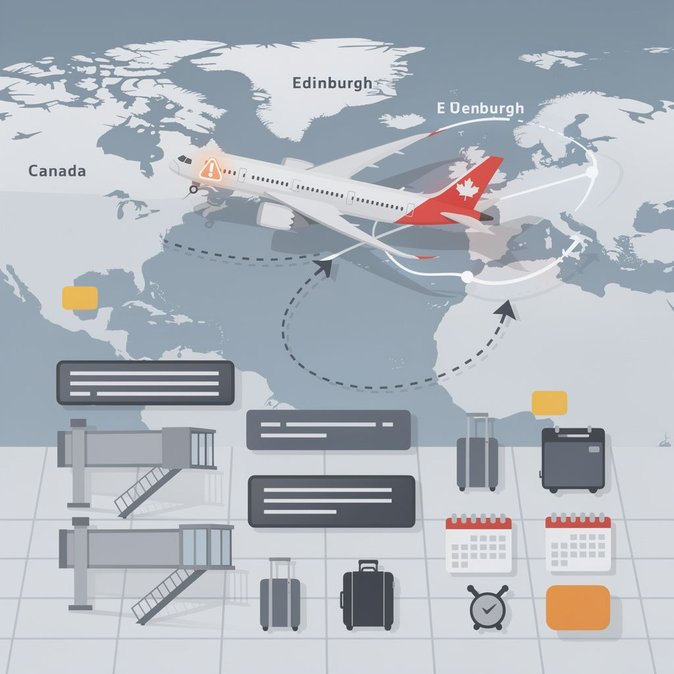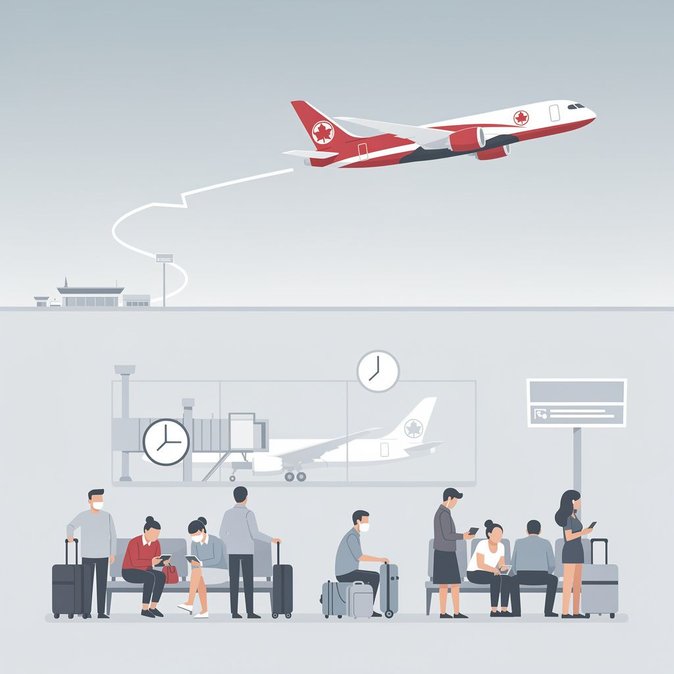
Passengers booked on Air Canada flight AC937 from Edinburgh to Montréal faced an unexpected ordeal on 14 June when the Boeing 787-9 crew squawked the 7700 general-emergency code and executed a rapid descent from 38,000 feet to 10,000 feet before turning back to the Scottish capital. The aircraft landed safely and no injuries were reported, but the rotation was cancelled, setting off a domino effect across the carrier’s Atlantic schedule. Aviation-tracking data show the jet—registration C-FRTU—was about an hour into its crossing of the North Atlantic when the incident occurred.
If your team’s travel plans now require rerouting through alternate countries, remember that VisaHQ can streamline the process of securing any additional transit or entry visas you might suddenly need. Their online platform, available at https://www.visahq.com/canada/ provides up-to-date requirements and rapid application services, helping corporate travellers avoid further disruption while itineraries are rebuilt.
Although Air Canada has not disclosed the cause, the descent profile is consistent with a pressurisation fault or other technical issue that requires an immediate return to lower altitude. Under Transport Canada and UK Civil Aviation Authority rules, the aircraft will remain grounded pending inspection, potentially removing a 298-seat wide-body from service during one of the busiest travel weeks of the year. For travellers, the practical fallout is significant. The EDI–YUL route operates at limited frequency, and alternative seats via London, Dublin or Toronto are already scarce thanks to World Cup-related demand. Under the UK 261 and Canadian Air Passenger Protection Regulations (APPR), Air Canada must re-route affected passengers and provide care (meals, accommodation) but cash compensation applies only if the fault is deemed within the airline’s control and not safety-related. Companies with travellers on the disrupted flight should initiate rebooking immediately and document delay-related expenses for possible credit-card insurance claims. Fleet-planning experts note that a single long-haul aircraft outage can ripple through a network for days, forcing equipment swaps and further delays. Organisations with employees booked on AC transatlantic services over the next 72 hours are advised to monitor flight-status updates closely and build additional connection time into itineraries. The incident also serves as a reminder to brief travellers on their rights under APPR and to ensure travel-risk policies cover extended delays outside North America. Should the investigation reveal a wider 787-9 maintenance issue, regulators could impose mandatory checks across Air Canada’s fleet—a low-probability but high-impact scenario that mobility managers will watch closely.
If your team’s travel plans now require rerouting through alternate countries, remember that VisaHQ can streamline the process of securing any additional transit or entry visas you might suddenly need. Their online platform, available at https://www.visahq.com/canada/ provides up-to-date requirements and rapid application services, helping corporate travellers avoid further disruption while itineraries are rebuilt.
Although Air Canada has not disclosed the cause, the descent profile is consistent with a pressurisation fault or other technical issue that requires an immediate return to lower altitude. Under Transport Canada and UK Civil Aviation Authority rules, the aircraft will remain grounded pending inspection, potentially removing a 298-seat wide-body from service during one of the busiest travel weeks of the year. For travellers, the practical fallout is significant. The EDI–YUL route operates at limited frequency, and alternative seats via London, Dublin or Toronto are already scarce thanks to World Cup-related demand. Under the UK 261 and Canadian Air Passenger Protection Regulations (APPR), Air Canada must re-route affected passengers and provide care (meals, accommodation) but cash compensation applies only if the fault is deemed within the airline’s control and not safety-related. Companies with travellers on the disrupted flight should initiate rebooking immediately and document delay-related expenses for possible credit-card insurance claims. Fleet-planning experts note that a single long-haul aircraft outage can ripple through a network for days, forcing equipment swaps and further delays. Organisations with employees booked on AC transatlantic services over the next 72 hours are advised to monitor flight-status updates closely and build additional connection time into itineraries. The incident also serves as a reminder to brief travellers on their rights under APPR and to ensure travel-risk policies cover extended delays outside North America. Should the investigation reveal a wider 787-9 maintenance issue, regulators could impose mandatory checks across Air Canada’s fleet—a low-probability but high-impact scenario that mobility managers will watch closely.