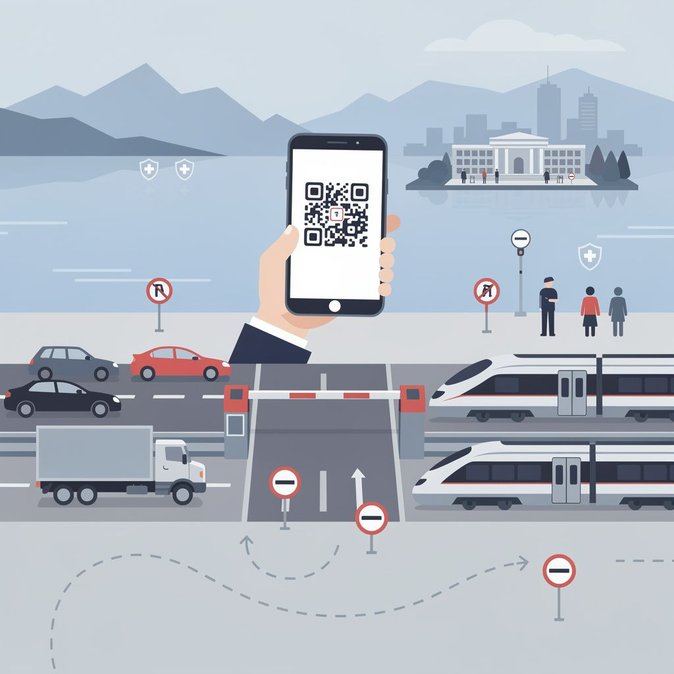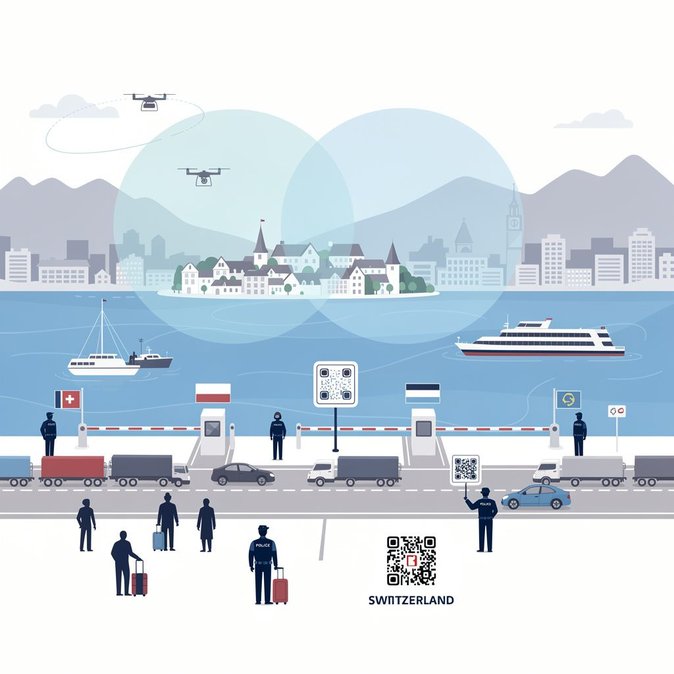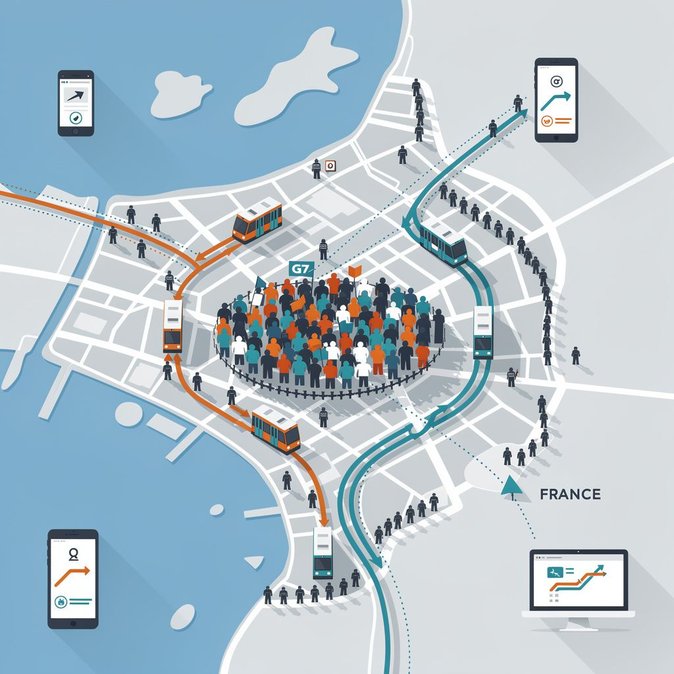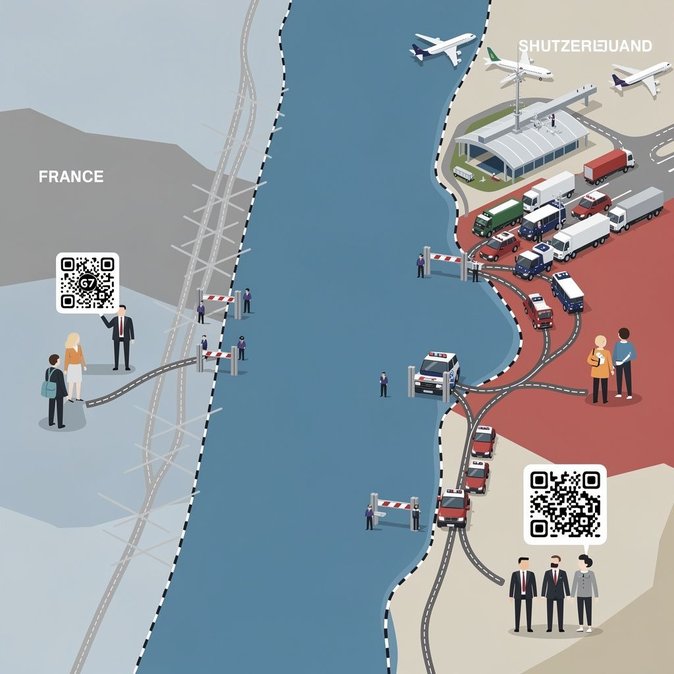
France’s three-day G7 leaders’ summit, which opens in the lakeside resort of Évian-les-Bains on 15 June, is already reshaping mobility on both sides of the Franco-Swiss frontier. French and Swiss authorities have deployed 16,000 police, gendarmes and soldiers, created concentric "blue" and "red" security zones, and—most disruptive for travellers—reduced the number of authorised road crossings between Haute-Savoie and the Canton of Geneva from 35 to just seven between 12 and 18 June. QR-coded access badges have been issued to 25,000 “essential” cross-border workers ranging from airport staff to hospital employees.
Travellers who find themselves suddenly navigating new documentation rules or anticipating future border changes can streamline the process through VisaHQ. The company’s portal (https://www.visahq.com/france/) provides real-time entry requirements, digital application tools and expert support, ensuring both business and leisure visitors stay compliant when events like the G7—or the upcoming EU Entry/Exit System—trigger rapid shifts in travel formalities.
The closures mean commuters who normally move freely within the Schengen area must now queue at manned checkpoints or make lengthy detours. Logistics firms report having rerouted Geneva-bound lorries via the Mont-Blanc tunnel, adding up to two hours per trip. Business-aviation operators at Geneva Airport (GVA)—the gateway for most delegations—warn that road convoys to the French shore of Lake Geneva will operate under police escort, further congesting the A40 autoroute. Mobility managers responsible for French or Swiss assignees have been advised to shift meetings online or postpone non-essential travel. Employers should also expect spikes in taxi and rail demand as workers abandon personal cars to avoid the bottlenecks. French authorities have quietly indicated that cross-border remote-work arrangements struck during the pandemic will not count as "presence" for badge issuance, meaning many hybrid employees must work from home this week. Longer-term, the summit functions as a large-scale dress rehearsal for the heightened border procedures Europe’s new Entry/Exit System will impose permanently from October. Police sources say digital pre-clearance tools tested this week—including licence-plate recognition cameras and mobile biometrics kits—could stay in place on key Geneva corridors if they prove effective. For now, travellers should build at least 60–90 minutes of extra buffer time into any journey that involves crossing the Franco-Swiss border near Évian or Geneva, carry printed proof of purpose of travel, and monitor both French Interior Ministry and cantonal police feeds for pop-up roadblocks or protests that can spring up with little warning.
Travellers who find themselves suddenly navigating new documentation rules or anticipating future border changes can streamline the process through VisaHQ. The company’s portal (https://www.visahq.com/france/) provides real-time entry requirements, digital application tools and expert support, ensuring both business and leisure visitors stay compliant when events like the G7—or the upcoming EU Entry/Exit System—trigger rapid shifts in travel formalities.
The closures mean commuters who normally move freely within the Schengen area must now queue at manned checkpoints or make lengthy detours. Logistics firms report having rerouted Geneva-bound lorries via the Mont-Blanc tunnel, adding up to two hours per trip. Business-aviation operators at Geneva Airport (GVA)—the gateway for most delegations—warn that road convoys to the French shore of Lake Geneva will operate under police escort, further congesting the A40 autoroute. Mobility managers responsible for French or Swiss assignees have been advised to shift meetings online or postpone non-essential travel. Employers should also expect spikes in taxi and rail demand as workers abandon personal cars to avoid the bottlenecks. French authorities have quietly indicated that cross-border remote-work arrangements struck during the pandemic will not count as "presence" for badge issuance, meaning many hybrid employees must work from home this week. Longer-term, the summit functions as a large-scale dress rehearsal for the heightened border procedures Europe’s new Entry/Exit System will impose permanently from October. Police sources say digital pre-clearance tools tested this week—including licence-plate recognition cameras and mobile biometrics kits—could stay in place on key Geneva corridors if they prove effective. For now, travellers should build at least 60–90 minutes of extra buffer time into any journey that involves crossing the Franco-Swiss border near Évian or Geneva, carry printed proof of purpose of travel, and monitor both French Interior Ministry and cantonal police feeds for pop-up roadblocks or protests that can spring up with little warning.