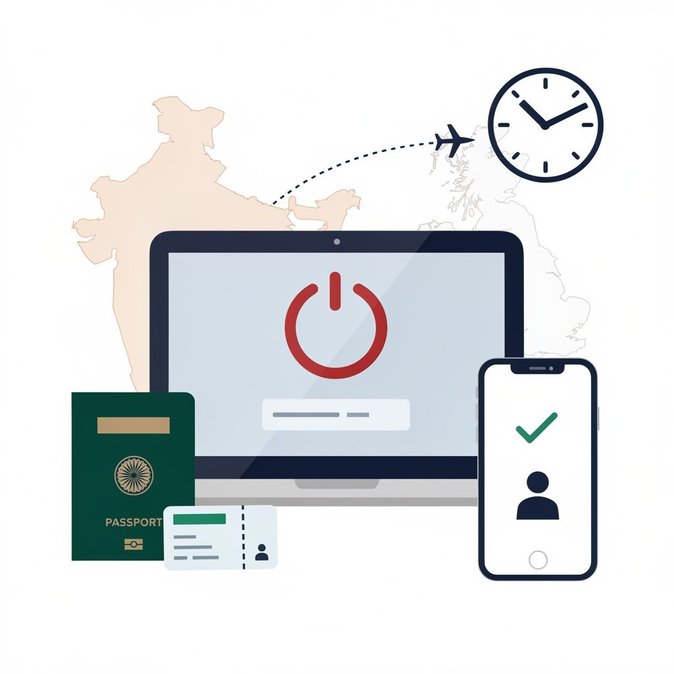
India’s DigiYatra Foundation is preparing to export its facial-recognition travel-identity platform beyond domestic airports. Chief Executive Suresh Khadakbhavi told The Financial Express on 13 June 2026 that countries including Singapore, Thailand, Vietnam and Sri Lanka are being evaluated for pilot deployments under the International Air Transport Association’s OneID standards. The international version will rely on e-passport chips rather than Aadhaar, allowing the credential to comply with foreign privacy laws such as the EU’s GDPR. Technical validation work—covering data-exchange protocols, encryption, and passenger-consent flows—will run over the next six months, with a soft launch pencilled in for early 2027.
Alongside these developments, global visa advisory platforms such as VisaHQ can simplify the paperwork that still sits outside the biometric corridor. Whether you need a Singapore business e-visa or a multi-entry Thai visa, VisaHQ’s India portal (https://www.visahq.com/india/) lets travellers and corporate travel desks complete online applications, track status updates and receive alerts on changing entry rules—services that dovetail neatly with DigiYatra’s promise of friction-free airports.
For Indian corporations the development promises a smoother end-to-end journey for regional business travellers. Once operational, an executive departing Bengaluru for Singapore could use the same biometric token at both departure and arrival gates, bypassing manual document checks and shaving minutes off connection times. However, the cross-border roll-out also introduces fresh compliance variables. Each partner country will want assurances on data retention, third-party audits and redress mechanisms. Mobility managers should monitor bilateral memoranda of understanding to understand which visa classes—and which nationalities—will be eligible for DigiYatra fast-track lanes. Domestically, DigiYatra already covers 38 airports and claims 100 million users. The platform is being integrated with hotel check-in systems and metro ticketing, broadening its relevance for relocated staff and frequent flyers alike. An overseas deployment would mark India’s entry into the global race for digital travel credentials currently led by the EU’s Digital Travel Credential and Canada’s Known Traveller Digital ID.
Alongside these developments, global visa advisory platforms such as VisaHQ can simplify the paperwork that still sits outside the biometric corridor. Whether you need a Singapore business e-visa or a multi-entry Thai visa, VisaHQ’s India portal (https://www.visahq.com/india/) lets travellers and corporate travel desks complete online applications, track status updates and receive alerts on changing entry rules—services that dovetail neatly with DigiYatra’s promise of friction-free airports.
For Indian corporations the development promises a smoother end-to-end journey for regional business travellers. Once operational, an executive departing Bengaluru for Singapore could use the same biometric token at both departure and arrival gates, bypassing manual document checks and shaving minutes off connection times. However, the cross-border roll-out also introduces fresh compliance variables. Each partner country will want assurances on data retention, third-party audits and redress mechanisms. Mobility managers should monitor bilateral memoranda of understanding to understand which visa classes—and which nationalities—will be eligible for DigiYatra fast-track lanes. Domestically, DigiYatra already covers 38 airports and claims 100 million users. The platform is being integrated with hotel check-in systems and metro ticketing, broadening its relevance for relocated staff and frequent flyers alike. An overseas deployment would mark India’s entry into the global race for digital travel credentials currently led by the EU’s Digital Travel Credential and Canada’s Known Traveller Digital ID.