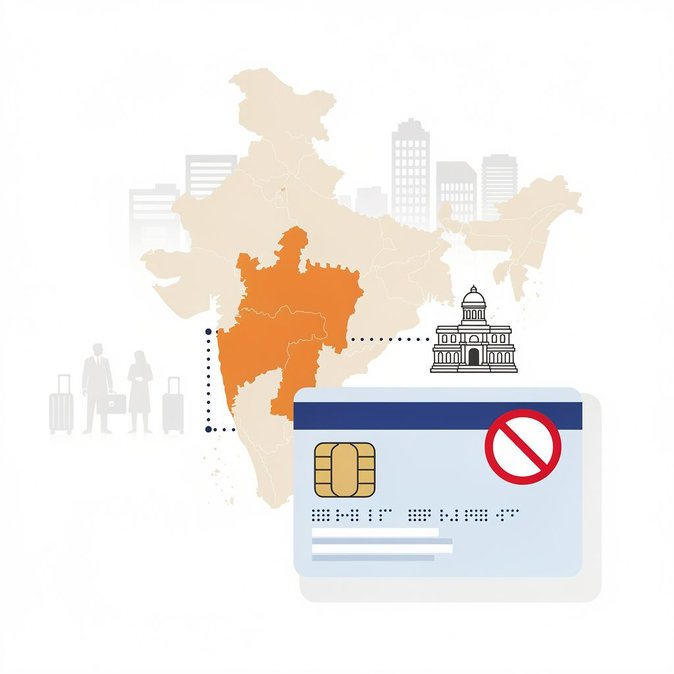
The Assam Cabinet has ordered an immediate freeze on fresh Aadhaar enrolment for residents aged 18 and above, except in tightly controlled “special-case” scenarios cleared by the state government. Announcing the decision on 13 June 2026, Chief Minister Himanta Biswa Sarma said the move is designed to prevent undocumented migrants—primarily those who have entered from neighbouring Bangladesh—from acquiring the biometric ID that unlocks a host of welfare and travel benefits. Under the new protocol, adults seeking Aadhaar will have to route applications through their district commissioners, who must submit individual proposals to the state’s Home Department.
For organisations and individuals grappling with the new verification hurdles, VisaHQ can provide end-to-end assistance. Through its India portal (https://www.visahq.com/india/), the company tracks state-level ID rules in real time, arranges document translations, schedules government appointments and helps applicants assemble fallback proofs of identity—services that can ease mobility planning while the Aadhaar freeze is in effect.
Tea-garden workers and Scheduled-Tribe communities receive a temporary exemption until 31 March 2027 because enrolment levels in those groups remain low. Aadhaar issuance for minors continues unchanged. Assam sits on the front line of South Asia’s most complex migration corridor, sharing a 263-kilometre riverine border with Bangladesh. The state’s National Register of Citizens (NRC) process—an exercise to verify legal residency—has already excluded 1.9 million people, many still appealing their status. Linking Aadhaar to NRC data gives authorities another filter to detect forged documents at the point of enrolment. For mobility practitioners the change raises practical challenges. Corporate assignees transferring to Assam may now struggle to obtain new Aadhaar numbers for spouses who do not yet hold the ID, complicating tax filings, SIM-card purchases and domestic travel bookings that require Aadhaar verification. Companies should advise relocating employees to secure Aadhaar cards before entry or plan for alternative KYC documentation, such as PAN or passports, when setting up utilities and bank accounts. Civil-liberty groups have criticised the policy as overly restrictive, warning that genuine Indian citizens without documentation risk being shut out of essential services. The state government counters that saturation levels in many districts exceed 100 percent, indicating multiple or fraudulent enrolments. A legal challenge in the Gauhati High Court is widely expected, but until then the freeze remains in force, adding a new layer of compliance for HR teams moving staff into the North-East.
For organisations and individuals grappling with the new verification hurdles, VisaHQ can provide end-to-end assistance. Through its India portal (https://www.visahq.com/india/), the company tracks state-level ID rules in real time, arranges document translations, schedules government appointments and helps applicants assemble fallback proofs of identity—services that can ease mobility planning while the Aadhaar freeze is in effect.
Tea-garden workers and Scheduled-Tribe communities receive a temporary exemption until 31 March 2027 because enrolment levels in those groups remain low. Aadhaar issuance for minors continues unchanged. Assam sits on the front line of South Asia’s most complex migration corridor, sharing a 263-kilometre riverine border with Bangladesh. The state’s National Register of Citizens (NRC) process—an exercise to verify legal residency—has already excluded 1.9 million people, many still appealing their status. Linking Aadhaar to NRC data gives authorities another filter to detect forged documents at the point of enrolment. For mobility practitioners the change raises practical challenges. Corporate assignees transferring to Assam may now struggle to obtain new Aadhaar numbers for spouses who do not yet hold the ID, complicating tax filings, SIM-card purchases and domestic travel bookings that require Aadhaar verification. Companies should advise relocating employees to secure Aadhaar cards before entry or plan for alternative KYC documentation, such as PAN or passports, when setting up utilities and bank accounts. Civil-liberty groups have criticised the policy as overly restrictive, warning that genuine Indian citizens without documentation risk being shut out of essential services. The state government counters that saturation levels in many districts exceed 100 percent, indicating multiple or fraudulent enrolments. A legal challenge in the Gauhati High Court is widely expected, but until then the freeze remains in force, adding a new layer of compliance for HR teams moving staff into the North-East.