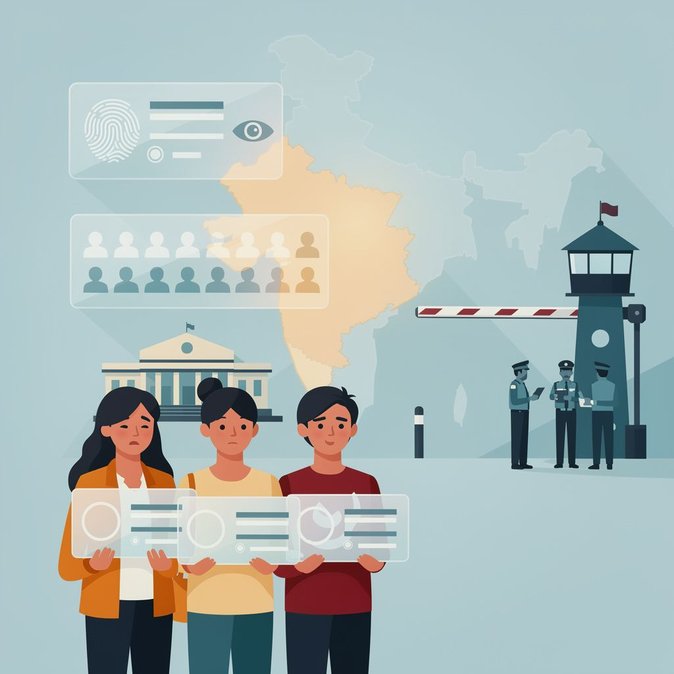
In a surprise weekend decision, Assam’s cabinet has ordered an immediate suspension of fresh Aadhaar enrolments for anyone aged 18 or above, unless the applicant’s biometrics are cleared against the state’s National Register of Citizens (NRC) database and vetted by the district collector. Chief Minister Himanta Biswa Sarma told reporters that the move is aimed at preventing “infiltrators from Bangladesh” from obtaining India’s key digital‐ID credential and, by extension, accessing welfare schemes, SIM cards and even voter rolls. Assam already has one of the highest Aadhaar saturation rates in the country—official data show certain districts exceed 100 percent coverage because migrants often hold multiple cards. Under the new rules, only tribal, Scheduled Caste and tea-garden communities—groups with historically low enrolment—remain exempt until 31 March 2027. After that date, every adult application will require cabinet-level approval. Children under 18 can still register freely. For multinational employers running plants in Assam or placing expatriates in the state, the decision adds a fresh documentary layer. Workers who turn 18 will no longer be able to walk into an Aadhaar centre; HR teams must instead budget several weeks for the collector-level clearance process. Foreign companies that hire local subcontractors will likewise need to verify that new hires possess valid Aadhaar numbers issued before the freeze or hold exemption letters. The clampdown also has wider immigration-compliance implications. Officers at airports and land checkpoints in the Northeast frequently treat Aadhaar as a proxy ID for Indian citizenship. With issuance now restricted, individuals without Aadhaar—especially cross-border truck drivers and seasonal labourers—could see increased scrutiny. Logistics providers moving goods through the Siliguri Corridor to Bhutan and Bangladesh should therefore factor in longer document checks at border crossings. Politically, the order signals that New Delhi’s “detect, delete, deport” mantra on illegal migration is filtering down to state policy levers. Observers say other border states such as West Bengal and Tripura may consider similar Aadhaar restrictions if Assam’s experiment is deemed effective. Corporates with mobile workforces in these regions should prepare for a patchwork of identity-verification standards in the coming months.
Source: The Indian Express