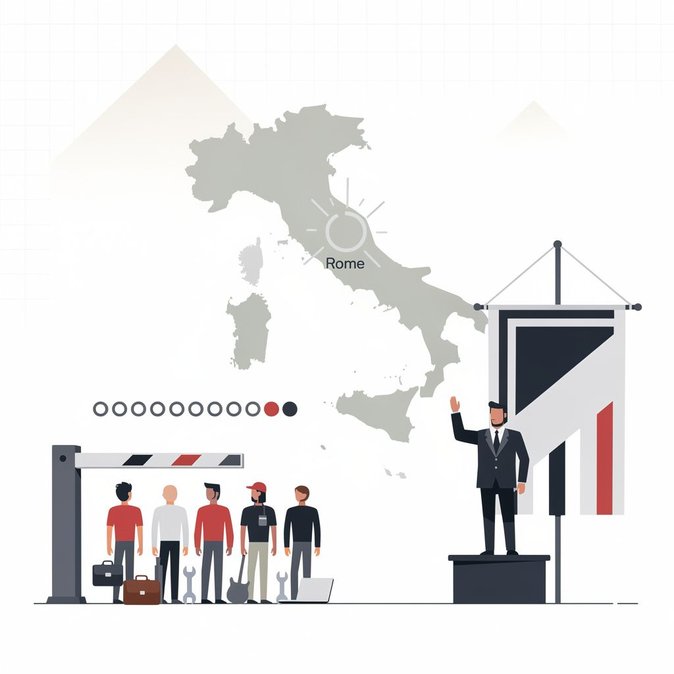
Rome became the epicentre of Europe’s migration debate on 13 – 14 June when two huge demonstrations—one demanding the mass “remigration” of foreigners, the other defending an open, multi-ethnic Italy—converged on the capital. Police kept the marches several kilometres apart, but the political message was impossible to miss: the far-right citizens’ bill “Remigration and Reconquest” has gathered the 50,000 signatures needed for parliamentary debate, thrusting a previously fringe idea—forced or incentivised return of migrants—into the legislative mainstream. Under the initiative, foreign nationals (including some with legal status) could face coercive returns, cash “exit bonuses” and strict assimilation tests. Critics across Italy’s business community fear that such measures would collide with labour-market reality: between 2023 and 2025 Italy issued more than 450,000 work permits for non-EU nationals to plug chronic shortages in logistics, hospitality and elder-care. Employers warn a sudden rollback would undermine growth just as EU Recovery Plan funds begin to flow. The pro-migration counter-march, backed by trade-union confederations and NGOs, stressed exactly that point. Speakers highlighted that 9.6 percent of Italy’s GDP is generated by foreign-born workers and that demographic decline means the country will need at least 200,000 additional immigrants per year to stabilise its pension system. They urged Parliament, when the bill is formally tabled later this summer, to reject “economically self-destructive” proposals. For global mobility managers the weekend’s events are a bell-wether. Although the bill’s chances of passage remain uncertain—Premier Giorgia Meloni’s coalition is split—its mere arrival in Parliament could prolong processing times for work permits or spur tougher residency checks, as officials scramble to show they are not “soft” on immigration. Corporations with expatriates in Italy should monitor parliamentary schedules, prepare legal briefings for staff, and review contingency plans for dependent family visas that might come under additional scrutiny if the political climate hardens. Practical takeaway: keep employees’ permit files immaculate, include extra buffer time for renewals in Q3-Q4 2026, and be ready to answer questions from Italian HR over workforce diversity ratios—an issue likely to gain profile as the public debate intensifies.