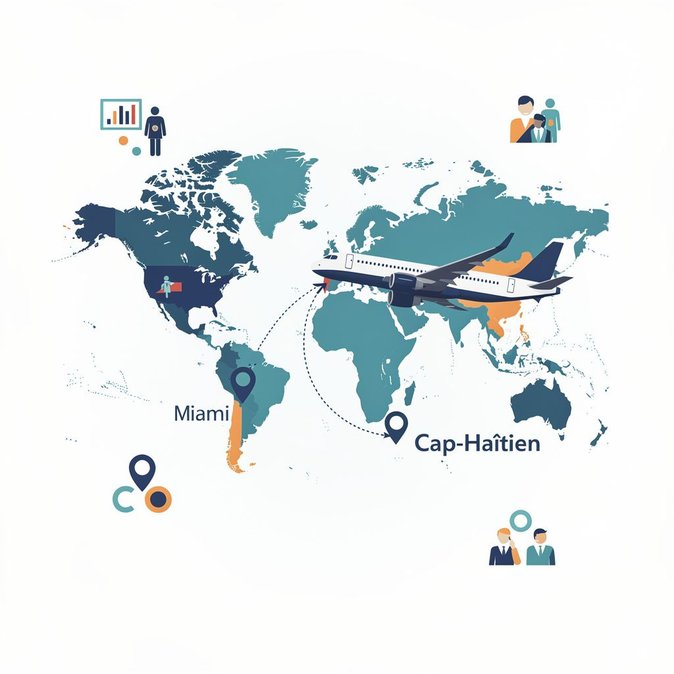
American Airlines announced on 13 June that it will resume nonstop flights from Miami International Airport (MIA) to Cap-Haïtien International (CAP) on 1 November 2027, becoming the first US carrier to commit to re-entering Haiti since the Federal Aviation Administration imposed a flight ban in 2024. The route, suspended during the pandemic and later blocked by security restrictions, will operate with Boeing 737 aircraft offering 172 seats, including 16 in business class. Although the launch date is more than a year away, the commitment is significant for the Haitian diaspora and US businesses with interests in the region. Cap-Haïtien is Haiti’s second-largest city and a gateway to the country’s northern manufacturing zone, where American apparel and agribusiness firms maintain operations. Current travel options for US passport holders are limited to foreign carriers via the Dominican Republic, adding time and cost. The restart hinges on the FAA’s intention to lift its security ban on flights to Port-au-Prince by September 2026. By serving CAP rather than the capital, American Airlines is hedging against continued instability while tapping unmet demand: South Florida hosts the largest Haitian-American community in the US, and one-stop itineraries from New York and Orlando will become possible. For mobility managers, the announcement provides a planning horizon for assignee rotations and project work in Haiti. Companies should monitor travel-security advisories closely; the US State Department still assigns Haiti a Level 4 “Do Not Travel” warning, and corporate policies may require bespoke risk assessments. Travel-insurance providers are likely to update coverage once US carriers return, potentially lowering premiums. The new Haiti service was revealed alongside a fresh route from Miami to Maracaibo, Venezuela, underscoring American’s strategy to expand in underserved Caribbean and northern South American markets as economic conditions stabilise. Competitive carriers are expected to follow if security benchmarks are met, further easing mobility between the US and the region.
Source: The Street