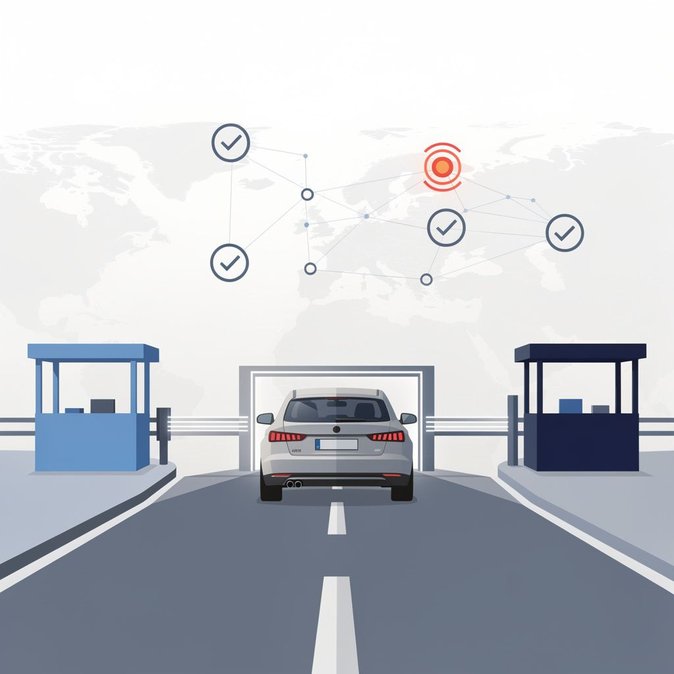
In a major step towards closer post-Brexit operational cooperation, the Home Office confirmed on 15 June that British police forces can now query the EU’s Prüm vehicle-registration database and receive keeper details in roughly ten seconds. Until now, forces had to request information through mutual-assistance channels, a process that could take days or weeks and often left investigators with little real-time intelligence when tracking smuggling convoys arriving at the Channel ports. The upgrade extends the UK’s existing participation in Prüm (which already covers fingerprints and DNA) to number-plate data. Detectives will be able to check EU-registered vans and cars spotted near clandestine arrival points, border staging sites or safe houses and immediately see whether the vehicle is stolen, who owns it and where it is normally kept. The first live rollout is taking place with the Police Service of Northern Ireland before a national launch later this summer. For mobility, relocation and travel-security teams the change should translate into fewer large-scale disruption operations at airports and ports, where Border Force previously had to hold vehicles while overseas enquiries were made. Faster identification of high-risk vehicles could also reduce random spot checks on legitimate corporate travellers using EU hire cars when driving into the UK. Reciprocity means EU authorities will gain access to Driver and Vehicle Licensing Agency (DVLA) records, helping them trace UK-registered vehicles used by organised crime on the continent. All data sharing is governed by the UK-EU Trade and Cooperation Agreement and domestic data-protection law, with audits built in to reassure privacy regulators. The announcement lands just weeks before the second UK-EU summit in Brussels and will be seen by business groups as a sign that practical cooperation on cross-border security is still progressing despite wider political tensions. Employers moving staff or goods across the Channel should however brief drivers that number-plate recognition is now fully connected and that vehicle documents must be kept up to date to avoid false alerts during the bedding-in period.
Source: Home Office