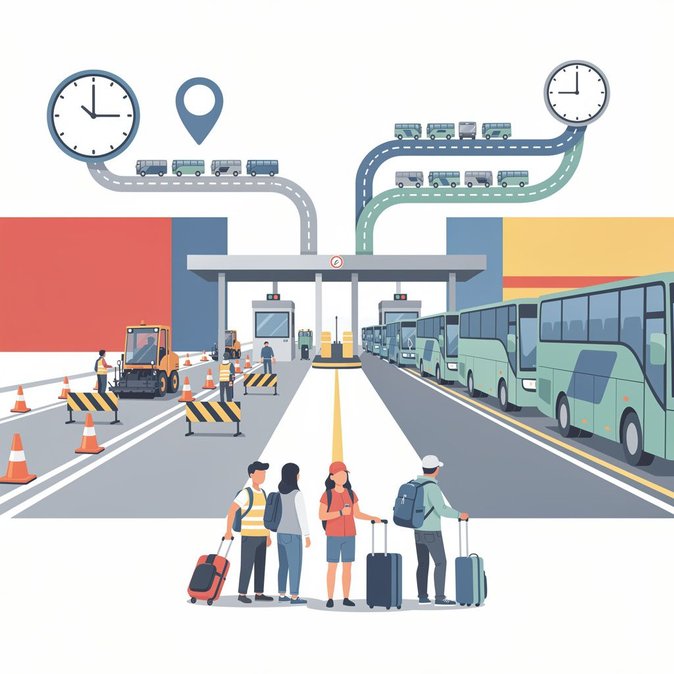
Poland’s busiest road connection with Ukraine is bracing for one of its most disruptive maintenance projects in years. From Monday, 15 June 2026, the Polish Border Guard will begin resurfacing the two dedicated bus lanes at the Medyka checkpoint, opposite Ukraine’s Shehyni post in Lviv oblast. Polish officials told their Ukrainian counterparts that throughput on the lanes will drop to just eight buses per 12-hour shift while the works are under way. Although no formal closure is planned, the Western Regional Directorate of Ukraine’s State Border Guard Service has already asked carriers to re-route or re-time journeys. The Shehyni–Medyka crossing normally handles up to 200 international coaches every 24 hours, funneling migrant workers, students and cross-border traders into south-eastern Poland. Operators warn that a sudden capacity reduction of more than 90 % could add several hours to the east-west journey and create kilometre-long tailbacks on the Ukrainian side of the fence, especially during the peak summer travel season. Tour organisers serving the Polish resort towns of Krynica-Zdrój and Zakopane have already begun issuing revised timetables and advising passengers to arrive at departure points two hours earlier than usual. For employers, the knock-on effects may extend well beyond passenger frustration. Many Ukrainian seasonal workers—particularly those in construction and agriculture—enter Poland by bus. Longer waits at the frontier can translate into delayed project start-dates, overtime costs and higher prices for door-to-door transport. Logistics firms running driver-accompanied vans also fear secondary congestion, as coaches caught in queues block access lanes shared with light commercial vehicles. Practical mitigation steps include switching to lesser-used crossings such as Krościenko–Smolnica or Budomierz–Hruszów, where current bus volume is less than 25 % of Medyka’s. Companies should also monitor the live queue dashboards provided by the Polish and Ukrainian border services and build a minimum 12-hour buffer into critical-timed staff movements. The repair programme is scheduled to last six weeks, but officials concede that bad weather or unforeseen engineering complications could push completion into August. Travelers are therefore urged to keep tickets flexible and stay alert for further official communiqués.
Source: Ukrainian National News (UNN)