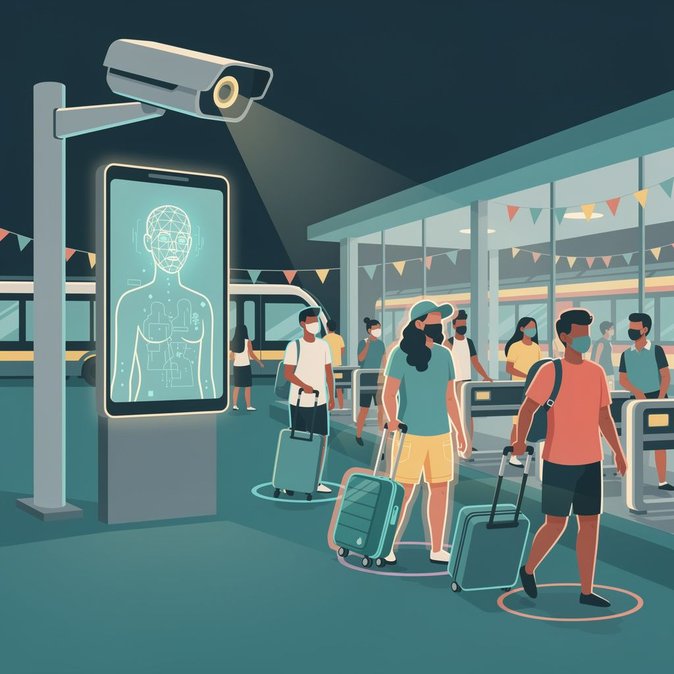
Bahia’s Secretariat for Public Security (SSP-BA) confirmed on 15 June that its statewide facial-recognition platform flagged and facilitated the arrest of ten wanted criminals during the first weekend of Operação São João 2026. The holiday marks one of Brazil’s largest domestic-travel peaks, with 1.5 million Brazilians expected to transit through Salvador and interior towns for traditional street festivals. The system—comprising fixed cameras in transport terminals and mobile elevated observation units—cross-checked live images against a database of 65,000 warrants. Among those captured were homicide suspects and a felon owing child support, intercepted as they entered regional bus stations in Jandaíra and Cardeal da Silva. SSP-BA invested R$45 million this year to expand biometric coverage to rural festival sites after a 2025 pilot slashed pick-pocketing by 32 percent. For mobility managers the technology offers dual benefits: enhanced traveller safety and faster pedestrian throughput, since random ID checks at roadblocks have been reduced by 40 percent. However, privacy advocates urge companies to brief employees on Brazil’s General Data Protection Law (LGPD) and obtain consent when collecting travel-risk data that may include facial images. The state says data are retained only long enough to confirm a match and are erased within 24 hours if no alert is triggered.