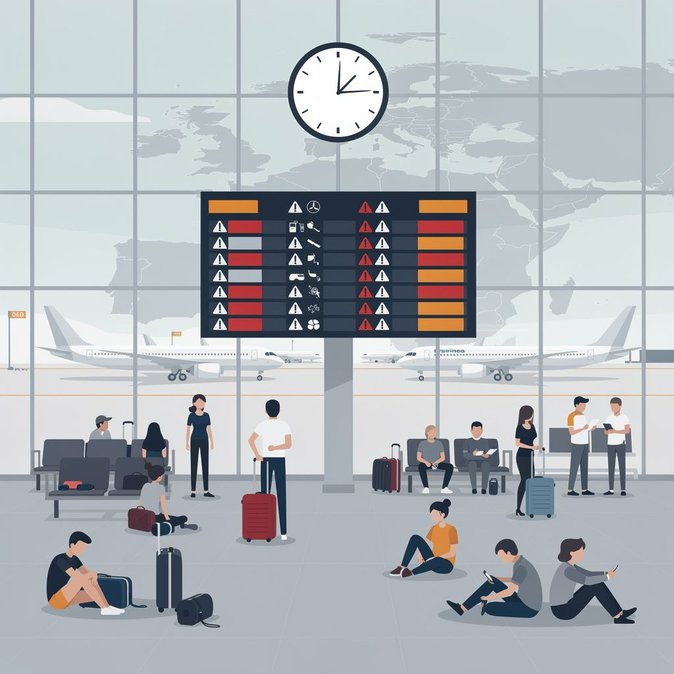
Spain’s flagship hub, Adolfo Suárez Madrid-Barajas, suffered a dramatic operational collapse on 17 June, logging 163 delays and seven cancellations across Iberia, Air Europa, Ryanair and other carriers. Aviation-news outlet Nomad Lawyer describes the episode as “a catastrophic breakdown” triggered by record passenger volumes, tight turnaround windows and air-traffic-control slot restrictions. Because Barajas is the primary bridge between Europe and Latin America, long-haul services bore the brunt of the disruption, with knock-on effects spreading to short-haul rotations throughout the day. Analysts point to a structural problem: the airport is operating at near-capacity, leaving little slack to absorb minor glitches. Once a morning arrival is delayed, its aircraft, crew and gate slot create a domino chain that ripples across the network. Under EU261, passengers delayed more than three hours are entitled to meals, hotel accommodation and up to €600 in compensation. Consumer groups urge travellers to document delays and file claims directly, rather than accept travel-voucher offers. For mobility teams, the incident highlights the fragility of corporate itineraries routed through mega-hubs. Best practice is to schedule at least a three-hour buffer for connections at MAD during the June–August peak and to monitor the Aena app for real-time gate changes. Aena has yet to publish an incident report, but industry insiders say the chaos will feed calls for a long-mooted Terminal 5 expansion and for greater integration of Europe’s fragmented air-traffic-control zones.
Source: Nomad Lawyer