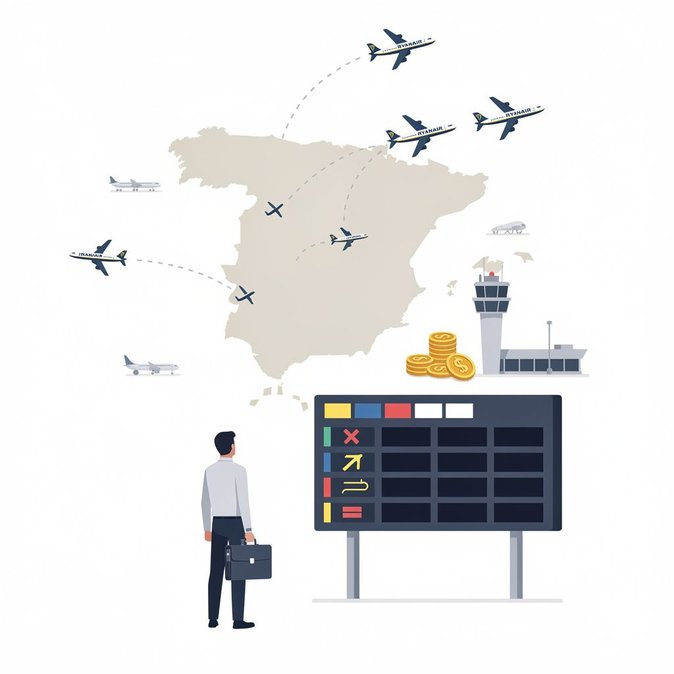
Ryanair has renewed its public battle with Spain’s Transport Ministry and airport operator Aena, arguing that successive increases in airport charges—4.1 % in 2024 and 6.4 % this year—are eroding Spain’s competitiveness. In comments published on 16 June, the carrier confirmed it will leave three million seats off its winter 2026 schedule and is “evaluating further cuts” if fees are not frozen. Since 2024 Ryanair has closed its base in Santiago de Compostela and halted operations in Valladolid, Jerez, Asturias, Tenerife Norte and Vigo. The airline maintains growth in Málaga and Alicante but contends that regional airports could lose connectivity just as Spain prepares for the 2030 World Cup tourism boom. For corporate mobility planners, the dispute raises uncertainty over medium-haul lift from secondary cities. Companies with manufacturing plants in Galicia and Andalusia may need to reroute travellers via Madrid or Lisbon, adding cost and time. Trade-promotion agencies warn that reduced frequencies could deter foreign investment in affected regions. Aena counters that fee hikes merely adjust for inflation after a decade-long freeze and fund terminal upgrades, sustainability projects and biometric boarding lanes. The operator notes that even after the increase, its average charge per departing passenger (€10.28) remains below the EU-airport average of €12.90. Negotiations are at a stand-off. Ryanair wants a long-term cap and performance-based discounts. Madrid says any further relief would breach the watchdog-approved regulatory framework. Analysts expect Ryanair to use capacity allocation for summer 2027 as its next bargaining chip.
Source: EL PAÍS