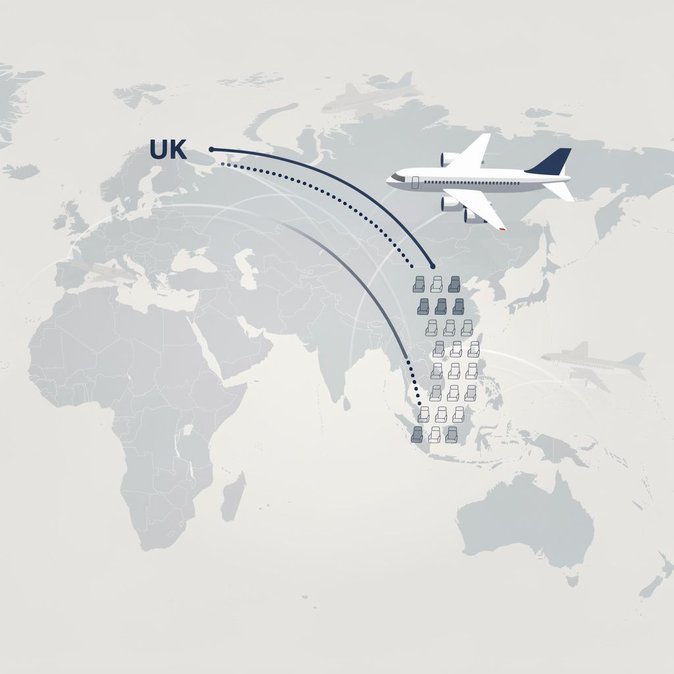
Industry data published on 16 June show seat capacity between India and the UK up 18.7 % year-on-year for June holiday travel, even as carriers slash flights to West and South-East Asia amid high fuel costs and airspace restrictions linked to the Iran war. British Airways and Lufthansa are leading the charge with larger aircraft and extra frequencies.
At the same time, obtaining the right travel documentation remains critical. Platforms such as VisaHQ streamline the visa application process for both UK-based executives heading to India and Indian nationals coming to Britain, offering real-time status updates, document checks and dedicated support (https://www.visahq.com/united-kingdom/). By outsourcing the paperwork, travel teams can focus on maximising the new seat availability rather than chasing consular appointments.
For UK-based travel managers this means greater availability – and potentially softer fares – on South Asian long-haul sectors, helping relieve pressure on corporate budgets during the peak summer window. The shift also underscores the strategic importance of point-to-point capacity as conflict and overflight bans make traditional Gulf hub connections less attractive. However, volatility remains: surcharges linked to rerouted flight paths over Pakistan and the Caucasus continue to inflate operational costs. Companies should monitor fare classes closely and advise travellers that last-minute inventory may still tighten if geopolitical risks escalate. Longer term, the capacity swing could accelerate secondary-airport development in the UK as airlines look for additional slots. Regional chambers are already lobbying for incentives to attract new direct services from Indian tier-two cities.
At the same time, obtaining the right travel documentation remains critical. Platforms such as VisaHQ streamline the visa application process for both UK-based executives heading to India and Indian nationals coming to Britain, offering real-time status updates, document checks and dedicated support (https://www.visahq.com/united-kingdom/). By outsourcing the paperwork, travel teams can focus on maximising the new seat availability rather than chasing consular appointments.
For UK-based travel managers this means greater availability – and potentially softer fares – on South Asian long-haul sectors, helping relieve pressure on corporate budgets during the peak summer window. The shift also underscores the strategic importance of point-to-point capacity as conflict and overflight bans make traditional Gulf hub connections less attractive. However, volatility remains: surcharges linked to rerouted flight paths over Pakistan and the Caucasus continue to inflate operational costs. Companies should monitor fare classes closely and advise travellers that last-minute inventory may still tighten if geopolitical risks escalate. Longer term, the capacity swing could accelerate secondary-airport development in the UK as airlines look for additional slots. Regional chambers are already lobbying for incentives to attract new direct services from Indian tier-two cities.