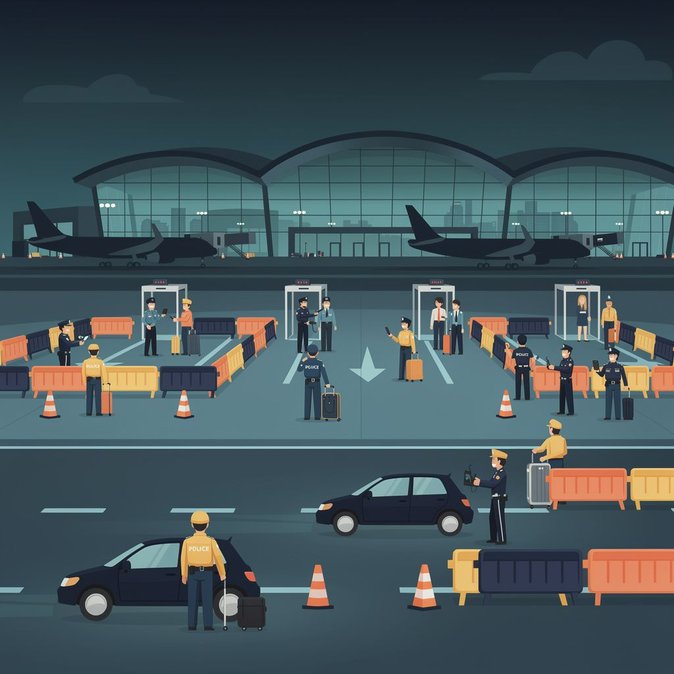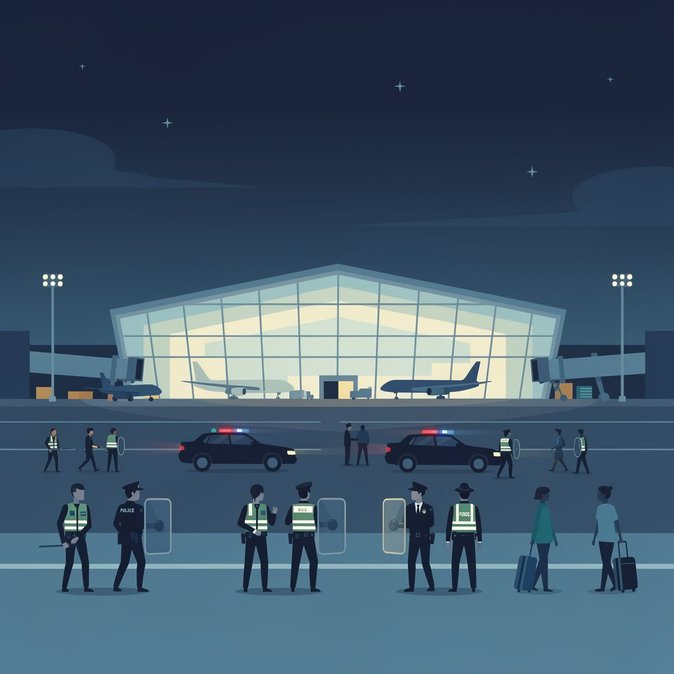
Hong Kong’s security agencies put Hong Kong International Airport (HKIA) under a stress test overnight on 16-17 June during “Securewall”, the city’s largest ever inter-departmental counter-terrorism and major-incident exercise. More than 1,400 officers from the Police Force, Airport Authority, Fire Services, Immigration Department, Customs, Civil Aviation Department and Hospital Authority rehearsed scenarios ranging from an aircraft-side hostage situation to a terminal-wide power outage.
Travel planners should also note that securing the correct travel documents remains critical. VisaHQ’s Hong Kong page (https://www.visahq.com/hong-kong/) offers a fast, online service for obtaining visas and travel authorizations, with dedicated support for corporate groups heading to the upcoming summits. By outsourcing paperwork to VisaHQ, companies can keep focus on itinerary adjustments while ensuring every delegate meets entry requirements smoothly.
The drill doubled as the Airport Authority’s biennial “Carcanet” exercise and was timed to precede a packed calendar of international events—most notably November’s Global Financial Leaders’ Investment Summit and December’s WTO ministerial—when the airport will handle a surge of VIP arrivals. Commanders tested the rapid deployment of the airport’s newly expanded Counter-terrorism Response Unit, cross-agency communications on the airport’s 5G private network, and the use of AI-enabled crowd-monitoring cameras at all passenger choke points. For business travellers the immediate impact is minimal: HKIA remained fully operational, with most live-fire elements confined to a closed pier and backup taxiway. However, airlines were briefed to expect short, unannounced lockdowns of individual gates in the coming months as authorities continue live drills. Corporate travel managers are being advised to build slightly longer connection buffers for tight transfers and to remind travellers that armed Police Tactical Unit foot patrols in the terminal are now a permanent fixture rather than a sign of an unfolding incident. Security consultants say the exercise underlines Hong Kong’s ambition to position itself as the safest large hub in Asia following the pandemic. Enhanced preparedness is viewed favourably by multinational insurers assessing event-contingent policies, and by risk-averse corporates considering relocating regional meetings back to Hong Kong. At the same time, privacy advocates have called for clearer sunset clauses on the retention of biometric data captured by the new surveillance systems. The government has promised to publish a post-exercise report next quarter outlining lessons learnt and any legislative follow-up.
Travel planners should also note that securing the correct travel documents remains critical. VisaHQ’s Hong Kong page (https://www.visahq.com/hong-kong/) offers a fast, online service for obtaining visas and travel authorizations, with dedicated support for corporate groups heading to the upcoming summits. By outsourcing paperwork to VisaHQ, companies can keep focus on itinerary adjustments while ensuring every delegate meets entry requirements smoothly.
The drill doubled as the Airport Authority’s biennial “Carcanet” exercise and was timed to precede a packed calendar of international events—most notably November’s Global Financial Leaders’ Investment Summit and December’s WTO ministerial—when the airport will handle a surge of VIP arrivals. Commanders tested the rapid deployment of the airport’s newly expanded Counter-terrorism Response Unit, cross-agency communications on the airport’s 5G private network, and the use of AI-enabled crowd-monitoring cameras at all passenger choke points. For business travellers the immediate impact is minimal: HKIA remained fully operational, with most live-fire elements confined to a closed pier and backup taxiway. However, airlines were briefed to expect short, unannounced lockdowns of individual gates in the coming months as authorities continue live drills. Corporate travel managers are being advised to build slightly longer connection buffers for tight transfers and to remind travellers that armed Police Tactical Unit foot patrols in the terminal are now a permanent fixture rather than a sign of an unfolding incident. Security consultants say the exercise underlines Hong Kong’s ambition to position itself as the safest large hub in Asia following the pandemic. Enhanced preparedness is viewed favourably by multinational insurers assessing event-contingent policies, and by risk-averse corporates considering relocating regional meetings back to Hong Kong. At the same time, privacy advocates have called for clearer sunset clauses on the retention of biometric data captured by the new surveillance systems. The government has promised to publish a post-exercise report next quarter outlining lessons learnt and any legislative follow-up.