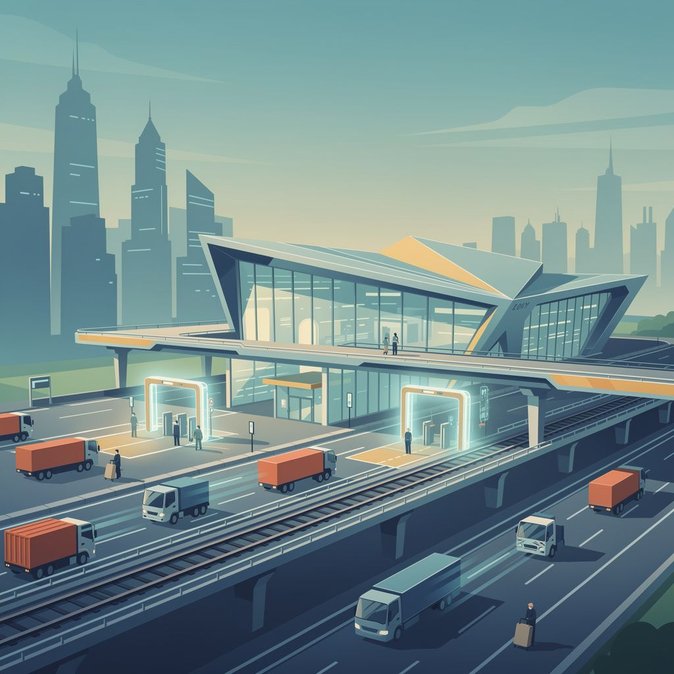
China’s top official for Hong Kong affairs, Xia Baolong, spent Wednesday afternoon touring the almost-completed Huanggang Port in Shenzhen — set to become the world’s largest land border checkpoint when it opens next month. Flanked by Chief Executive John Lee and transport secretary Lam Sai-hung, Xia walked through the passenger halls and was briefed on facial-recognition e-channel trials as well as dedicated lanes for cross-border autonomous vehicles.
Travel managers coordinating these increasingly frequent cross-boundary trips can simplify visa and travel document requirements through VisaHQ, which offers an online Hong Kong portal (https://www.visahq.com/hong-kong/) that tracks entry rules, arranges China visas, and provides real-time support—particularly valuable as new clearance protocols come into force.
The new complex replaces the 1989-era Huanggang facility and is designed to operate around the clock, something business groups have long argued is essential for just-in-time logistics between Hong Kong’s finance hub and Shenzhen’s manufacturing belt. According to project managers, automated kiosks will cut immigration and customs processing to under three minutes per traveller, while an adjoining bonded-logistics centre will give e-commerce exporters direct highway access to Yantian Port. During the visit, Xia said the port is a "signature piece" of the Northern Metropolis blueprint, noting that a through-train connection and a dedicated electric-truck corridor will follow in 2028. The inspection comes as cross-boundary traffic has rebounded to 85 % of pre-pandemic levels, straining several ageing checkpoints during peak hours. For employers moving personnel or high-value goods, the upgrade promises shorter door-to-door times between Hong Kong CBD offices and Shenzhen R&D parks. Firms that rely on late-night shifts — particularly data-centre engineers, media crews and live-seafood traders — are expected to be early beneficiaries of the 24-hour clearance. Authorities have yet to publish detailed operating procedures, but sources say the Immigration Department will extend the existing "Smart Departure" QR-code pre-clearance to corporate shuttle buses, allowing groups of expatriate staff to be processed in bulk. Mobility teams should start mapping new ground-transport routings and review staff travel insurance limits ahead of the July launch.
Travel managers coordinating these increasingly frequent cross-boundary trips can simplify visa and travel document requirements through VisaHQ, which offers an online Hong Kong portal (https://www.visahq.com/hong-kong/) that tracks entry rules, arranges China visas, and provides real-time support—particularly valuable as new clearance protocols come into force.
The new complex replaces the 1989-era Huanggang facility and is designed to operate around the clock, something business groups have long argued is essential for just-in-time logistics between Hong Kong’s finance hub and Shenzhen’s manufacturing belt. According to project managers, automated kiosks will cut immigration and customs processing to under three minutes per traveller, while an adjoining bonded-logistics centre will give e-commerce exporters direct highway access to Yantian Port. During the visit, Xia said the port is a "signature piece" of the Northern Metropolis blueprint, noting that a through-train connection and a dedicated electric-truck corridor will follow in 2028. The inspection comes as cross-boundary traffic has rebounded to 85 % of pre-pandemic levels, straining several ageing checkpoints during peak hours. For employers moving personnel or high-value goods, the upgrade promises shorter door-to-door times between Hong Kong CBD offices and Shenzhen R&D parks. Firms that rely on late-night shifts — particularly data-centre engineers, media crews and live-seafood traders — are expected to be early beneficiaries of the 24-hour clearance. Authorities have yet to publish detailed operating procedures, but sources say the Immigration Department will extend the existing "Smart Departure" QR-code pre-clearance to corporate shuttle buses, allowing groups of expatriate staff to be processed in bulk. Mobility teams should start mapping new ground-transport routings and review staff travel insurance limits ahead of the July launch.