
French President Emmanuel Macron arrived in Brussels on Thursday afternoon for a European Council that could shape corporate immigration planning for years. According to the European Parliament’s official press kit, migration, security and competitiveness dominate the 18-19 June summit, the first since the provisional political agreement on the EU’s revamped Returns Directive cleared Parliament the previous day. France—already aligning national law with the EU Pact on Migration and Asylum via Decree 2026-454 earlier this month—wants rapid adoption of common rules that shorten appeal deadlines, add detention grounds for absconding risks and expand mutual recognition of entry bans.
Companies scrambling to understand how these evolving rules may affect business travel and long-term assignments can lean on specialist platforms such as VisaHQ, which already consolidates French and EU visa requirements in one dashboard and offers alerting tools for upcoming policy shifts. Their France portal (https://www.visahq.com/france/) lets mobility teams preview documentation needs, track application statuses in real time and book on-demand consultations—services that will prove invaluable once the Returns Directive starts feeding EES data into national systems.
The Élysée argues that harmonised procedures will reduce forum-shopping and give companies faster clarity on whether a foreign hire may regularise status after an expired visa. Critics, including several French NGOs, warn that accelerated returns could limit access to legal counsel and risk refoulement. For global mobility managers, the stakes are practical: once the directive enters force, Schengen states will interconnect national case-management systems with the EU’s Entry/Exit System (EES). Overstays logged digitally at French borders would automatically feed into a pan-European returns database, making it harder for non-EU assignees to “reset” their status by moving between member states. Failure to meet new information-sharing deadlines could see France referred to the Court of Justice—something Paris is keen to avoid after past infringement proceedings over residence-permit backlogs. Parallel talks on the EU’s competitiveness agenda also matter. France supports earmarking Horizon Europe surplus funds for a new talent-attraction programme modelled on its own “Passeport Talent” visa, which issued a record 24,300 permits in 2025. Council conclusions are expected late Friday; if heads of government endorse the returns deal, Parliament aims for a plenary vote in October, with implementation two years later. Companies planning intra-EU moves in 2027-2028 should therefore begin mapping compliance workflows now. The French Interior Ministry will brief industry associations next week on how the draft directive dovetails with national plans to merge prefecture IT back-offices into a single “France Mobilité” portal. Early adopters in the aerospace and luxury-goods sectors have been invited to a pilot running from September that will test automated data feeds to the EU return-cases platform.
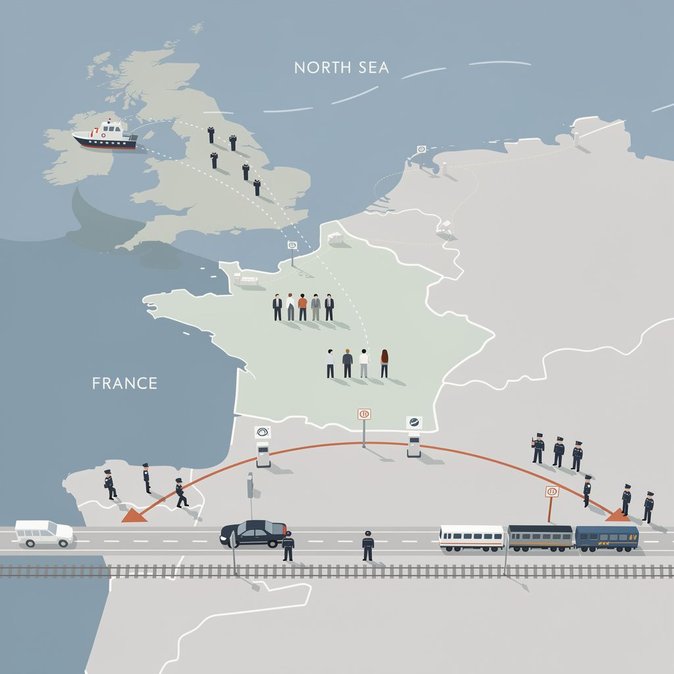
Companies scrambling to understand how these evolving rules may affect business travel and long-term assignments can lean on specialist platforms such as VisaHQ, which already consolidates French and EU visa requirements in one dashboard and offers alerting tools for upcoming policy shifts. Their France portal (https://www.visahq.com/france/) lets mobility teams preview documentation needs, track application statuses in real time and book on-demand consultations—services that will prove invaluable once the Returns Directive starts feeding EES data into national systems.
The Élysée argues that harmonised procedures will reduce forum-shopping and give companies faster clarity on whether a foreign hire may regularise status after an expired visa. Critics, including several French NGOs, warn that accelerated returns could limit access to legal counsel and risk refoulement. For global mobility managers, the stakes are practical: once the directive enters force, Schengen states will interconnect national case-management systems with the EU’s Entry/Exit System (EES). Overstays logged digitally at French borders would automatically feed into a pan-European returns database, making it harder for non-EU assignees to “reset” their status by moving between member states. Failure to meet new information-sharing deadlines could see France referred to the Court of Justice—something Paris is keen to avoid after past infringement proceedings over residence-permit backlogs. Parallel talks on the EU’s competitiveness agenda also matter. France supports earmarking Horizon Europe surplus funds for a new talent-attraction programme modelled on its own “Passeport Talent” visa, which issued a record 24,300 permits in 2025. Council conclusions are expected late Friday; if heads of government endorse the returns deal, Parliament aims for a plenary vote in October, with implementation two years later. Companies planning intra-EU moves in 2027-2028 should therefore begin mapping compliance workflows now. The French Interior Ministry will brief industry associations next week on how the draft directive dovetails with national plans to merge prefecture IT back-offices into a single “France Mobilité” portal. Early adopters in the aerospace and luxury-goods sectors have been invited to a pilot running from September that will test automated data feeds to the EU return-cases platform.