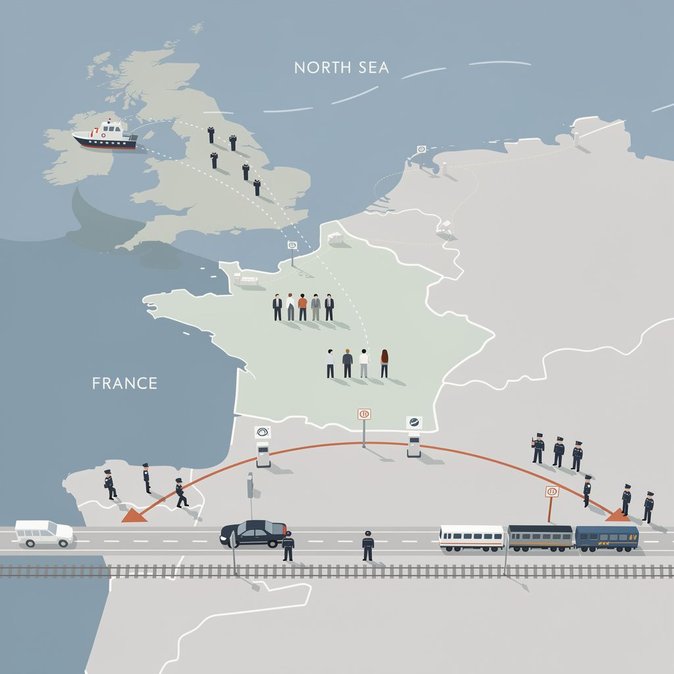
On 18 June the governor of West Flanders, Carl Decaluwé, warned that Belgium had become the new “launch pad” for small-boat journeys to the UK, with more than 400 interceptions so far this year. Speaking to local media, he urged authorities to step up joint patrols with France along the Ypres–Dunkirk corridor and to resurrect the 2016 Franco-Belgian mobile-border-control units. While the English Channel crossings crisis has largely focused on northern French beaches, smugglers are increasingly bussing migrants from Calais to Belgian resorts such as De Panne and Nieuwpoort to dodge French gendarmerie patrols. UK Home Office data confirm a 37 % rise in departures traced to Belgian shores in Q1 2026.
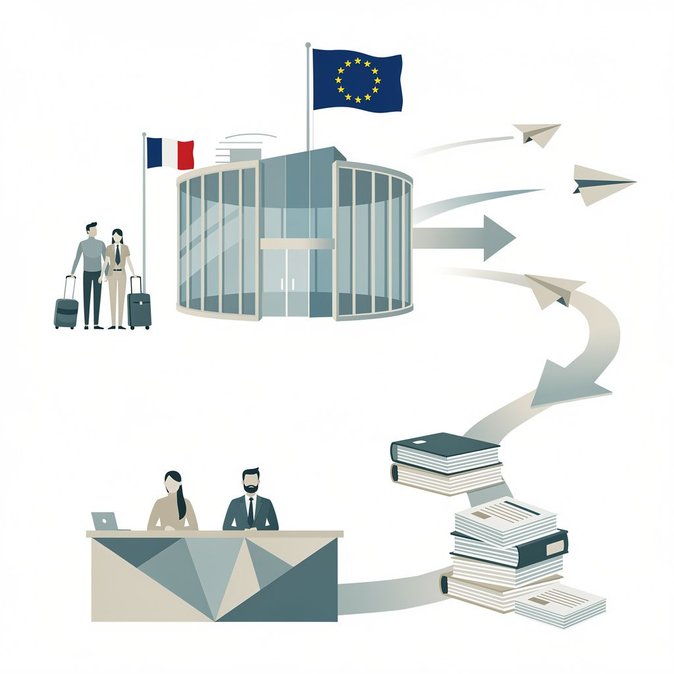
Amid this shifting landscape, travellers and companies planning cross-Channel movements can streamline their documentation through VisaHQ. The France-dedicated portal (https://www.visahq.com/france/) provides real-time updates on visa rules, electronic authorisation schemes and passport validity, and can arrange fast-track processing—minimising uncertainty when sudden border measures like those outlined above are introduced.
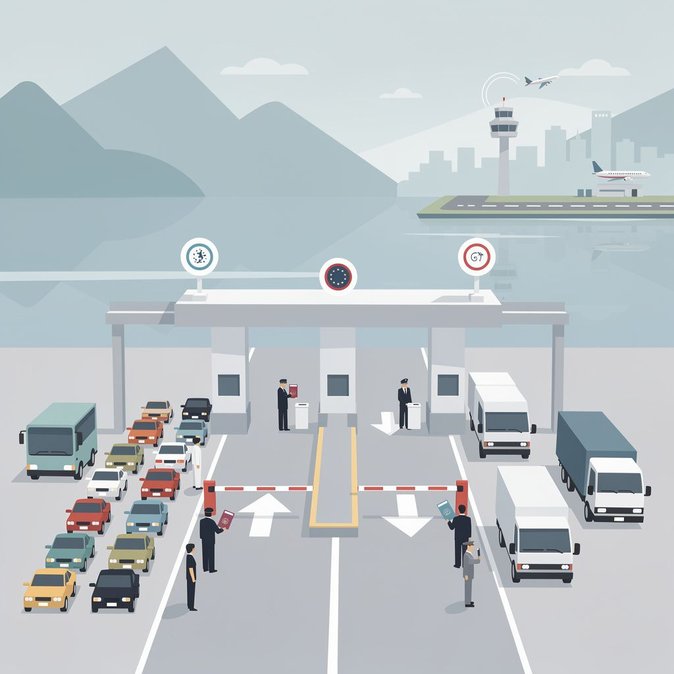
For France the shift is double-edged. Fewer embarkations on its coastline lessen immediate policing pressure but raise the risk of secondary movements back into French territory if Belgian security pushes migrants south again. The Interior Ministry said it is “ready to reinforce coordination” and pointed to an existing trilateral task-force with Belgium and the UK. Corporate relocation teams moving staff through Lille, Dunkirk or Brussels Airport should expect spot ID checks on the E40/A16 and potential delays on Eurostar services if ad-hoc rail controls are revived. Logistics operators may also see tighter customs inspections of unaccompanied freight vans—an approach trialled during the 2024 peaks. Longer-term, Decaluwé’s comments add momentum to calls in Paris for an EU-wide maritime surveillance pool and could influence funding allocations under the Internal Security Fund 2027–2030—money that ultimately underpins border-post staffing levels affecting business travel flows.
Amid this shifting landscape, travellers and companies planning cross-Channel movements can streamline their documentation through VisaHQ. The France-dedicated portal (https://www.visahq.com/france/) provides real-time updates on visa rules, electronic authorisation schemes and passport validity, and can arrange fast-track processing—minimising uncertainty when sudden border measures like those outlined above are introduced.
For France the shift is double-edged. Fewer embarkations on its coastline lessen immediate policing pressure but raise the risk of secondary movements back into French territory if Belgian security pushes migrants south again. The Interior Ministry said it is “ready to reinforce coordination” and pointed to an existing trilateral task-force with Belgium and the UK. Corporate relocation teams moving staff through Lille, Dunkirk or Brussels Airport should expect spot ID checks on the E40/A16 and potential delays on Eurostar services if ad-hoc rail controls are revived. Logistics operators may also see tighter customs inspections of unaccompanied freight vans—an approach trialled during the 2024 peaks. Longer-term, Decaluwé’s comments add momentum to calls in Paris for an EU-wide maritime surveillance pool and could influence funding allocations under the Internal Security Fund 2027–2030—money that ultimately underpins border-post staffing levels affecting business travel flows.