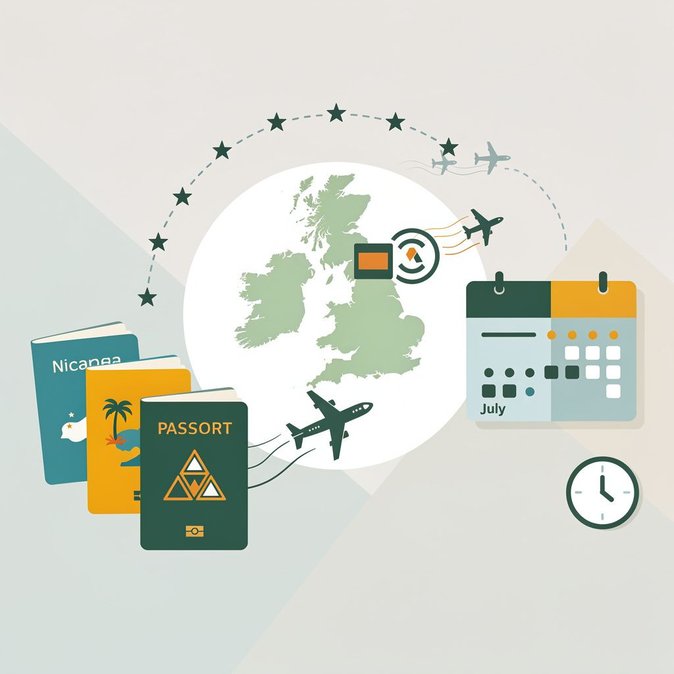
The Department of Justice, Home Affairs and Migration has tightened Ireland’s short-stay regime by adding Nicaragua, St Kitts & Nevis and St Lucia to the list of visa-required countries with effect from 15 June 2026. Minister for Migration Colm Brophy said the move aligns Irish practice with the UK and the wider Schengen area after a comprehensive risk review of irregular migration and overstays. Travellers from the three Caribbean states must now secure an Irish visa before boarding a flight or ferry to the Republic, even for airport transit. A limited grace period applies only to passengers who bought tickets before 15 June and who arrive before 14 July 2026, provided they can show carrier-issued proof of purchase at immigration control. The change will primarily affect cruise-line crew rotations, seasonal hospitality exchanges and postgraduate summer schools that traditionally relied on visa-free entry. Universities have been told to factor an extra three to six weeks into onboarding timelines for visiting researchers, while tour operators have been advised to reroute multi-stop Caribbean charters through London or Madrid to access biometrics-enabled Irish visa centres. Business-travel stakeholders welcomed the transitional window but warned that “connecting-Schengen” itineraries will now need double paperwork—an Irish visa plus a Schengen visa or ETIAS if continuing onward. Airlines are updating their Timatic profiles and retraining gate agents to prevent inadmissibility fines. For mobility managers the immediate priority is to audit any bookings made after 15 June for affected passport holders and to issue pre-departure compliance checklists.