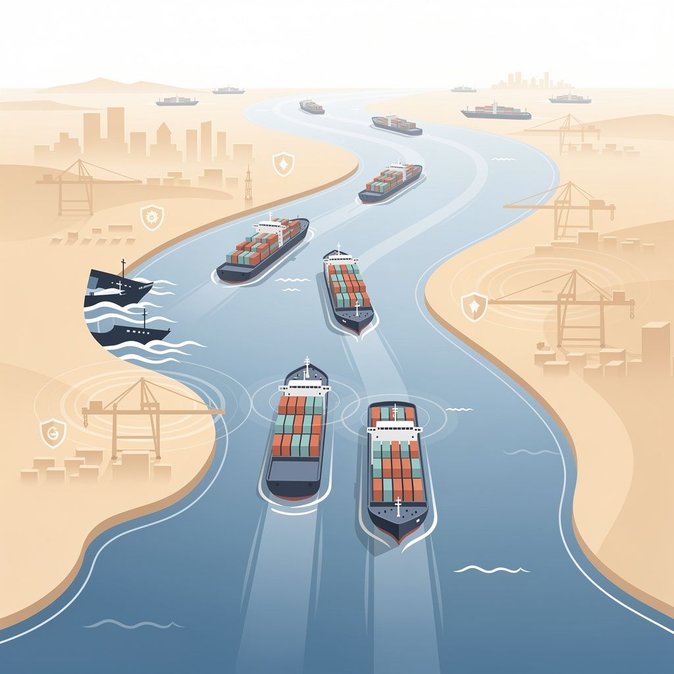
The United Arab Emirates has doubled-down on calls for safe passage through the Strait of Hormuz after a fresh week of conflict-related disruption cut vessel movements by as much as 70 per cent and kept war-risk surcharges on UAE-bound cargo at record highs.
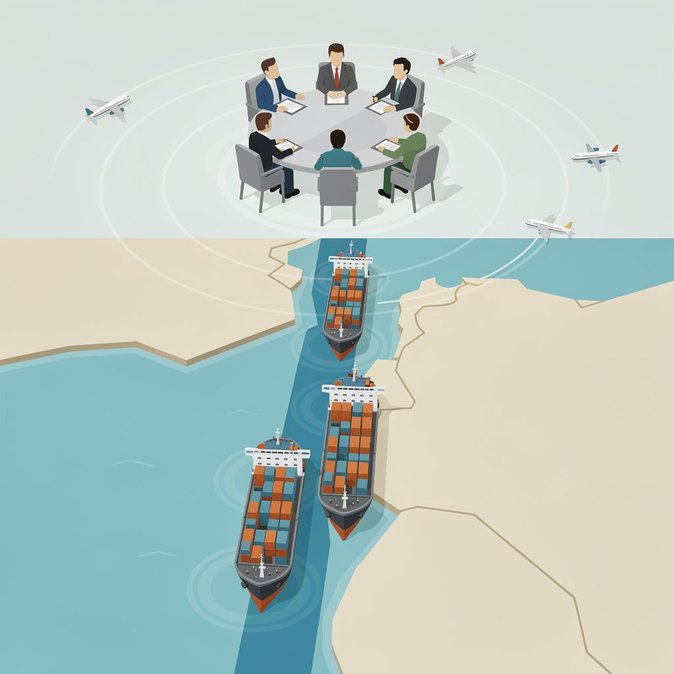
In a statement released late on Sunday, 15 June, the Ministry of Foreign Affairs urged “full and immediate implementation” of last month’s interim US-Iran deal and stressed that freedom of navigation in Hormuz remains an economic lifeline for the Emirates’ oil exporters, manufacturers and re-export hubs.
Behind the diplomacy lies a bruising four-month battle for supply-chain resilience.
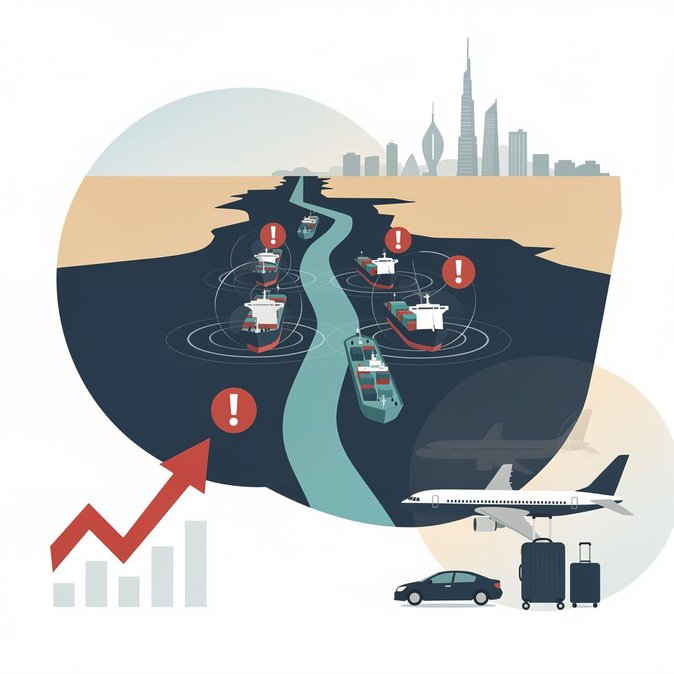
Since Iranian forces first warned commercial traffic away from Hormuz in late February, container lines such as CMA CGM and Hapag-Lloyd have been charging emergency conflict premiums of US $1,500-4,000 per box on UAE lanes, and insurers have added further war-risk cover.
For companies that rely on Jebel Ali, Khalifa Port or Fujairah, the extra cost is now a line-item in annual budgets and a trigger for accelerated inventory and routing reviews.
Industry guidance issued on 16 June recommends that UAE importers lock in capacity early, diversify sourcing, and build buffer stock where cash-flow allows.
Freight forwarders are also advising clients to review sanctions-compliance clauses and payment terms because shipments that transit Iranian-controlled waters now face heightened documentation checks.
Amid these uncertainties, organisations are discovering that even basic travel and crew‐rotation plans can become complicated at short notice. VisaHQ’s UAE portal (https://www.visahq.com/united-arab-emirates/) lets supply-chain managers, project teams and relocating families secure visas, entry permits and document legalisations online, with live status updates that dovetail neatly with tight shipping or relocation schedules. It is a practical safety net for companies trying to keep people and cargo moving when routing disruptions leave no room for administrative error.
Analysts warn that even if a permanent ceasefire is reached, surcharges could remain in place for several months while underwriters assess residual risk.
For multinational mobility and project teams, the stakes are equally high. Delays to spare parts, office fit-outs and household goods moves are already running into weeks for assignments starting this summer, forcing HR and relocation managers to negotiate temporary housing extensions and contingency budgets.
The government’s public stance therefore serves a dual purpose: reassuring trading partners and signalling to global talent that the UAE is proactively managing a volatile security environment.
In the medium term, officials are exploring participation in a US-led naval protection mission and fast-tracking alternative overland links to Gulf neighbours.
Until those measures bear fruit, corporate mobility managers are being told to plan for continued volatility in transit times and costs.
In a statement released late on Sunday, 15 June, the Ministry of Foreign Affairs urged “full and immediate implementation” of last month’s interim US-Iran deal and stressed that freedom of navigation in Hormuz remains an economic lifeline for the Emirates’ oil exporters, manufacturers and re-export hubs.
Behind the diplomacy lies a bruising four-month battle for supply-chain resilience.
Since Iranian forces first warned commercial traffic away from Hormuz in late February, container lines such as CMA CGM and Hapag-Lloyd have been charging emergency conflict premiums of US $1,500-4,000 per box on UAE lanes, and insurers have added further war-risk cover.
For companies that rely on Jebel Ali, Khalifa Port or Fujairah, the extra cost is now a line-item in annual budgets and a trigger for accelerated inventory and routing reviews.
Industry guidance issued on 16 June recommends that UAE importers lock in capacity early, diversify sourcing, and build buffer stock where cash-flow allows.
Freight forwarders are also advising clients to review sanctions-compliance clauses and payment terms because shipments that transit Iranian-controlled waters now face heightened documentation checks.
Amid these uncertainties, organisations are discovering that even basic travel and crew‐rotation plans can become complicated at short notice. VisaHQ’s UAE portal (https://www.visahq.com/united-arab-emirates/) lets supply-chain managers, project teams and relocating families secure visas, entry permits and document legalisations online, with live status updates that dovetail neatly with tight shipping or relocation schedules. It is a practical safety net for companies trying to keep people and cargo moving when routing disruptions leave no room for administrative error.
Analysts warn that even if a permanent ceasefire is reached, surcharges could remain in place for several months while underwriters assess residual risk.
For multinational mobility and project teams, the stakes are equally high. Delays to spare parts, office fit-outs and household goods moves are already running into weeks for assignments starting this summer, forcing HR and relocation managers to negotiate temporary housing extensions and contingency budgets.
The government’s public stance therefore serves a dual purpose: reassuring trading partners and signalling to global talent that the UAE is proactively managing a volatile security environment.
In the medium term, officials are exploring participation in a US-led naval protection mission and fast-tracking alternative overland links to Gulf neighbours.
Until those measures bear fruit, corporate mobility managers are being told to plan for continued volatility in transit times and costs.