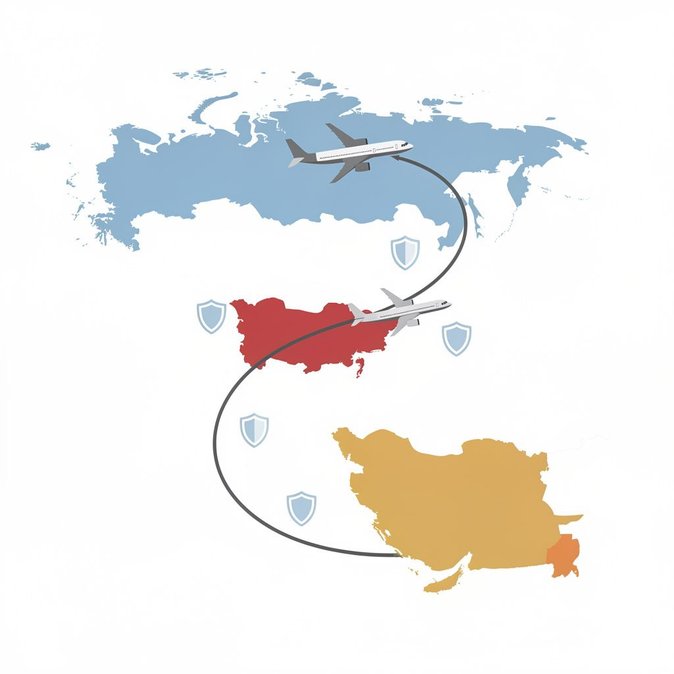
Russia’s Federal Air Transport Agency (Rosaviation) confirmed late on 19 June 2026 that it has withdrawn its earlier recommendation for airlines to halt ticket sales on services to and from the United Arab Emirates. The advisory—issued in March amid heightened regional tensions—had triggered wide-ranging cancellations by Aeroflot, S7 and several charter carriers, disrupting travel for thousands of leisure and business passengers. Rosaviation said the decision followed a joint safety assessment conducted with the Ministry of Transport and major Russian carriers. Since the US-Iran ceasefire extension took effect on 17 June, over-flight permissions and air-traffic-control coordination along Gulf corridors have largely normalised. Moscow’s clearance means airlines can now reopen inventory, restore frequencies and resume marketing campaigns aimed at the lucrative Russia-to-Dubai leisure market. For the UAE, the timing is critical: Russian visitors accounted for more than 850,000 hotel arrivals in 2025, and tourism authorities are banking on a similar rebound this year to fill summer capacity. Travel-management companies expect fares to stabilise within two weeks, once airlines rebuild forward bookings. Businesses with Russian operations should revisit crew-rotation schedules and VIP-travel policies, as nonstop services to Dubai, Abu Dhabi and Sharjah are set to scale up quickly. Importantly, while ticket sales are once again permitted, Rosaviation reminded carriers that contingency routings avoiding Iranian airspace remain mandatory until a permanent peace accord is signed. Travellers should therefore anticipate slightly longer flight times and continue monitoring airline notices for last-minute rerouting.
Source: AK&M Newswire