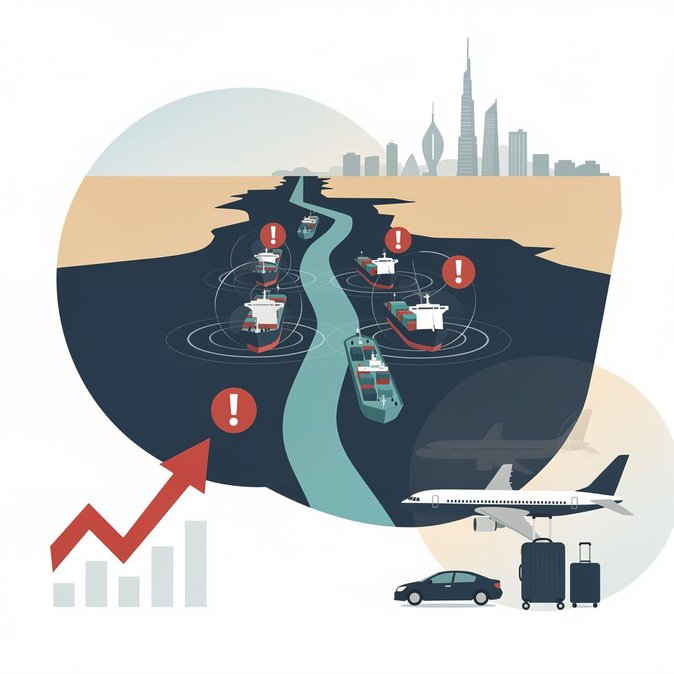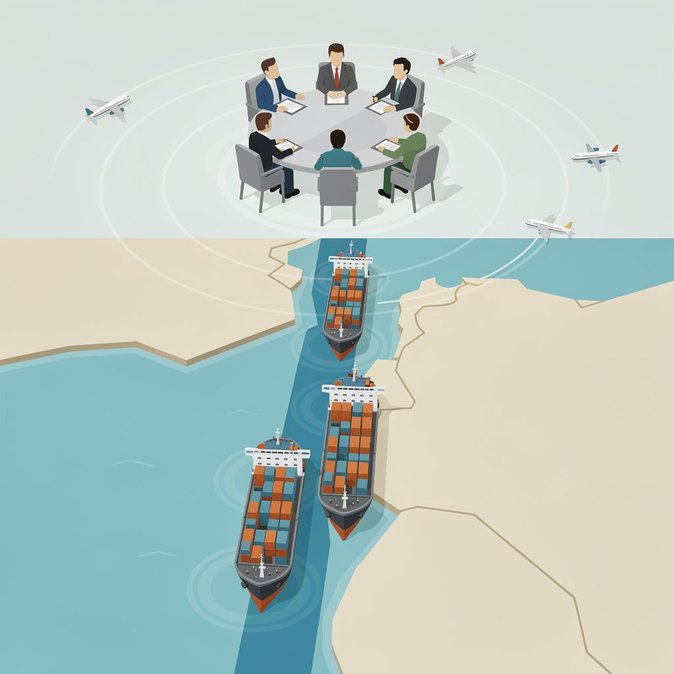
Intense US-Iran negotiations resumed on 22 June in the Swiss resort of Bürgenstock, this time focused on the technical details of an interim peace roadmap brokered by Qatar and Pakistan. According to a joint communiqué released by the mediators, the delegations endorsed an emergency mechanism to guarantee ‘uninterrupted and safe passage for commercial vessels through the Strait of Hormuz,’ the narrow waterway that carries roughly a fifth of the world’s traded oil and is the lifeline of the United Arab Emirates’ export-driven economy.
Amid these shifting geopolitical and operational variables, firms should remember that keeping staff documentation current is just as critical as real-time security updates. VisaHQ can help simplify the process: through its dedicated UAE page (https://www.visahq.com/united-arab-emirates/), the platform handles express visa applications, extensions and work permits, allowing mobility managers to focus on route planning rather than paperwork.
For UAE-based multinationals and logistics providers, the announcement offers a measure of predictability after months of missile and drone attacks that forced insurers to impose war-risk premiums of up to 400 %. Dubai-headquartered tanker giant ADNOC Logistics had rerouted several VLCCs around the Cape of Good Hope in early June; a senior operations manager told Reuters the detour added “12–14 days and nearly US $2 million in fuel per voyage.” The new mechanism, which will be monitored by satellite and a Joint Maritime Coordination Cell staffed by US, Iranian and GCC officers, should allow carriers to revert to normal Gulf routing within days, the source said. The breakthrough is tied to wider cease-fire talks in Lebanon and a US waiver that permits limited Iranian oil exports. Analysts at Emirates NBD note that Washington is effectively exchanging sanctions relief for maritime stability—an arrangement welcomed by Abu Dhabi Ports, whose free-zone tenants reported a 28 % drop in container throughput in Q2 because of the conflict. For corporate mobility managers, two practical points stand out. First, the UAE’s General Civil Aviation Authority (GCAA) has indicated that the airspace restrictions introduced in March will be relaxed in phases once the maritime corridor proves secure; Etihad has already published contingency schedules that reduce average flight times to Europe by 45 minutes. Second, insurers such as AXA Gulf are re-rating travel policies: war-risk surcharges for personnel transiting the UAE are expected to fall by at least a third if the corridor remains incident-free for 30 days. While diplomats caution that the 60-day roadmap could unravel, the immediate implication is clear: companies can start restoring suspended project rotations and accelerate delayed relocations into the UAE, provided they maintain elevated security monitoring and contingency routing for the next two months.
Amid these shifting geopolitical and operational variables, firms should remember that keeping staff documentation current is just as critical as real-time security updates. VisaHQ can help simplify the process: through its dedicated UAE page (https://www.visahq.com/united-arab-emirates/), the platform handles express visa applications, extensions and work permits, allowing mobility managers to focus on route planning rather than paperwork.
For UAE-based multinationals and logistics providers, the announcement offers a measure of predictability after months of missile and drone attacks that forced insurers to impose war-risk premiums of up to 400 %. Dubai-headquartered tanker giant ADNOC Logistics had rerouted several VLCCs around the Cape of Good Hope in early June; a senior operations manager told Reuters the detour added “12–14 days and nearly US $2 million in fuel per voyage.” The new mechanism, which will be monitored by satellite and a Joint Maritime Coordination Cell staffed by US, Iranian and GCC officers, should allow carriers to revert to normal Gulf routing within days, the source said. The breakthrough is tied to wider cease-fire talks in Lebanon and a US waiver that permits limited Iranian oil exports. Analysts at Emirates NBD note that Washington is effectively exchanging sanctions relief for maritime stability—an arrangement welcomed by Abu Dhabi Ports, whose free-zone tenants reported a 28 % drop in container throughput in Q2 because of the conflict. For corporate mobility managers, two practical points stand out. First, the UAE’s General Civil Aviation Authority (GCAA) has indicated that the airspace restrictions introduced in March will be relaxed in phases once the maritime corridor proves secure; Etihad has already published contingency schedules that reduce average flight times to Europe by 45 minutes. Second, insurers such as AXA Gulf are re-rating travel policies: war-risk surcharges for personnel transiting the UAE are expected to fall by at least a third if the corridor remains incident-free for 30 days. While diplomats caution that the 60-day roadmap could unravel, the immediate implication is clear: companies can start restoring suspended project rotations and accelerate delayed relocations into the UAE, provided they maintain elevated security monitoring and contingency routing for the next two months.