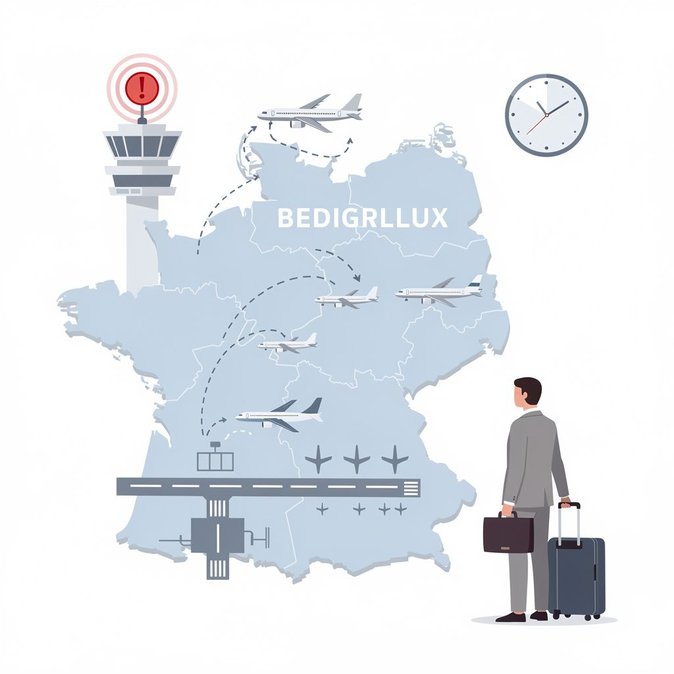
Business travellers flying into the Low Countries on Monday experienced unexpected detours after a technical failure in the military-run control tower at Eindhoven Airport (NL) forced a temporary suspension of all take-offs and landings. The outage, detected around 11:30 CET and resolved four hours later, led several inbound services to divert to regional alternatives—including Brussels Airport (BRU), Rotterdam-The Hague, Maastricht Aachen and Weeze in Germany. Data from real-time tracking site Flightradar24 showed at least eight passenger jets rerouted to Brussels during the closure. While the Dutch airport has a primarily leisure profile, the day’s diversions contained multiple intra-European business flights operated by Transavia and Ryanair that carry significant Belgian origin/destination traffic during the week. Brussels Airport confirmed that it coordinated additional parking stands and handled some 1,200 unscheduled passengers, triggering delays of up to 90 minutes as ground-handling teams processed extra baggage and refuelled aircraft for onward repositioning flights. For corporates, the episode is a reminder of the fragility of the tightly integrated Benelux airspace: Eindhoven’s tower is managed by the Dutch Defence Ministry, but disruptions ripple quickly across the border because many travellers select airports interchangeably based on fare and schedule. Travel managers are advised to ensure travellers have multi-airport itineraries encoded in booking profiles and to monitor NOTAMs (Notices to Airmen) that cover adjoining Flight Information Regions (FIRs). The incident also raises questions about contingency capacity at Belgian airports. Brussels South Charleroi (CRL) operated normally but reported short-term stand shortages, while Antwerp Airport lacks the runway length to accept most of Eindhoven’s diverted Boeing 737s and Airbus 320s. Brussels Airport’s capacity to absorb spill-over traffic will be further tested later this summer when scheduled runway works overlap with peak holiday demand. Air-traffic authorities in both countries have launched a joint investigation into the root cause of the tower failure. Meanwhile, airlines are reviewing diversion agreements to ensure that passenger reaccommodation—particularly for the growing number of same-day business trips—can be executed swiftly when neighbouring facilities suffer outages.
Source: Luchtvaartnieuws