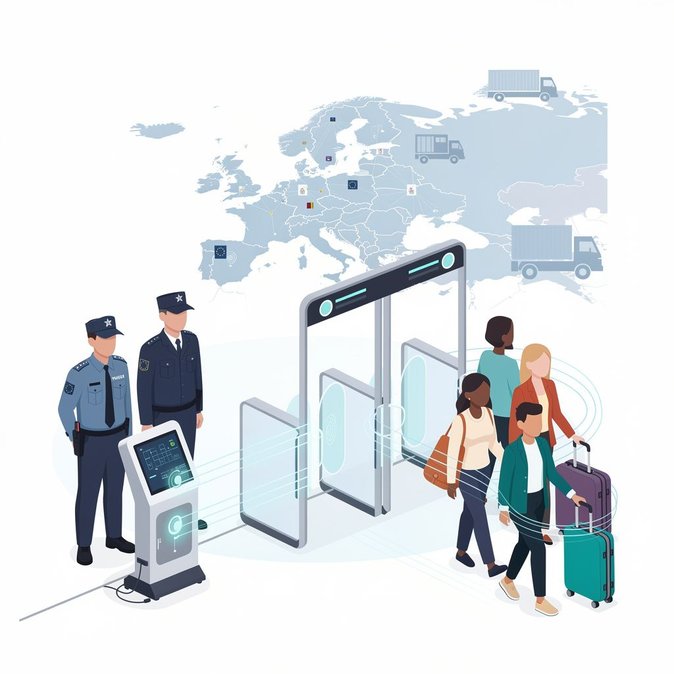
Geel, in Belgium’s Antwerp province, briefly became the epicentre of Europe’s border-security innovation on 22 June when the European Commission’s Directorate-General for Home Affairs (DG HOME) and Joint Research Centre (JRC) hosted a high-profile demonstration of cutting-edge screening technologies for law-enforcement and customs authorities. More than 150 participants—including representatives of Belgian Federal Police, Belgian Customs & Excise, Frontex, Europol and security officials from all 27 EU member states—watched live trials of portable drug- and explosives-detectors, AI-enabled scanning tunnels for luggage and parcels, and camera systems able to spot concealed weapons or illicit cash in seconds. All of the prototypes were financed through Horizon Europe security calls and are part of the Commission’s CERIS (Community for European Research & Innovation for Security) platform, which pools research on border management, document security and counter-terrorism. For Belgium, which manages one of the Schengen Area’s busiest external air gateways at Brussels Airport and a major North Sea cargo hub in Antwerp, the showcase was more than a tech fair. Customs officials told EU Reporter that field-testing in Geel allows them to assess whether equipment can integrate with the country’s existing Automatic Number Plate Recognition (ANPR) network and planned Entry/Exit System (EES) kiosks that must be operational by mid-2027. Faster, interoperable detection should mean shorter queues for travellers when the new biometric border regime starts, while still allowing officers to intercept drugs and weapons moving through Benelux road corridors. Manufacturers—including Belgian start-ups specialising in millimetre-wave scanners—used the event to court public-sector buyers ahead of the release of €135 million in fresh Horizon and Internal Security Fund calls later this year. The Commission also floated the idea of a permanent “Border Tech Test Bed” in Geel, which could give Belgium a structural role in shaping EU security standards and create a new cluster of high-skilled jobs in Flanders. For corporate mobility managers, the message is clear: Europe is doubling down on smart borders. Business travellers can expect increasingly automated, risk-based controls at airports, seaports and land frontiers—promising speed but also demanding flawless travel documentation and compliance with import/export rules. Companies moving high-value goods through Belgian gateways should prepare for more routine non-intrusive inspections and data sharing with customs, while HR teams should monitor the forthcoming funding calls: pilot projects often need private-sector participants and can provide early access to seamless crew and cargo-processing solutions.
Source: EU Reporter