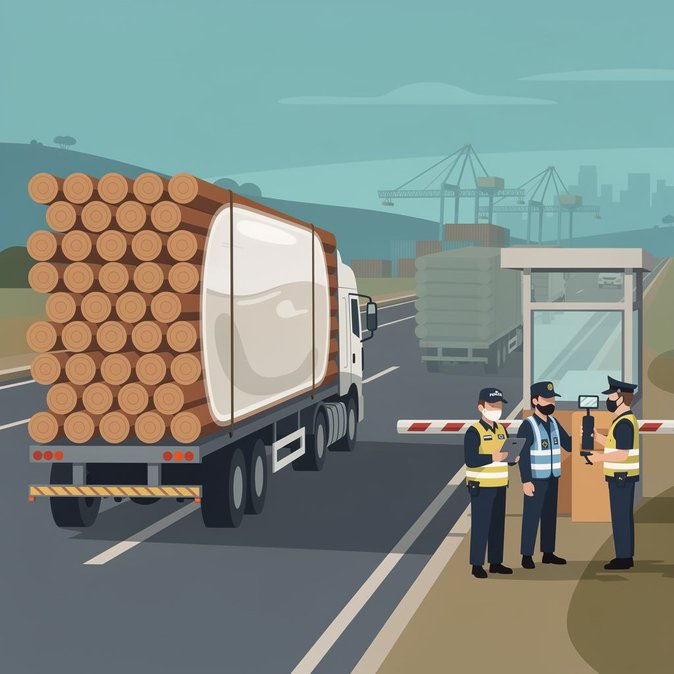
Customs officers and Federal Police announced on 22 June 2026 what could become the largest cocaine seizure in Brazil’s history after intercepting eight lorries carrying 260 tonnes of supposedly export-grade timber on the Bolivian border. Acting on intelligence shared by the US Drug Enforcement Administration and Bolivian counterparts, agents stopped four vehicles in Corumbá (Mato Grosso do Sul) and another four in Cáceres (Mato Grosso). Laboratory tests suggest that between 10 % and 20 % of each wooden beam had been impregnated with a cocaine solution—equivalent to 20-50 tonnes of narcotic once extracted. Dubbed “Operação Timber Shield”, the sting follows a similar bust by Chilean customs earlier this month, pointing to a growing trend in the use of chemically-treated hardwood to mask drug shipments. Investigators believe the cargo was destined for trans-shipment at Brazilian Atlantic ports before onward travel to Europe and Asia, exploiting Brazil’s vast timber-export infrastructure. The logistics complexity of the scheme raises fresh questions for supply-chain security teams. Exporters of Amazonian wood and third-party freight forwarders may now face closer scrutiny, additional scanning requirements and possible delays at border crossings and ports. Companies operating authorised economic-operator (OEA) programmes should review vendor due-diligence procedures to ensure they are not inadvertently facilitating contraband. Finance Minister Dario Durigan praised the agencies involved, calling the operation “a firm state response to increasingly sophisticated transnational crime”. The seizure comes amid budget constraints that have prompted the Army to scale back some frontier patrols, heightening the importance of customs-led intelligence work. Further arrests are expected as forensic teams analyse electronic devices seized from the drivers. For global-mobility and trade-compliance managers, the immediate impact lies in potential bottlenecks along the Bolivia–Brazil corridors (BR-070 and BR-262) and in tighter inspection regimes that could affect legitimate cargo, especially forestry products. Firms should plan for longer clearance times and engage proactively with customs brokers to document cargo provenance.
Source: R7 Notícias