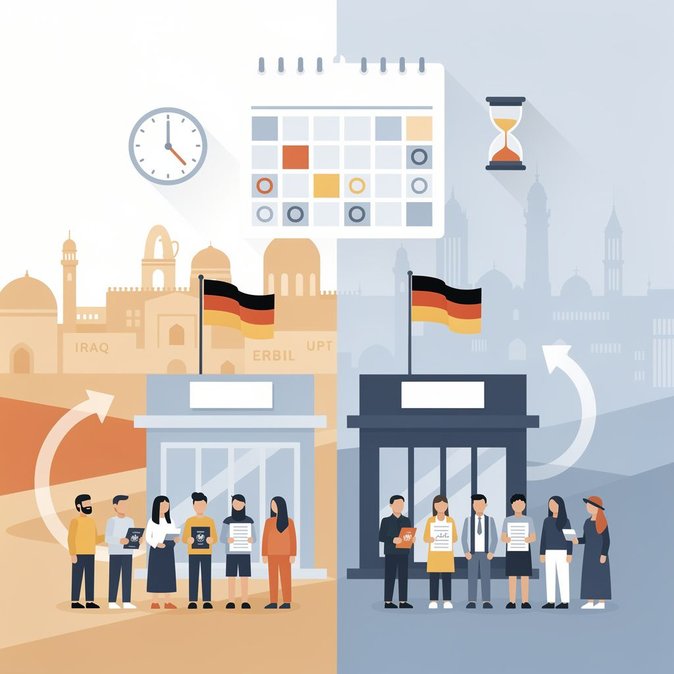
The German Embassy in Baghdad and the Consulate-General in Erbil quietly reopened their visa and consular sections on 21 June, ending a three-month closure caused by security threats and IT upgrades. The Foreign Office confirmed the move in an online FAQ, stressing that backlogged national-visa appointments will be automatically rescheduled, while new Schengen-visa applicants must re-register on a waiting list. The shutdown since March 2026 had paralysed family-reunion, student and work-visa processing for Iraqi nationals and foreign residents, pushing waiting times beyond 12 months in some categories.
For applicants still navigating these German visa challenges, VisaHQ can streamline the process. Its dedicated Germany portal (https://www.visahq.com/germany/) allows individuals and corporate mobility teams to verify up-to-date requirements, obtain personalised document checklists, and arrange secure courier submission—saving time while the Baghdad and Erbil missions work through their backlog.
German employers with projects in the Kurdistan Region reported delayed project mobilisation and increased use of remote onboarding. Emergency hotlines have been reinstated, and additional consular staff from Berlin have been seconded to clear the application backlog. However, the missions caution that “significant delays” will persist throughout the summer due to the accumulated caseload. Applicants holding expired language-test certificates may still use them, but university admissions for the summer semester 2026 can no longer be processed. Global-mobility teams relocating talent from Iraq should: 1) ensure candidates rebook cancelled slots; 2) prepare updated employment contracts confirming continued validity; and 3) budget extra lead-time for security screening. The reopening also frees German expatriates in Iraq to renew passports and obtain civil documents locally, reducing the need for travel to neighbouring states. The episode underscores the fragility of visa operations in high-risk regions and the importance of contingency planning – including remote work, hub processing in Abu Dhabi or Istanbul, and flexible start dates in employment contracts.
For applicants still navigating these German visa challenges, VisaHQ can streamline the process. Its dedicated Germany portal (https://www.visahq.com/germany/) allows individuals and corporate mobility teams to verify up-to-date requirements, obtain personalised document checklists, and arrange secure courier submission—saving time while the Baghdad and Erbil missions work through their backlog.
German employers with projects in the Kurdistan Region reported delayed project mobilisation and increased use of remote onboarding. Emergency hotlines have been reinstated, and additional consular staff from Berlin have been seconded to clear the application backlog. However, the missions caution that “significant delays” will persist throughout the summer due to the accumulated caseload. Applicants holding expired language-test certificates may still use them, but university admissions for the summer semester 2026 can no longer be processed. Global-mobility teams relocating talent from Iraq should: 1) ensure candidates rebook cancelled slots; 2) prepare updated employment contracts confirming continued validity; and 3) budget extra lead-time for security screening. The reopening also frees German expatriates in Iraq to renew passports and obtain civil documents locally, reducing the need for travel to neighbouring states. The episode underscores the fragility of visa operations in high-risk regions and the importance of contingency planning – including remote work, hub processing in Abu Dhabi or Istanbul, and flexible start dates in employment contracts.