Germany’s Federal Ministry for Digital Affairs unveiled a new artificial-intelligence platform—Spark Workflow—on 16 June, promising to slash approval times for complex administrative procedures, including visas and residence permits. The software is immediately available to Länder and municipalities as part of the federal “Deutschland-Stack” digital toolbox. Spark Workflow automatically extracts key data from application files, checks legal compliance and flags missing documents, while the final decision remains with human officials.
While the authorities work on adopting Spark Workflow, travelers and employers can already streamline their paperwork through VisaHQ, which provides step-by-step guidance, document checks and appointment scheduling for German visas via its online portal (https://www.visahq.com/germany/). The service helps applicants avoid common errors and delays, acting as a bridge until the new government system is fully deployed.
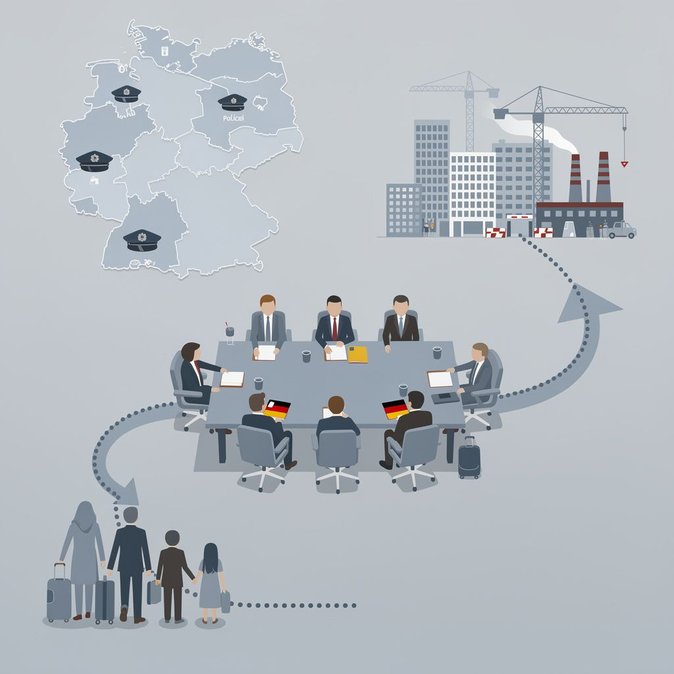
Digital Minister Karsten Wildberger said pilot projects suggest large infrastructure approvals can be completed in half the time, and that immigration offices should see similar gains once templates are adapted to the Aufenthaltsgesetz (Residence Act). Germany’s embassies and consulates issued a record 1.2 million visas in 2025 but face mounting backlogs, particularly for Western Balkan workers and family-reunion cases. Employers complain that three- to six-month wait times jeopardise project deadlines. By offering a ready-made AI module, Berlin hopes to standardise processes nationwide and relieve severely understaffed Ausländerbehörden. Data-protection campaigners have demanded transparency on the training data and audit mechanisms, warning that algorithmic errors could unfairly reject applicants. The ministry pledged to publish an annual bias-assessment report and allow applicants to request human re-evaluation. For global-mobility and HR teams, the announcement signals potential relief in the medium term—but only if states adopt the software consistently and invest in staff training. Companies are advised to track rollout timetables in the key states of North-Rhine Westphalia, Bavaria and Baden-Württemberg, where pilot deployments start in July.
While the authorities work on adopting Spark Workflow, travelers and employers can already streamline their paperwork through VisaHQ, which provides step-by-step guidance, document checks and appointment scheduling for German visas via its online portal (https://www.visahq.com/germany/). The service helps applicants avoid common errors and delays, acting as a bridge until the new government system is fully deployed.
Digital Minister Karsten Wildberger said pilot projects suggest large infrastructure approvals can be completed in half the time, and that immigration offices should see similar gains once templates are adapted to the Aufenthaltsgesetz (Residence Act). Germany’s embassies and consulates issued a record 1.2 million visas in 2025 but face mounting backlogs, particularly for Western Balkan workers and family-reunion cases. Employers complain that three- to six-month wait times jeopardise project deadlines. By offering a ready-made AI module, Berlin hopes to standardise processes nationwide and relieve severely understaffed Ausländerbehörden. Data-protection campaigners have demanded transparency on the training data and audit mechanisms, warning that algorithmic errors could unfairly reject applicants. The ministry pledged to publish an annual bias-assessment report and allow applicants to request human re-evaluation. For global-mobility and HR teams, the announcement signals potential relief in the medium term—but only if states adopt the software consistently and invest in staff training. Companies are advised to track rollout timetables in the key states of North-Rhine Westphalia, Bavaria and Baden-Württemberg, where pilot deployments start in July.