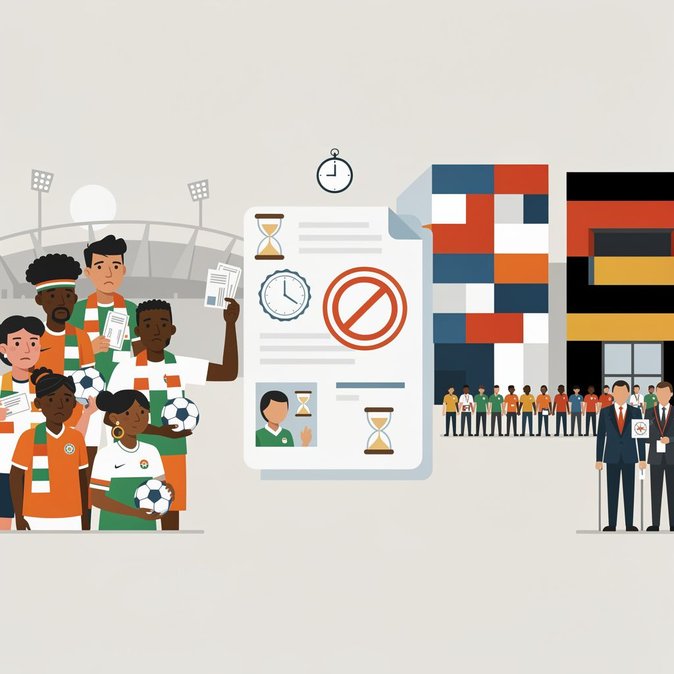
German Football Association (DFB) President Bernd Neuendorf voiced “serious concern” on 13 June after reports that dozens of Ivory Coast supporters were denied visas for the United States, co-host of the 2026 FIFA World Cup. The issue surfaced just a week before Germany meets the West African side in Toronto on 20 June. According to multiple fan-groups, US consulates rejected applications en masse, citing incomplete itineraries and insufficient proof of funds—even though many applicants had match tickets and hotel bookings. While entry to Canada (venue for the Germany–Ivory Coast fixture) requires a separate eTA, the US visa remains essential for trans-Atlantic flights with stop-overs. Neuendorf, speaking at the German House of Soccer in New York, warned that blanket refusals “run counter to the spirit of an open World Cup” and risk setting a precedent for future mega-events in which German fans could be affected. He has asked the German Foreign Office to raise the matter with US counterparts, noting that some German supporters are also still awaiting visa interview slots for knockout-stage venues south of the border. Sports-tourism operators say uncertainty is already depressing last-minute package sales. Several Frankfurt agencies reported cancellation rates above 20 percent for itineraries that combine US and Canadian matches. Lufthansa Group, which added special fan charters to Philadelphia and Houston, says it will allow one free re-routing for passengers whose visa outcome changes. Employers planning incentive trips or executive hospitality around Germany’s matches should ensure travellers hold the correct US B-1/B-2 or Canadian eTA approvals and build longer lead times into visa scheduling. The episode is a reminder that even event-based visa facilitation is not guaranteed—something global-mobility teams must factor into risk assessments.
Source: Sportschau (ARD) live blog