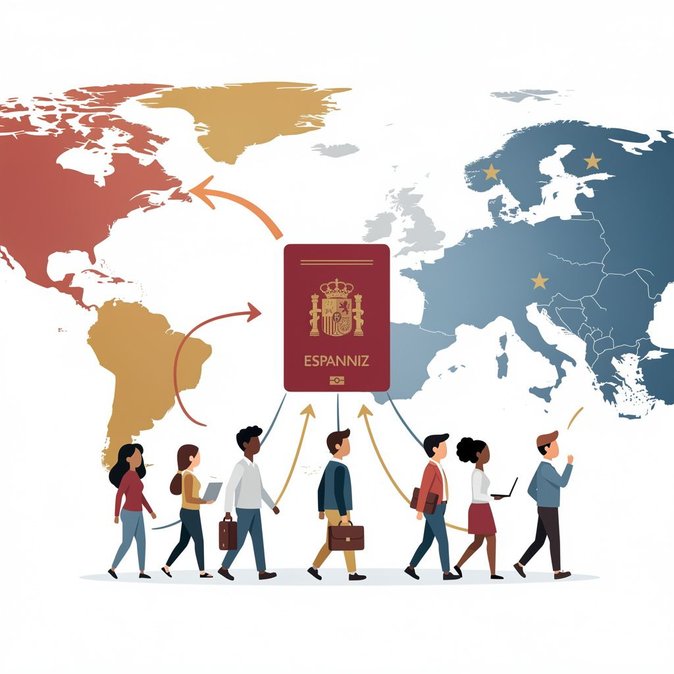
Opposition leader Alberto Núñez Feijóo reignited debate on Spain’s so-called ‘Ley de Nietos’ on 22 June, accusing the Socialist government of “manipulating the overseas electoral roll” by granting citizenship en masse to descendants of Spanish emigrants. An Interior Ministry circular in 2024 broadened eligibility under the 2022 Democratic Memory Law, allowing applicants to skip the traditional exile-proof requirement if a parent or grandparent was originally Spanish. According to leaked consular data, more than 2.5 million applications have been lodged worldwide—545,000 already approved—especially in Argentina, Uruguay and Mexico. Feijóo’s Partido Popular fears the surge could shift tight electoral districts in 2027, since external voters trend centre-left. The government counters that the measure corrects historical injustices and strengthens cultural links with the diaspora. Consular sections have hired temporary staff and launched an online appointment platform, yet processing backlogs stretch to 18 months in Buenos Aires. Multinationals see a different angle: dual nationals face fewer labour-market barriers in the EU and can transfer intra-company without work permits. Global-mobility teams should therefore monitor whether key third-country staff become eligible through ancestry—opening a quicker, cheaper pathway to Schengen mobility.
Source: Moncloa.com