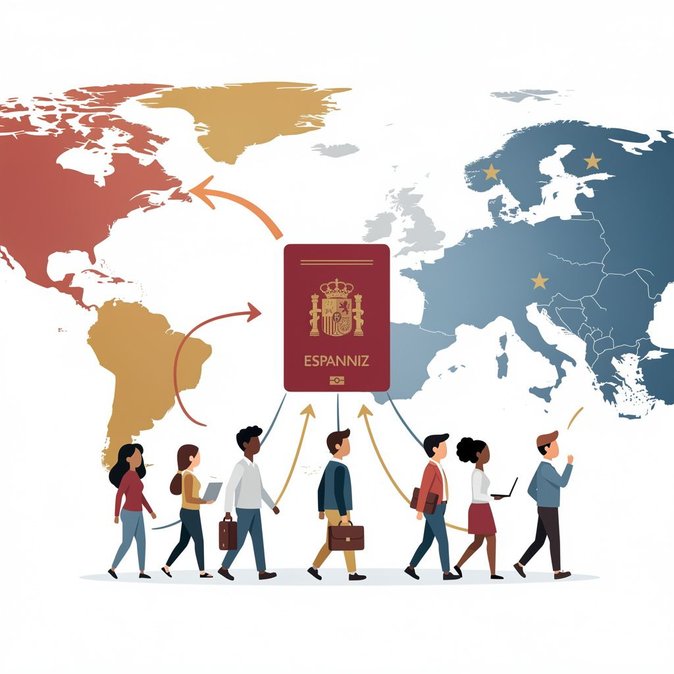
Spain’s 2024-2026 extraordinary regularisation programme is entering its final stretch, and Catalonia is proving to be the epicentre of demand. Government Delegate Carlos Prieto confirmed on 22 June that more than 150,000 foreign nationals have already filed for residence‐and-work permits in the region, with a nationwide total that now exceeds 900,000. The scheme, open until 30 June, allows people who can prove at least two years’ residence and labour market integration to move out of irregular status and into Spain’s social-security system. The Interior and Inclusion ministries launched the programme to reduce informality, ease labour shortages in hospitality, agriculture and care work, and give businesses legal certainty when hiring migrant workers. To cope with demand, the government has seconded temporary staff to extranjería offices and rolled out a fast-track digital filing tool; Barcelona’s foreigners’ office alone has processed more than 42,000 files since April. Employers’ federations welcome the initiative, noting that regularised workers can now be deployed legally throughout the country, while trade unions insist that enforcement against abusive contracts must accompany the permits. Municipalities such as L’Hospitalet will pilot an automatic-appointment platform that could later be exported nationwide to unclog police stations that issue foreigner ID cards (TIEs). For multinational HR teams the message is clear: Spain is significantly expanding its legally employable talent pool. Companies that were previously hesitant to contract staff without papers now have a window of opportunity—but only if they act quickly to file supporting job offers before the 30 June deadline. After that, cases risk being relegated to ordinary, slower immigration channels.
Source: El País