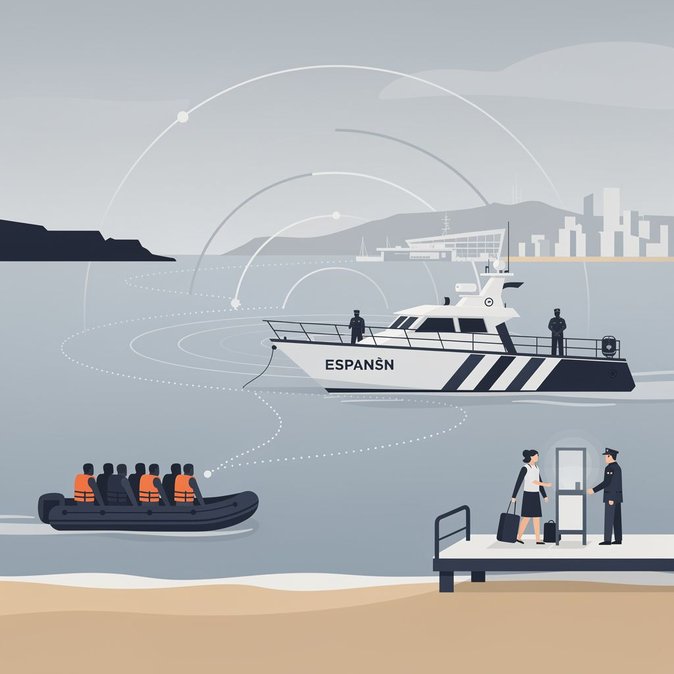
Spanish law-enforcement agencies scored a major victory against irregular migration networks this weekend, arresting nine alleged smugglers who organised crossings from Algeria to Andalusia and Murcia. The joint Guardia Civil/National Police operation, announced on 22 June and supported by Europol analysts, targeted every layer of the criminal structure—from recruiters in Oran to skippers of speedboats and safe-house managers on the Spanish coast. Investigators say the gang charged up to €6,000 per person for a perilous 200-kilometre Mediterranean voyage in overloaded RIBs. Payments were laundered through cryptocurrency wallets and a web of shell companies registered in Spain and France. Officers seized GPS equipment, forged Algerian passports and €180,000 in cash during coordinated raids in Almería, Cartagena and Valencia. The bust comes as the western Mediterranean route records a 12 % year-on-year rise in arrivals, putting pressure on Spain’s reception system and the EU’s solidarity mechanism. Interior Minister Fernando Grande-Marlaska thanked Europol for “essential real-time intelligence” and reiterated calls for stronger returns agreements with North-African states. For companies relocating staff to Spain, the news underscores that enforcement against irregular entry is tightening, even while regular labour migration channels expand. Global-mobility managers should advise relocating employees—especially from visa-waiver countries—to carry proper entry documentation, as ad-hoc coastal checks are likely to intensify throughout the summer travel peak.
Source: Moncloa.com