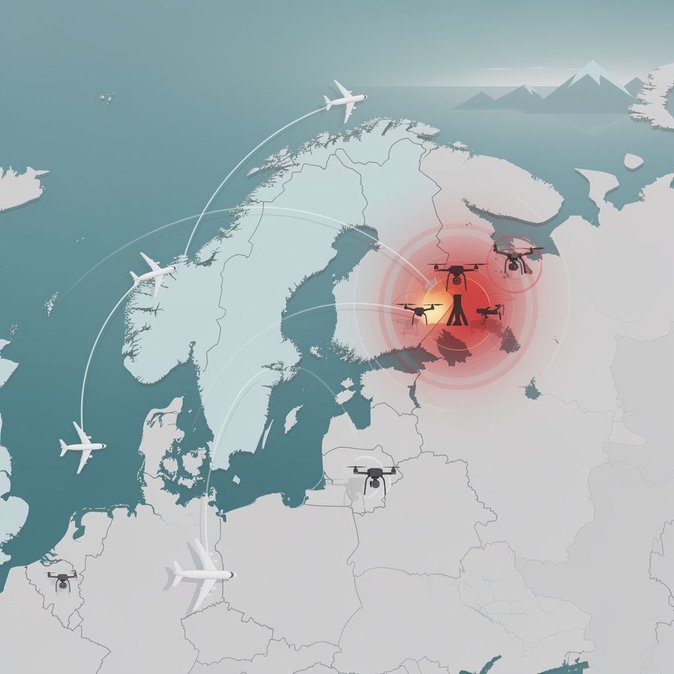
Russian aviation authorities briefly closed all four Moscow airports on Monday morning after air-defence units intercepted what officials said were 59 long-range Ukrainian drones targeting the capital. Operations at Sheremetyevo, Domodedovo, Vnukovo and Zhukovsky were halted for nearly two hours, with multiple inbound flights diverted to St Petersburg and Kazan before normal traffic resumed. Finnair no longer flies to Russia, but Helsinki Airport handles several daily freighter and charter services that overfly western Russia en route to Asia. Eurocontrol issued a rapid-response flow-control measure that temporarily re-routed north-bound traffic through Finnish and Baltic airspace to avoid potential missile-defence zones around Moscow. The Finnish Transport and Communications Agency (Traficom) warned carriers that residual delays could ripple into the afternoon bank of Asian departures from Helsinki. Travel-risk consultants note that although passenger flights between Finland and Russia remain suspended under EU sanctions, many multinational firms still move personnel into Central Asia via Helsinki-Doha or Helsinki-Istanbul routings. Should the conflict trigger further Russian airspace closures, those routings could lengthen by 30-60 minutes and raise fuel surcharges. The incident underscores the fragility of European-Asian flight corridors. Airlines registered in Finland are already avoiding large swathes of Siberian airspace; a full closure around Moscow would squeeze remaining corridors and may obligate carriers to file new risk assessments under EASA Conflict Zone Information Bulletin CZIB-2026-01. For travellers, experts advise building extra connection time this week, especially for itineraries involving tight 45-minute transfers at Helsinki Airport. Cargo forwarders shipping via the Finnair Cargo hub likewise face possible missed trucking cut-offs as wide-body arrivals stagger back to schedule.
Source: Al Jazeera