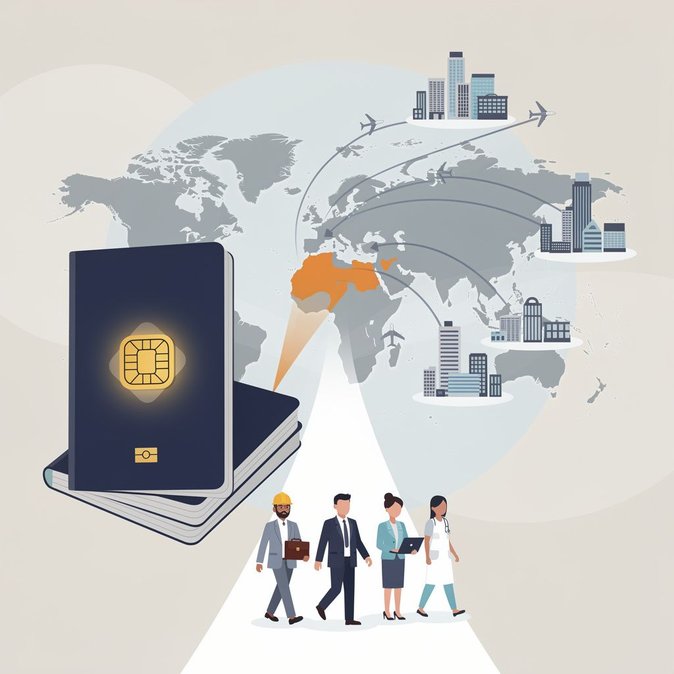
Marking the 14th Passport Seva Divas on 24 June, officials of the Ministry of External Affairs (MEA) reminded citizens that an Indian passport is fundamentally a travel document that attests to nationality abroad but is not, in itself, conclusive proof of citizenship. The clarification comes against the backdrop of heated domestic debates on documentation in electoral rolls and citizenship verification drives, and is intended to head off confusion as India accelerates the roll-out of chip-enabled e-passports. More than 14.7 million of the highly secure documents have been issued since last year, and all new passports are now e-passports. Officials used the occasion to showcase the breadth of reforms under the revamped Passport Seva Programme, from shrinking average processing times to five–six days to tripling the network of Passport Seva Kendras and Post-Office centres to 544 nationwide. Police-verification times, once a persistent bottleneck, have been cut to as little as two days in early-adopter states, with the MEA pushing to replicate best-practice elsewhere. The digital back-end—built and maintained by Tata Consultancy Services—keeps all data on government servers to meet privacy and sovereignty requirements. Looking outward, the ministry highlighted the steady expansion of mobility options for Indians: 27 countries now offer visa-free entry (up from 16 in 2019), 47 grant visa-on-arrival and 66 accept e-visas. India has also signed migration-and-mobility agreements with 25 countries, mainly in Europe, that both open legal pathways for skilled workers and streamline the return of irregular migrants. To deepen those pathways, the MEA announced a two-day Human Resource Mobility Forum in New Delhi on 30 June–1 July. Government agencies, ethical recruiters and employers from Denmark, Germany, Italy, Japan and Russia will match vacancies with Indian talent while warning workers about fraud—an issue spotlighted after some Indians were duped into joining Russia’s armed forces. The event will also tackle skills certification, language training and pre-departure orientation. For businesses managing global assignments, the message is twofold: Indian travel documents are becoming harder to tamper with and faster to obtain, while government-to-government deals are widening the menu of visa-light options for projects abroad. Mobility managers should watch the upcoming forum for new pilot schemes and sector-specific quotas that could ease staffing in Europe and East Asia.
Source: Hindustan Times