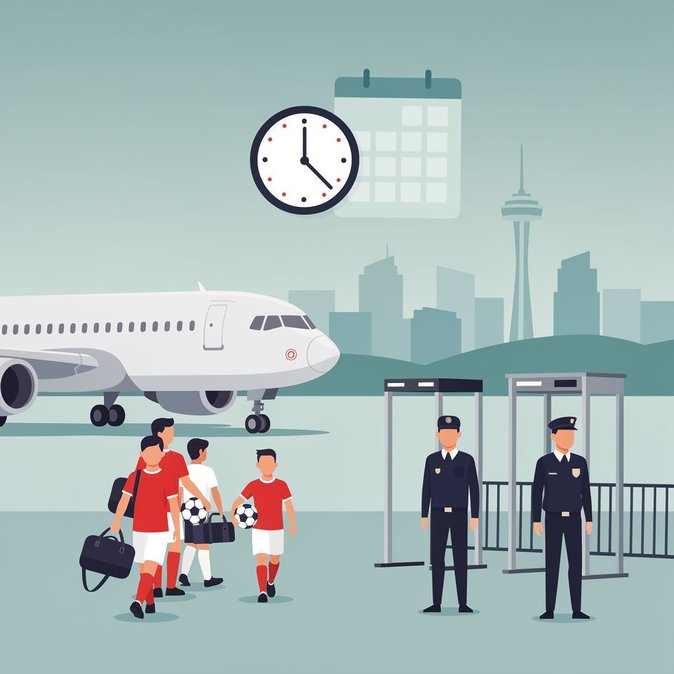
Homeland Security officials confirmed on June 23 that Iran’s men’s football squad may enter the United States two days before its June 26 World Cup group match in Seattle—an extension from the previous 24-hour window. The team must still depart on match-day, and staff denied earlier visas remain ineligible.
Teams, support staff, and even traveling supporters facing similarly complex entry timelines can streamline paperwork by using a specialist facilitator such as VisaHQ. The company’s online portal (https://www.visahq.com/united-states/) offers up-to-date guidance on U.S. visa categories, document checklists, and expedited processing options, helping large delegations meet tight event schedules with fewer administrative headaches.
The compromise follows logistical turmoil that saw Iran relocate its base camp from Arizona to Tijuana to avoid repeated border crossings. DHS said security vetting remains “robust,” with movement restricted to team hotels, training venues, and stadiums. Tournament organizers welcomed the move, noting that same-day travel risked player fatigue and undermined competition integrity. Analysts say the concession illustrates how mega-events force limited, case-by-case easing of strict U.S.–Iran travel frictions. Companies moving VIP clients or equipment across the border during the tri-nation World Cup should expect ad-hoc exemptions paired with stringent monitoring. Advance manifest submissions and secure-transport arrangements are advisable, especially for delegations from sanctioned states.
Teams, support staff, and even traveling supporters facing similarly complex entry timelines can streamline paperwork by using a specialist facilitator such as VisaHQ. The company’s online portal (https://www.visahq.com/united-states/) offers up-to-date guidance on U.S. visa categories, document checklists, and expedited processing options, helping large delegations meet tight event schedules with fewer administrative headaches.
The compromise follows logistical turmoil that saw Iran relocate its base camp from Arizona to Tijuana to avoid repeated border crossings. DHS said security vetting remains “robust,” with movement restricted to team hotels, training venues, and stadiums. Tournament organizers welcomed the move, noting that same-day travel risked player fatigue and undermined competition integrity. Analysts say the concession illustrates how mega-events force limited, case-by-case easing of strict U.S.–Iran travel frictions. Companies moving VIP clients or equipment across the border during the tri-nation World Cup should expect ad-hoc exemptions paired with stringent monitoring. Advance manifest submissions and secure-transport arrangements are advisable, especially for delegations from sanctioned states.