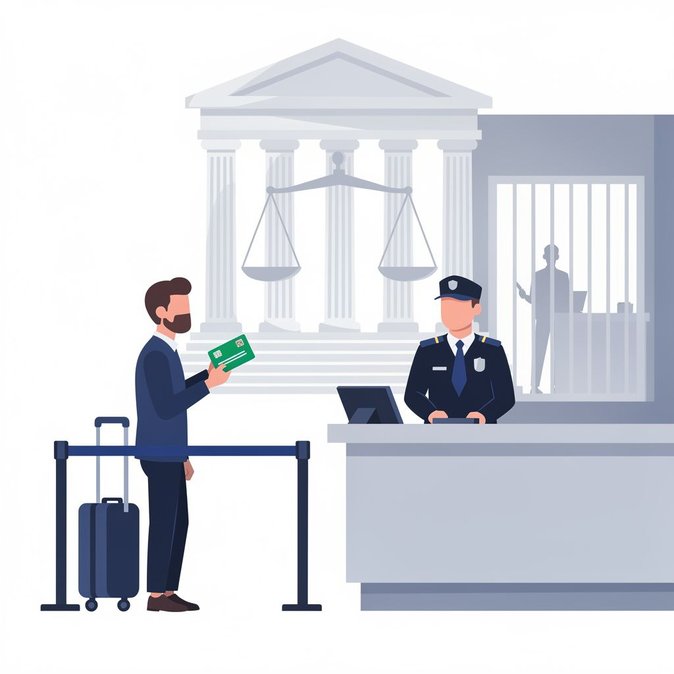
With the final enforcement deadline for the REAL ID Act firmly in place, the Transportation Security Administration confirmed on June 23 that passengers who arrive at airport checkpoints without a REAL ID-compliant license—or an approved alternative—must now pay a $45 "ConfirmID" fee for an on-the-spot identity-verification process.
If you or your employees still need help obtaining a REAL ID-compliant document, VisaHQ can simplify the process. The company’s self-service portal (https://www.visahq.com/united-states/) offers step-by-step guidance for passports, Global Entry cards, and other acceptable alternatives, reducing the chance of incurring the new $45 fee at the airport.
The fee took effect February 1 but gained wider attention after additional guidance was circulated to airlines and airport operators this week. Under the new procedure, travelers who fail to present a REAL ID or passport can opt to pay $45 to initiate biometric and database checks intended to satisfy security requirements. Payment does *not* guarantee boarding; if TSA cannot verify identity, the traveler is still denied access beyond security. For employers managing domestic project travel, the surcharge functions as both a compliance nudge and a potential budget line. Large consulting firms estimate that 3-5 % of their U.S. work-force still lacks a REAL ID-compliant credential, risking last-minute fees or flight disruptions. Some companies have responded by reimbursing employees for early REAL ID conversions and building "fee contingencies" into travel authorizations through fiscal 2026. Airlines, which are not direct beneficiaries of the surcharge, nevertheless support the policy as it reduces checkpoint delays caused by secondary screening. However, consumer advocates argue that lower-income travelers—already facing higher summer airfares—will be disproportionately affected. TSA says the fee helps offset the cost of manual vetting and will be reevaluated after one year. Mobility teams should remind travelers that acceptable alternatives (passport, Global Entry card, DoD ID, tribal ID) avoid both the fee and the risk of a missed flight.
If you or your employees still need help obtaining a REAL ID-compliant document, VisaHQ can simplify the process. The company’s self-service portal (https://www.visahq.com/united-states/) offers step-by-step guidance for passports, Global Entry cards, and other acceptable alternatives, reducing the chance of incurring the new $45 fee at the airport.
The fee took effect February 1 but gained wider attention after additional guidance was circulated to airlines and airport operators this week. Under the new procedure, travelers who fail to present a REAL ID or passport can opt to pay $45 to initiate biometric and database checks intended to satisfy security requirements. Payment does *not* guarantee boarding; if TSA cannot verify identity, the traveler is still denied access beyond security. For employers managing domestic project travel, the surcharge functions as both a compliance nudge and a potential budget line. Large consulting firms estimate that 3-5 % of their U.S. work-force still lacks a REAL ID-compliant credential, risking last-minute fees or flight disruptions. Some companies have responded by reimbursing employees for early REAL ID conversions and building "fee contingencies" into travel authorizations through fiscal 2026. Airlines, which are not direct beneficiaries of the surcharge, nevertheless support the policy as it reduces checkpoint delays caused by secondary screening. However, consumer advocates argue that lower-income travelers—already facing higher summer airfares—will be disproportionately affected. TSA says the fee helps offset the cost of manual vetting and will be reevaluated after one year. Mobility teams should remind travelers that acceptable alternatives (passport, Global Entry card, DoD ID, tribal ID) avoid both the fee and the risk of a missed flight.