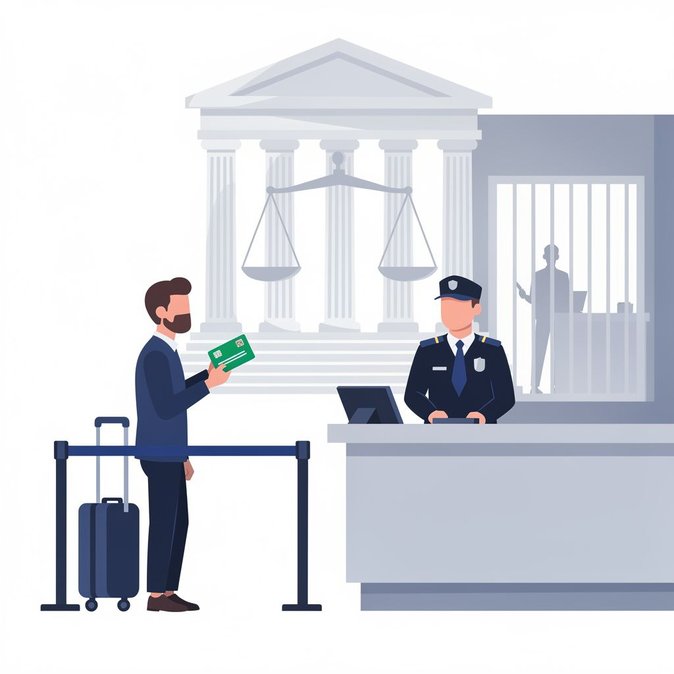
In a 6-3 decision issued on June 23, the U.S. Supreme Court sided with the Trump administration in *Lau v. Mayorkas*, a case that tested how much discretion border officers have when a lawful permanent resident (LPR) returns from a short trip abroad. The majority opinion, written by Justice Clarence Thomas, upheld the government’s authority to place Muk Choi Lau—an LPR accused (but not yet convicted) of a 2012 counterfeiting offense—into "immigration parole" and start removal proceedings the moment he re-entered the United States from China. The ruling means that border officers do not need “clear and convincing evidence” that an arriving green-card holder actually *committed* a crime involving moral turpitude before treating the individual as an applicant for admission. Suspicion alone is enough.
VisaHQ, an online visa and passport facilitation platform, can help both employers and their traveling green-card employees navigate these shifting rules by advising on valid travel documents, monitoring policy updates in real time, and preparing contingency paperwork before departure. Its dedicated U.S. portal (https://www.visahq.com/united-states/) provides step-by-step guidance and live support so that last-minute trips are less likely to be derailed at the port of entry.
For companies that rely on mobile permanent residents—particularly managers who routinely travel to oversee overseas operations—the decision injects new risk. A green-card employee accused of criminal conduct abroad or at home can now be detained and placed in removal proceedings without the procedural protections normally afforded to LPRs who are already inside the country. Because the Court framed the question as one of statutory interpretation rather than constitutional due-process, Congress—not the courts—would have to narrow this power. Immigration lawyers advise employers to review corporate travel policies, ensure that mobile LPRs understand how even unresolved criminal allegations may trigger secondary inspection, and build additional time into critical-travel schedules in case an employee is detained. Human-resources teams should also revisit contingency plans for project coverage if a key green-card holder is unexpectedly barred from immediate re-entry. Long term, the ruling could embolden U.S. Customs and Border Protection (CBP) to scrutinize more returning residents and may influence parallel debates over birth-right citizenship and asylum tight-ening now pending before the Court. Multinationals should monitor whether DHS issues new guidance, as any expansion of "parole-plus-removal" authority could affect thousands of cross-border commuters in America’s technology, energy and life-sciences corridors.
VisaHQ, an online visa and passport facilitation platform, can help both employers and their traveling green-card employees navigate these shifting rules by advising on valid travel documents, monitoring policy updates in real time, and preparing contingency paperwork before departure. Its dedicated U.S. portal (https://www.visahq.com/united-states/) provides step-by-step guidance and live support so that last-minute trips are less likely to be derailed at the port of entry.
For companies that rely on mobile permanent residents—particularly managers who routinely travel to oversee overseas operations—the decision injects new risk. A green-card employee accused of criminal conduct abroad or at home can now be detained and placed in removal proceedings without the procedural protections normally afforded to LPRs who are already inside the country. Because the Court framed the question as one of statutory interpretation rather than constitutional due-process, Congress—not the courts—would have to narrow this power. Immigration lawyers advise employers to review corporate travel policies, ensure that mobile LPRs understand how even unresolved criminal allegations may trigger secondary inspection, and build additional time into critical-travel schedules in case an employee is detained. Human-resources teams should also revisit contingency plans for project coverage if a key green-card holder is unexpectedly barred from immediate re-entry. Long term, the ruling could embolden U.S. Customs and Border Protection (CBP) to scrutinize more returning residents and may influence parallel debates over birth-right citizenship and asylum tight-ening now pending before the Court. Multinationals should monitor whether DHS issues new guidance, as any expansion of "parole-plus-removal" authority could affect thousands of cross-border commuters in America’s technology, energy and life-sciences corridors.