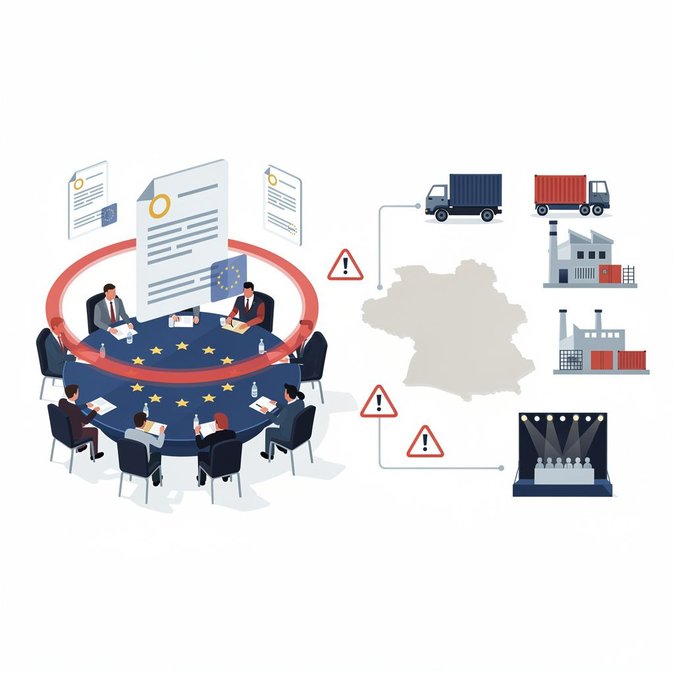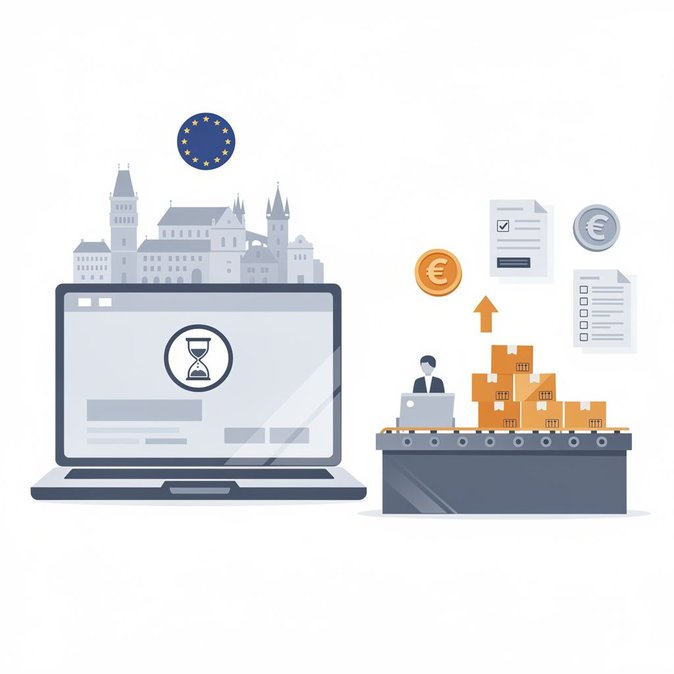
The General Directorate of Customs has posted an urgent banner on its cPortál website informing traders and the public that a new software version will be deployed between 07:00 and 08:00 CEST on Thursday, 25 June 2026. During that window users may experience brief outages when filing import or excise declarations online. While the technical interruption is minor, the same notice reveals a bigger change effective 1 July. From that date most distance-sale consignments arriving from non-EU countries will attract a flat customs duty of €3 per line item, even if valued below the €150 de minimis threshold. The update also ends the possibility of submitting simplified “eCeP” declarations for parcels carrying an Import One-Stop-Shop (IOSS) number or for gifts, forcing shippers and couriers to switch to the full Automated Export System (AES) or New Computerised Transit System (NCTS) interface. For Czech online shoppers the levy means a smartwatch bought from a Chinese platform for €30 will cost roughly CZK 80 more at the doorstep. Marketplaces and postal operators must update price calculators and advise customers of the extra duty to avoid refused parcels—last year Česká pošta returned 1.4 million packages because recipients declined to pay unexpected charges. Small e-commerce importers and freight forwarders will need to adapt their customs software within a week, prompting the Association of Internet Commerce to request a grace period. Customs officials say the €3 duty harmonises Czech practice with EU-wide anti-dumping efforts and will fund extra risk-scanning staff at Prague Airport’s cargo terminal. Travellers bringing purchases in their luggage are unaffected so long as goods remain within the existing traveller allowance (currently €430 by air or €300 by land). However, business travellers shipping samples ahead of trade fairs must now budget for the per-item duty or apply for inward processing relief.
Source: cPortál Celní správy ČR