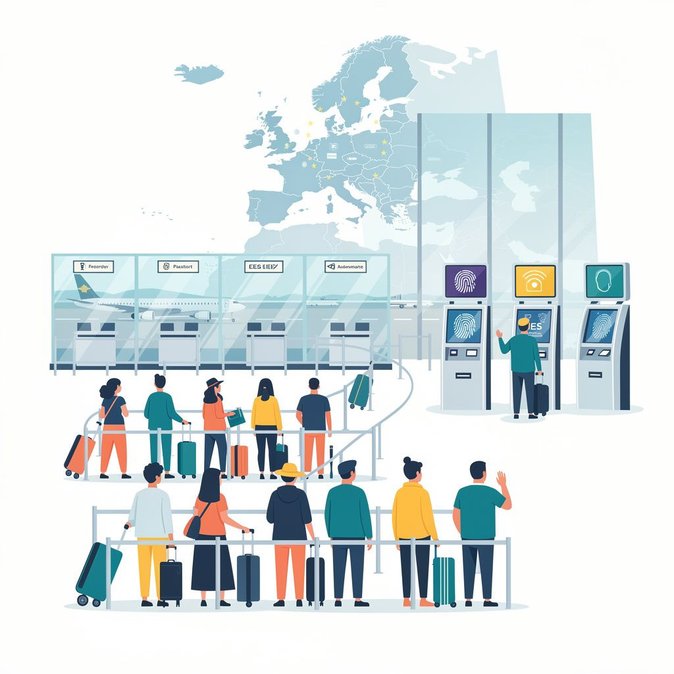
At a revived Visegrád Group (V4) summit in Gödöllő, Hungary, on 23 June 2026, Czech Prime Minister Andrej Babiš joined his Hungarian, Polish and Slovak counterparts for the first in-person V4 gathering since the bloc’s two-year hiatus. Migration dominated the agenda. According to the joint communiqué, the four Central-European countries will 1) create a permanent working group of interior-ministry experts to exchange real-time data on irregular-migration routes, 2) develop a common position on the EU’s newly-adopted Pact on Migration and Asylum before the European Council in July, and 3) press for stronger external-border funding in the next Multi-annual Financial Framework. For Czech employers operating regional mobility programmes, the most concrete outcome is Prague’s agreement to pilot fast-track return flights from Václav Havel Airport for third-country nationals found to have no legal basis to remain in the Schengen area. The Interior Ministry confirmed that the pilot will start in September, initially covering overstayers intercepted on the Czech-Slovak land border. The summit also addressed business-travel facilitation. The four prime ministers endorsed a Hungarian proposal for a “V4 Business Traveller Lane”: participating airports would recognise each other’s registered-traveller databases to speed up passport checks for frequent flyers. Prague Airport said it can connect its existing “SmartGate” infrastructure to the shared database with only minor software changes, potentially shaving minutes off every intra-V4 flight. Analysts note the broader political context: the meeting closed Hungary’s rotating V4 chairmanship and signalled the group’s return to coordinated EU lobbying after a period of bilateral friction. For multinational companies, the renewed V4 coordination means policy shifts—whether on posted-worker rules, Schengen reform or Ukraine reconstruction visas—are again likely to emerge first from Central Europe. Mobility managers should monitor joint non-papers in the run-up to the 18-19 July European Council, where migration burden-sharing will resurface.