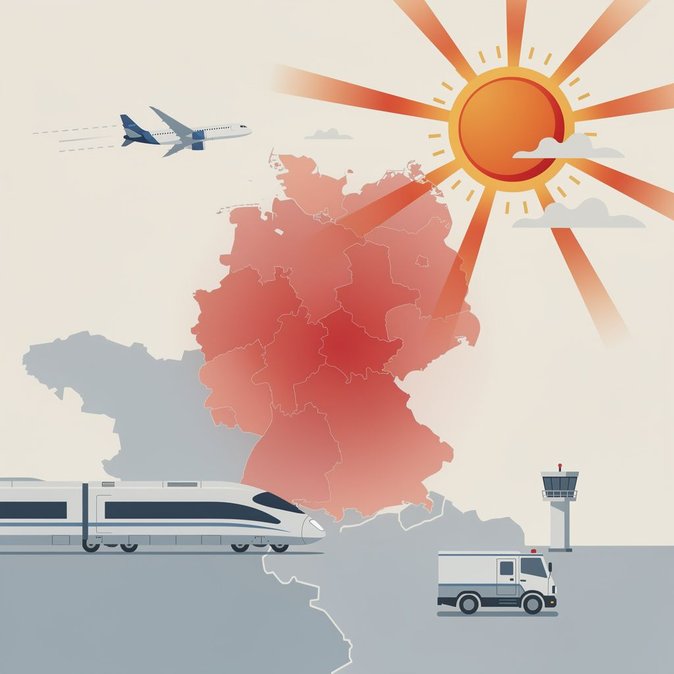
Germany joined France, Spain and Italy under Europe’s unprecedented “red-zone” heat alert on 24 June, with temperatures topping 39 °C in Cologne and 38 °C on Munich’s apron. Rail operator Deutsche Bahn imposed temporary speed limits on key ICE corridors to prevent track buckling, while airlines at Frankfurt and Düsseldorf warned of ground-handling slowdowns as ramp workers faced mandatory hydration breaks. The German Meteorological Service (DWD) expects the heat dome to persist until 28 June, raising the risk of thunderstorms that could compound delays. Some Länder have already relaxed truck-driving bans on national highways to allow night-time logistics runs, a measure welcomed by express-freight operators serving automotive plants. For corporate-travel planners the immediate tasks are traveller-health briefings, flexible ticketing and real-time monitoring of weather-related rail speed restrictions. Employers must also remember Germany’s workplace-safety rules: outdoor work must be reduced or rescheduled once 35 °C thresholds are reached, affecting construction-site and field-service deployments. Climate scientists note that Europe is warming twice as fast as the global average, meaning such extreme heat events—and the accompanying transport disruption—are likely to become routine. Companies with large mobile workforces should integrate heat-stress metrics into risk assessments alongside traditional security and health factors.
Source: Le Monde