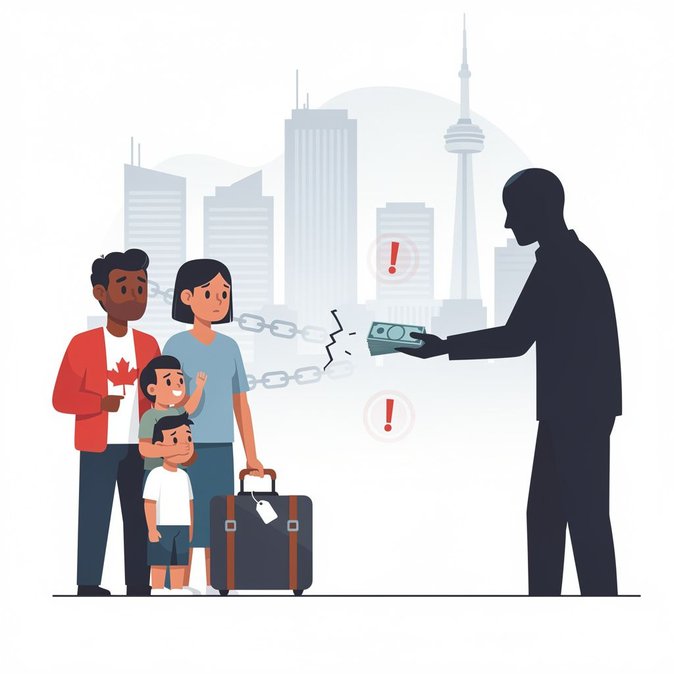
The Canada Border Services Agency (CBSA) disclosed on 25 June that it has opened 196 immigration investigations in the Greater Toronto Area (GTA) involving suspected extortion. Nationally, 484 similar cases have been launched since August 2025, resulting in 139 removal orders and 81 deportations. Officials said police referrals point to organised-crime groups coercing foreign nationals—often with precarious status—into paying protection money or performing illicit work under threat of denunciation. Victims frequently avoid law enforcement for fear of losing immigration status, making detection difficult.
Individuals who are uncertain about their immigration paperwork or need to regularise their status can turn to VisaHQ’s Canadian portal for step-by-step guidance on visas, permits and travel documentation. The service (https://www.visahq.com/canada/) streamlines applications, offers document-check tools and connects users to experienced advisers—resources that can reduce vulnerability to fraud and coercion while helping employers and foreign nationals stay compliant.
CBSA has created a joint task force with the Royal Canadian Mounted Police and local police services to fast-track inadmissibility findings under the Immigration and Refugee Protection Act. The agency is also urging the public to use its confidential tip line, underscoring that extortion undermines both community safety and the integrity of Canada’s immigration system. Employers should verify the status of contractors and be alert to forged documents; hiring a victim of coercion can inadvertently expose companies to penalties for non-compliance. Immigration counsel note that genuine victims may be eligible for temporary resident permits on humanitarian grounds, provided they come forward. The announcement highlights the intersection of border enforcement and organised crime—a reminder that immigration compliance is not solely a paperwork exercise but part of a broader public-safety mandate.
Individuals who are uncertain about their immigration paperwork or need to regularise their status can turn to VisaHQ’s Canadian portal for step-by-step guidance on visas, permits and travel documentation. The service (https://www.visahq.com/canada/) streamlines applications, offers document-check tools and connects users to experienced advisers—resources that can reduce vulnerability to fraud and coercion while helping employers and foreign nationals stay compliant.
CBSA has created a joint task force with the Royal Canadian Mounted Police and local police services to fast-track inadmissibility findings under the Immigration and Refugee Protection Act. The agency is also urging the public to use its confidential tip line, underscoring that extortion undermines both community safety and the integrity of Canada’s immigration system. Employers should verify the status of contractors and be alert to forged documents; hiring a victim of coercion can inadvertently expose companies to penalties for non-compliance. Immigration counsel note that genuine victims may be eligible for temporary resident permits on humanitarian grounds, provided they come forward. The announcement highlights the intersection of border enforcement and organised crime—a reminder that immigration compliance is not solely a paperwork exercise but part of a broader public-safety mandate.