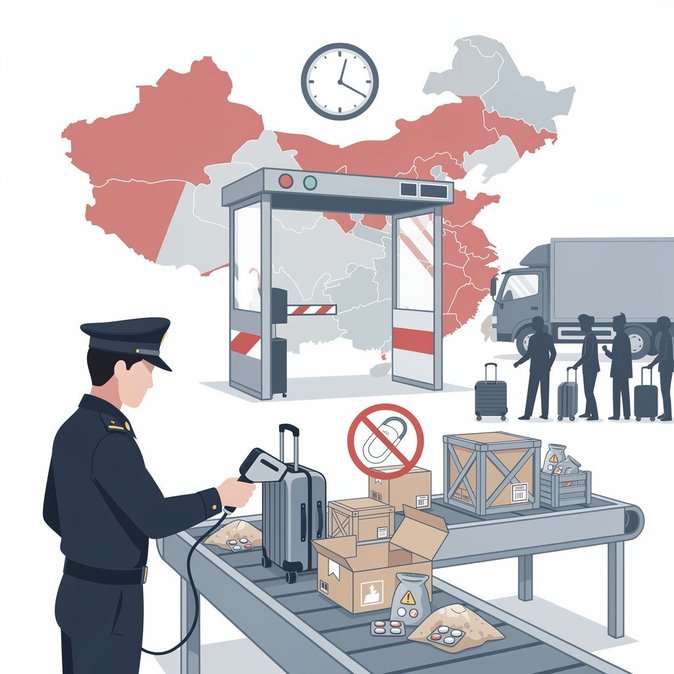
China’s top legislature has passed a special decision granting the Hong Kong Special Administrative Region administrative control over the Hong Kong-side facilities of the rebuilt Huanggang/Lok Ma Chau land port—paving the way for a fully integrated checkpoint that will operate around the clock with “co-operative inspection, one-time release” procedures. The measure, adopted by the Standing Committee of the 14th National People’s Congress on 26 June, allows Hong Kong law to apply within the designated port zone, which will be leased to the SAR until at least 30 June 2047. Huanggang is being transformed from an ageing freight-focused frontier into the Shenzhen-Hong Kong corridor’s primary 24-hour passenger gateway. Post-renovation designs project daily capacity of 200,000 travellers—scaling up to 300,000 once the MTR’s Northern Link spur opens.
Travelers preparing for this shift should also confirm that their travel documents and any requisite visas remain valid. VisaHQ’s online platform (https://www.visahq.com/china/) simplifies the process of checking entry requirements for both mainland China and Hong Kong, and can expedite visa applications or renewals for employees who will take advantage of the new 24-hour crossing. The service’s automated reminders and corporate dashboards help mobility managers stay compliant while the legal framework surrounding the port continues to evolve.
Clearance time is expected to drop from the current 30 minutes (when using separate Hong Kong and mainland halls) to about five minutes under the “one place, two inspections” model that co-locates officers from both jurisdictions. For cross-border professionals—finance executives shuttling between Central and Qianhai, or engineers supporting Shenzhen tech plants—the upgrade promises a dramatic improvement in schedule flexibility. Companies that previously avoided late-night transfers because Lo Wu closes at midnight will gain a true 24-hour option. Mobility teams should revisit housing allowances, duty-of-care plans and fleet routes, as talent may choose to live deeper inside Guangdong while retaining Hong Kong employment contracts. The arrangement mirrors the legal framework used at the West Kowloon high-speed rail terminus and the Hong Kong-Zhuhai-Macao Bridge. While effective, those precedents have attracted judicial reviews and privacy debates. Corporates should monitor forthcoming local legislation—Hong Kong must still pass an Ordinance mapping the exact boundary and security rules—to understand employee rights, evidence handling and potential exposure to mainland jurisdiction within the port area. Construction of the new facility is already well advanced, and officials hint at a phased opening starting in late 2027. In the meantime, freight forwarders will continue to use the existing Huanggang cargo channel, but should plan for temporary diversions once site integration begins. The ultimate goal is seamless passenger and cargo flow across the Shenzhen-Hong Kong innovation belt, reinforcing the Greater Bay Area’s bid to rival Tokyo and San Francisco as a top-tier economic cluster.
Travelers preparing for this shift should also confirm that their travel documents and any requisite visas remain valid. VisaHQ’s online platform (https://www.visahq.com/china/) simplifies the process of checking entry requirements for both mainland China and Hong Kong, and can expedite visa applications or renewals for employees who will take advantage of the new 24-hour crossing. The service’s automated reminders and corporate dashboards help mobility managers stay compliant while the legal framework surrounding the port continues to evolve.
Clearance time is expected to drop from the current 30 minutes (when using separate Hong Kong and mainland halls) to about five minutes under the “one place, two inspections” model that co-locates officers from both jurisdictions. For cross-border professionals—finance executives shuttling between Central and Qianhai, or engineers supporting Shenzhen tech plants—the upgrade promises a dramatic improvement in schedule flexibility. Companies that previously avoided late-night transfers because Lo Wu closes at midnight will gain a true 24-hour option. Mobility teams should revisit housing allowances, duty-of-care plans and fleet routes, as talent may choose to live deeper inside Guangdong while retaining Hong Kong employment contracts. The arrangement mirrors the legal framework used at the West Kowloon high-speed rail terminus and the Hong Kong-Zhuhai-Macao Bridge. While effective, those precedents have attracted judicial reviews and privacy debates. Corporates should monitor forthcoming local legislation—Hong Kong must still pass an Ordinance mapping the exact boundary and security rules—to understand employee rights, evidence handling and potential exposure to mainland jurisdiction within the port area. Construction of the new facility is already well advanced, and officials hint at a phased opening starting in late 2027. In the meantime, freight forwarders will continue to use the existing Huanggang cargo channel, but should plan for temporary diversions once site integration begins. The ultimate goal is seamless passenger and cargo flow across the Shenzhen-Hong Kong innovation belt, reinforcing the Greater Bay Area’s bid to rival Tokyo and San Francisco as a top-tier economic cluster.