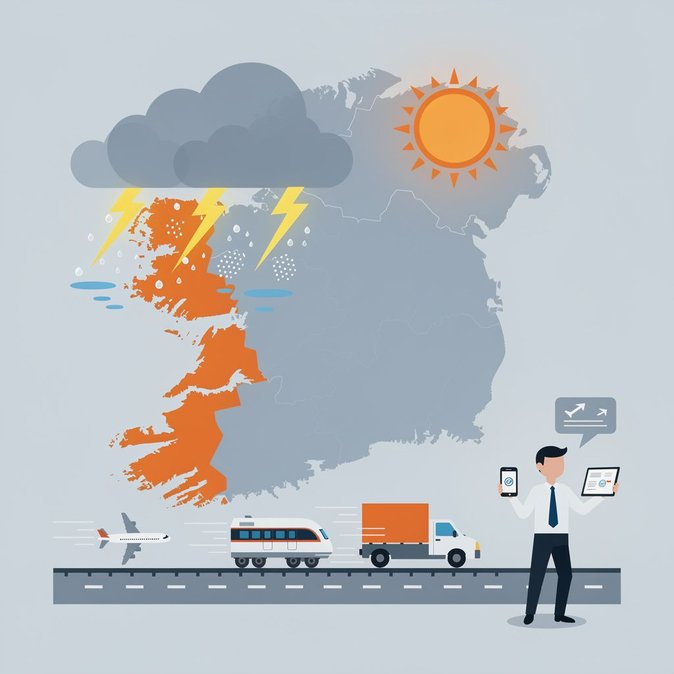
Ireland’s Meteorological Service, Met Éireann, escalated weather advisories to Orange level on 26 June 2026 for large swathes of Connacht and parts of the north-west, warning of intense thunderstorms, hail and localised flooding through Friday evening. A separate Status Yellow high-temperature alert, in force nationwide since 23 June, remains active until the morning of 27 June as daytime highs push past 27 °C and night-time lows stay above 15 °C. Transport operators have begun contingency planning. Dublin Airport said it is monitoring lightning proximity sensors and may order temporary ramp ground-handling stoppages if strikes approach the 5 km safety perimeter—actions that historically translate into departure backlogs of 20–40 minutes. Irish Rail has pre-positioned engineering crews at flood-prone track sections near Athlone and Sligo after flash flooding in July 2025 washed out signalling cabinets. Bus Éireann warns of detours on the N17 and N59 if surface water renders sections impassable. For road travellers, the Road Safety Authority is advising reduced speed and increased braking distance, particularly on the M6 Galway – Dublin corridor, where hail accumulation can create sudden skid risks. Employers with mobile workforces are reviewing duty-of-care protocols; several multinationals have pushed non-essential site visits to next week and instructed staff to use virtual-meeting alternatives. The heat element of the warning raises separate concerns. The Health Service Executive has re-issued its “Stay Cool” guidance, urging hydration breaks for outdoor workers and reminding companies of their obligation under the Safety, Health and Welfare at Work Act to assess thermal stress. Construction sites in the Leinster region are shifting shifts to earlier start times to avoid peak afternoon temperatures. While Ireland is no stranger to four-season-in-a-day weather, the combination of high heat and convective storms is unusual and increasingly blamed on changing Atlantic jet-stream patterns. Travel-risk consultancies note that such compound events are a growing factor in corporate mobility planning, reinforcing the need for real-time itinerary tracking and flexible ticketing policies.
Source: Met Éireann