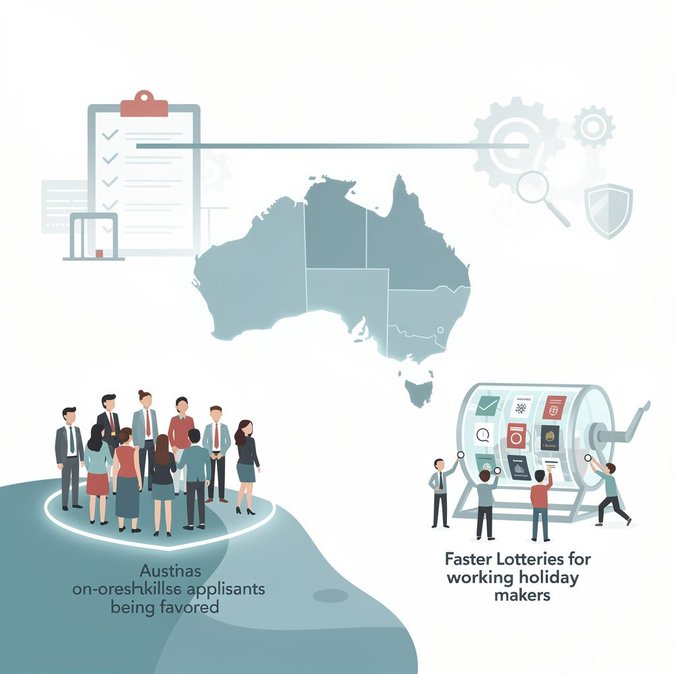
Prime Minister Anthony Albanese used a 27 June 2026 media release to confirm that Vanuatu’s Prime Minister Jotham Napat will pay his first official visit to Australia on 29 June. While framed as a bilateral relations event, officials in both capitals signal that labour mobility—and specifically the Pacific Australia Labour Mobility (PALM) scheme—will top the economic agenda. Vanuatu has long been one of the largest sources of seasonal and longer-term PALM workers, supplying Australia’s agriculture, hospitality and aged-care sectors.
For workers, employers and mobility planners who will need to adapt quickly to any revised PALM settings, VisaHQ can simplify the process of obtaining or renewing Australian visas and work permits. Its online platform provides up-to-date guidance, document checklists and application tracking, helping applicants stay compliant as new rules emerge; visit https://www.visahq.com/australia/ for details on tailored support.
Canberra is under pressure from growers and care providers to expand the annual PALM cap when the new migration year opens on 1 July. Vanuatu, for its part, seeks longer placement terms and streamlined pathways that would allow workers to return over multiple seasons without fresh visa processing. Global employers operating regional facilities stand to gain if the two leaders agree to faster employer accreditation or occupation-tiering that prioritises critical-skill roles. Industry insiders expect announcements on pilot programmes that would let Pacific workers move between accredited employers—reducing the downtime and cost when projects change hands. Separately, negotiators are finalising an air-services understanding that could see more direct Port-Vila–Brisbane flights, easing family-reunion travel and lowering recruitment costs. Any aviation deal would dovetail with the broader push, announced in Australia’s 2026-27 Budget, to tilt migration settings toward on-shore applicants and trusted regional partners. Mobility leaders should watch post-visit communiqués for concrete changes to wage-floor requirements, employer obligations and multi-year visa options, all of which could feed into workforce-planning models for the Pacific step-up.

For workers, employers and mobility planners who will need to adapt quickly to any revised PALM settings, VisaHQ can simplify the process of obtaining or renewing Australian visas and work permits. Its online platform provides up-to-date guidance, document checklists and application tracking, helping applicants stay compliant as new rules emerge; visit https://www.visahq.com/australia/ for details on tailored support.
Canberra is under pressure from growers and care providers to expand the annual PALM cap when the new migration year opens on 1 July. Vanuatu, for its part, seeks longer placement terms and streamlined pathways that would allow workers to return over multiple seasons without fresh visa processing. Global employers operating regional facilities stand to gain if the two leaders agree to faster employer accreditation or occupation-tiering that prioritises critical-skill roles. Industry insiders expect announcements on pilot programmes that would let Pacific workers move between accredited employers—reducing the downtime and cost when projects change hands. Separately, negotiators are finalising an air-services understanding that could see more direct Port-Vila–Brisbane flights, easing family-reunion travel and lowering recruitment costs. Any aviation deal would dovetail with the broader push, announced in Australia’s 2026-27 Budget, to tilt migration settings toward on-shore applicants and trusted regional partners. Mobility leaders should watch post-visit communiqués for concrete changes to wage-floor requirements, employer obligations and multi-year visa options, all of which could feed into workforce-planning models for the Pacific step-up.