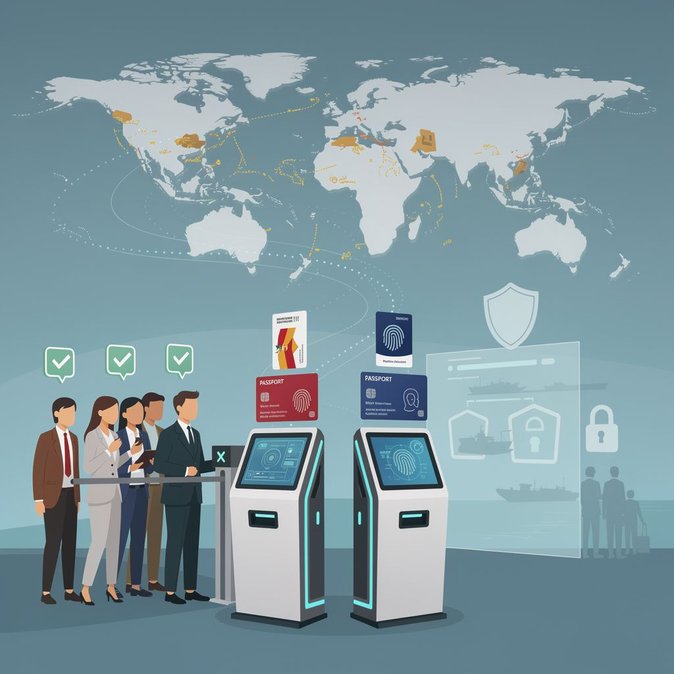
Meeting on the sidelines of the 29th ASEAN Directors-General of Immigration summit in Siem Reap, senior officials from Indonesia and Australia signed a plan of action that will overhaul how the two neighbours share real-time data on irregular maritime arrivals, forged travel documents and cyber-enabled people-smuggling networks. The outcome, announced by Indonesia’s Directorate-General of Immigration on 27 June, includes a pilot for direct API (advance passenger information) feeds into Australia’s Border Risk Engine and reciprocal access to Indonesia’s new biometric watch-list.
Amid these fast-moving policy changes, travellers and corporate mobility managers can streamline their visa preparations through VisaHQ. The platform offers up-to-date guidance, document validation and expedited processing for Australia and the wider ASEAN region, all accessible online at https://www.visahq.com/australia/
The agreement matters because people-smuggling routes in the region have pivoted from traditional boat departures to multi-country air-and-sea ‘visa runs’ arranged on encrypted messaging apps. Both countries acknowledge that stronger analytics and faster intelligence loops—not just physical patrols—are needed to keep ahead of syndicates that exploit visa-free travel and digital identity fraud. For corporate mobility teams the deal promises smoother, more predictable clearance for legitimate travellers. Indonesia’s Director General Hendarsam Marantoko confirmed that SmartGate e-Passport access—which already covers Singaporean and Bruneian travellers at Australian airports—will be expanded to Indonesian e-Passport holders once data-integrity benchmarks are met. That could shave 15-20 minutes off arrival processing for Jakarta–Sydney business flights. The two governments will also co-sponsor a cyber-resilience training program for ASEAN immigration agencies, focusing on artificial-intelligence threat-detection at primary line. Australian technology vendors in the automated-border space are eyeing the initiative as an opportunity to demonstrate next-generation gait-analysis and liveness-detection tools. Longer term, the partnership feeds into negotiations on a single-window traveller identity platform for the Indo-Pacific—a move that could, within five years, allow pre-cleared executives to move between ASEAN capitals and Australia on a seamless digital visa, boosting regional project deployment and fly-in-fly-out operations.
Amid these fast-moving policy changes, travellers and corporate mobility managers can streamline their visa preparations through VisaHQ. The platform offers up-to-date guidance, document validation and expedited processing for Australia and the wider ASEAN region, all accessible online at https://www.visahq.com/australia/
The agreement matters because people-smuggling routes in the region have pivoted from traditional boat departures to multi-country air-and-sea ‘visa runs’ arranged on encrypted messaging apps. Both countries acknowledge that stronger analytics and faster intelligence loops—not just physical patrols—are needed to keep ahead of syndicates that exploit visa-free travel and digital identity fraud. For corporate mobility teams the deal promises smoother, more predictable clearance for legitimate travellers. Indonesia’s Director General Hendarsam Marantoko confirmed that SmartGate e-Passport access—which already covers Singaporean and Bruneian travellers at Australian airports—will be expanded to Indonesian e-Passport holders once data-integrity benchmarks are met. That could shave 15-20 minutes off arrival processing for Jakarta–Sydney business flights. The two governments will also co-sponsor a cyber-resilience training program for ASEAN immigration agencies, focusing on artificial-intelligence threat-detection at primary line. Australian technology vendors in the automated-border space are eyeing the initiative as an opportunity to demonstrate next-generation gait-analysis and liveness-detection tools. Longer term, the partnership feeds into negotiations on a single-window traveller identity platform for the Indo-Pacific—a move that could, within five years, allow pre-cleared executives to move between ASEAN capitals and Australia on a seamless digital visa, boosting regional project deployment and fly-in-fly-out operations.