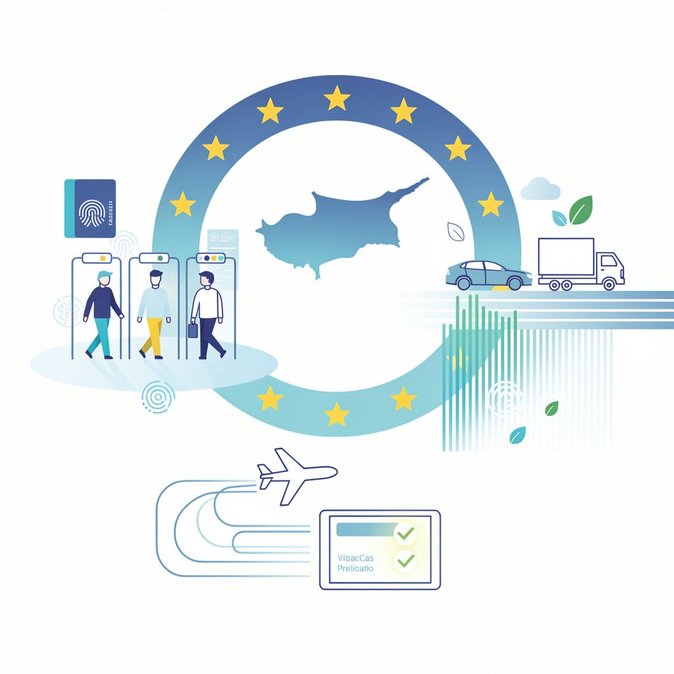
Cyprus Police announced on 28 June that 4,021 third-country nationals without legal status have already been repatriated or deported since 1 January 2026 – a pace that keeps the island on track for a record year of returns. The latest departures came via a Frontex-co-ordinated charter that left Larnaca at the weekend and marked Cyprus’ tenth participation in an EU joint return flight so far this year. The figure is striking for a country of just 900,000 residents and underlines the pressure Cyprus continues to face as one of the European Union’s five Mediterranean “front-line” member states. Arrivals fell sharply after Nicosia tightened asylum rules in 2024, but reception centres remain near capacity and the government has shifted resources from processing to removal. Since January the Aliens & Migration Service has expanded rapid-return teams, reopened a dedicated case-management unit at Menoyia and negotiated fast-track documentation with Nigeria, Bangladesh and the Democratic Republic of Congo – the three largest source countries so far this year. Returns rely heavily on EU funding. All charter and commercial-flight costs, as well as €1,000–€3,000 reintegration grants for voluntary returnees, are covered by the EU’s Asylum, Migration & Integration Fund (AMIF). Officials argue that the strategy is more humane and cost-effective than prolonged detention, but NGOs warn that detainees have little time to access legal aid. The new EU Pact on Migration and Asylum, which entered into force on 12 June, will make such funding permanent and create a single “EU Returns Co-ordinator” – a change Cypriot authorities say will speed up the paperwork now handled piecemeal by 27 capitals. For internationally mobile employers the message is clear: Cyprus is stepping-up status checks. Police have already run 2,900 workplace inspections this year and say every overstayer encountered during a raid faces detention pending removal. Companies sponsoring non-EU staff are being told to keep residency permits and payroll records up-to-date or risk administrative fines of up to €10,000 per worker under amendments adopted in April. HR teams should also prepare for stricter border questioning; officers at Larnaca and Paphos airports now verify that business travellers hold return tickets, hotel confirmations and proof of sufficient funds. Looking ahead, the Deputy Ministry of Migration plans to extend its voluntary Assisted Return Scheme for Syrian families until 30 October and to open a “return hub” inside Pournara reception centre that can process travel documents in less than 72 hours. If the current tempo continues, Cyprus could surpass last year’s full-year total of 6,200 removals by early November – cementing its position as the EU’s most proactive return country on a per-capita basis.
Source: Cyprus Mail