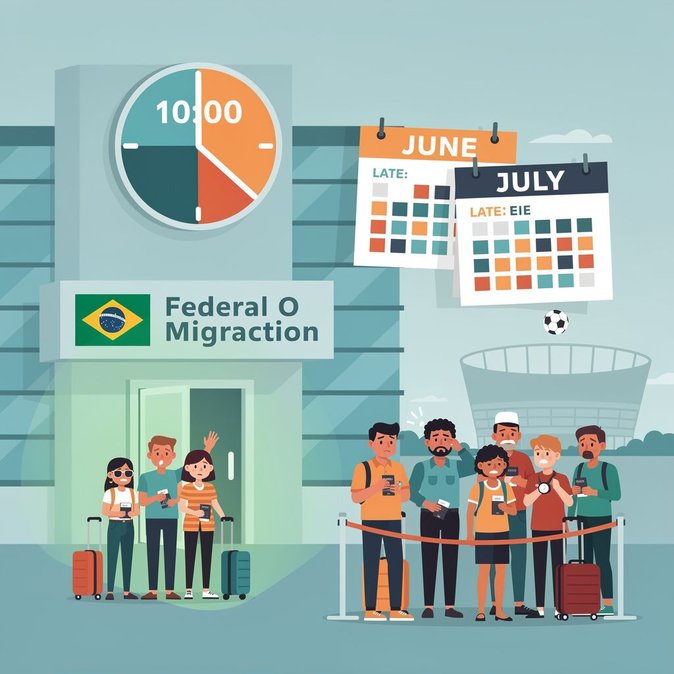
The Federal Police (PF) announced that its Migration Division in São Paulo—Brazil’s busiest immigration office—would operate only until 10:00 on Monday, 29 June, because of the short working day declared for the national football team’s World Cup fixture. Services for refugee applicants are suspended entirely. Foreign nationals and HR teams woke up to a notice on the PF website instructing anyone with appointments after 10:00 to return between 20 and 23 July, according to a staggered timetable based on original booking slots. Urgent cases must be justified by e-mail with evidence of the original appointment.
For organizations looking to reduce exposure to this kind of disruption, VisaHQ offers an end-to-end online visa facilitation service with real-time tracking, expert review and courier logistics; its Brazil portal (https://www.visahq.com/brazil/) keeps applicants current on shifting requirements and can step in when last-minute PF closures derail in-person appointments.
The abrupt change impacts hundreds of expatriates awaiting residence permits, renewals and exit-and-entry endorsements. Legal advisers warn that overstaying a visa because of an interrupted appointment can still trigger fines unless clients keep proof of the rescheduled slot. Companies that planned start dates for inbound assignees this week may need to postpone onboarding or file provisional work notices. The episode underscores Brazil’s continued use of ‘ponto facultativo’—optional public-sector holidays—during major football matches. While many consulates now publish contingency calendars, the PF has historically issued same-day alerts, leaving little room for mobility managers to adjust. Experts recommend monitoring the PF’s official channels during the tournament and building at least a two-week buffer into immigration timelines. Looking ahead, mobility teams should watch for possible service reductions on 3 July, the date of a potential quarter-final. Contingency options include re-routing filings to smaller PF units, using certified couriers for document drop-off, and briefing travellers on proof-of-stay requirements.
For organizations looking to reduce exposure to this kind of disruption, VisaHQ offers an end-to-end online visa facilitation service with real-time tracking, expert review and courier logistics; its Brazil portal (https://www.visahq.com/brazil/) keeps applicants current on shifting requirements and can step in when last-minute PF closures derail in-person appointments.
The abrupt change impacts hundreds of expatriates awaiting residence permits, renewals and exit-and-entry endorsements. Legal advisers warn that overstaying a visa because of an interrupted appointment can still trigger fines unless clients keep proof of the rescheduled slot. Companies that planned start dates for inbound assignees this week may need to postpone onboarding or file provisional work notices. The episode underscores Brazil’s continued use of ‘ponto facultativo’—optional public-sector holidays—during major football matches. While many consulates now publish contingency calendars, the PF has historically issued same-day alerts, leaving little room for mobility managers to adjust. Experts recommend monitoring the PF’s official channels during the tournament and building at least a two-week buffer into immigration timelines. Looking ahead, mobility teams should watch for possible service reductions on 3 July, the date of a potential quarter-final. Contingency options include re-routing filings to smaller PF units, using certified couriers for document drop-off, and briefing travellers on proof-of-stay requirements.