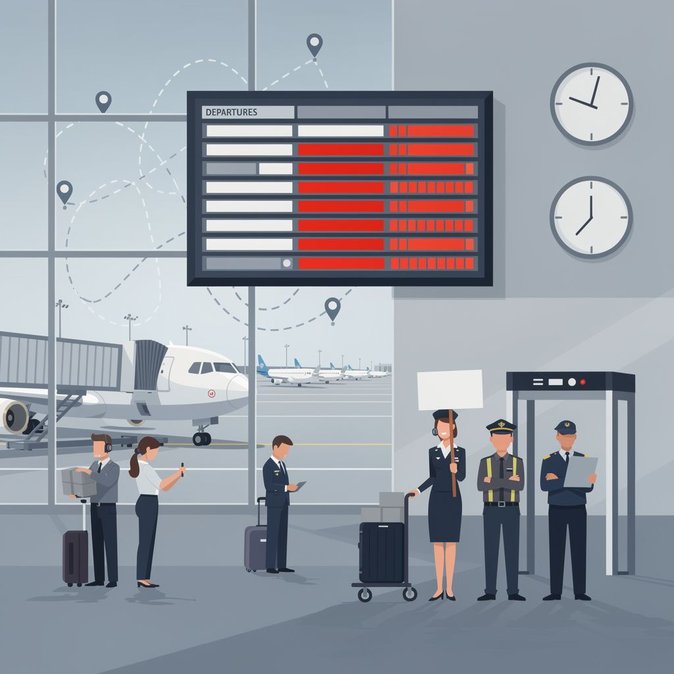
Aeroporti di Roma (AdR), the operator of Fiumicino and Ciampino, has asked Brussels for permission to suspend parts of the new EU Entry/Exit System (EES) during the summer peak after record queues caused missed flights and passenger frustration. The plea follows reports of waits exceeding three hours as border officers capture fingerprints and facial images for all third-country nationals entering or leaving the Schengen Area. AdR chief executive Marco Troncone told the Financial Times that the biometric workload is ‘incompatible’ with forecast throughput of 180,000 passengers per day in July. He warned of “a systemic failure” unless regulators allow airports to waive fingerprint collection during surge periods. Under EU rules, member states may apply temporary derogations, but must still record passport data and manually verify entry stamps. The bottlenecks pose a particular problem for business travellers on tight connections and for companies relocating staff under the 90/180-day Schengen limit—every minute spent in the queue counts as time on Italian soil. Airlines face operational knock-ons: delayed outbound departures trigger crew-duty infringements, forcing cancellations or overnighting. Corporate travel buyers should advise employees to arrive at least four hours before long-haul departures and to keep work-permit letters handy in case border officers need additional verification. Carriers such as ITA Airways are trialling dedicated ‘fast lanes’ for premium passengers, but capacity is limited. Frequent-traveller programmes that previously allowed use of automated e-gates have been suspended until further notice. The European Commission maintains that EES improves security by automatically flagging overstays and document fraud, but airports across the bloc—from Dublin to Athens—are reporting similar logjams. If Rome’s request is granted, it could set a precedent for other hubs and shape how the EU balances security with passenger throughput during major travel peaks.
Source: The Connexion