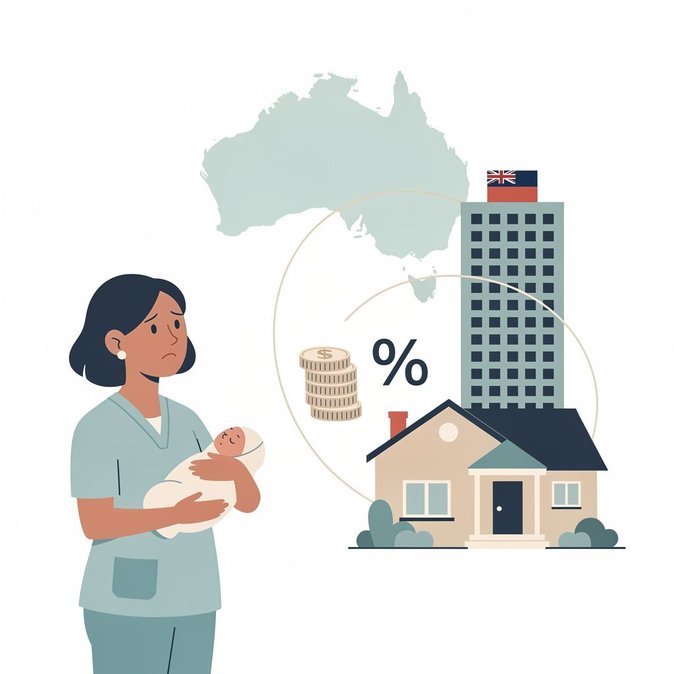
Kate Griffiths answered South Australia’s urgent call for midwives in 2024, uprooting her life in Liverpool for a Subclass 482 Skills-in-Demand visa and an eventual promise of permanent residency. Two years later she is still delivering babies in Whyalla—and battling a combined A$72,000 in federal and state “foreign buyer” penalties after buying the family’s first Australian home before her permanent residence was approved. Griffiths was caught by a little-known rule: migrants who purchase established housing while holding only a temporary visa face both an Australian Taxation Office Established Dwelling Investment Fee (A$44,000 in her case) and an SA stamp-duty surcharge (A$28,000). The state government has now agreed to refund its share on compassionate grounds after media pressure, but the ATO insists the federal fee is non-refundable. The episode has alarmed hospitals recruiting offshore health workers and highlighted a blind spot in corporate-relocation policies. Many HR teams reimburse stamp duty for interstate moves yet overlook foreign-investment levies that can dwarf normal settlement costs. Migration agents say they routinely field frantic calls from skilled migrants unaware that buying “too soon” can trigger six-figure imposts. For employers, the lesson is two-fold: ensure advisers brief recruits on property-purchase timing, and accelerate permanent-residence nominations for critical staff to shorten their exposure period. With the Skills in Demand visa pathway taking 9-15 months to convert to PR, some health networks are revisiting rental subsidies and lease-to-buy models to keep staff from entering the market early. Policy advocates argue the surcharge was designed to deter speculative offshore investment, not penalise essential workers filling skill shortages. The federal Treasury has mooted a targeted exemption for employer-sponsored migrants in next year’s budget, but any fix is at least 12 months away—meaning current arrivals must tread carefully.
Source: ABC News Australia